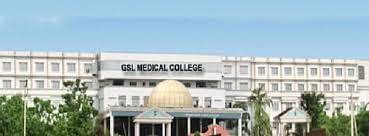
G.S.L. Medical College
About
OfficialG.S.L. Medical College is a other institution in Rajahmundry, established in 2003. G.S.L. Medical College, established in 2008 in Rajahmundry, Andhra Pradesh, is a private medical institution recognised by the Medical Council of India (now National Medical Commission). The college was founded to address the shortage of quality medical education in the region and has gradually built a reputation as a competent medical college serving the Coastal Andhra region. The institution operates under the governance of Sri Srinivasa Educational Trust and is located approximately 15 km from Rajahmundry city center in a suburban setting with adequate space for medical education infrastructure. Academic Programs: The college primarily offers the 5.5-year MBBS undergraduate program with an annual intake of 150 students across general merit seats (state and national level) and management quota seats. Post-graduation programs include MD (Internal Medicine, Pediatrics, Pathology, Microbiology, Pharmacology, Forensic Medicine, Anesthesiology) and MS (General Surgery, ENT, Orthopedics, Obstetrics & Gynecology) with varying intake capacities of 4-6 seats per branch. The college also runs diploma programs in radiography, nursing, and paramedical sciences. Campus Infrastructure: The campus houses a 450-bed teaching hospital with separate departments for each major specialty. Medical education is supported by well-equipped laboratories for Anatomy, Physiology, Biochemistry, and Pathology. The library holds approximately 8,000 books with access to medical journals through INFLIBNET. Practical training is conducted in the college hospital's outpatient departments, wards, and operation theaters with reasonable patient loads for learning purposes. The campus has residential facilities with separate hostels for male and female students, though infrastructure quality varies with some blocks requiring renovation. Academic Strengths and Research: The college emphasizes clinical training through direct patient exposure in the teaching hospital. Faculty members are generally competent in their respective fields with most holding postgraduate qualifications. Research activities are moderate, with occasional publications in national journals and participation in conferences. The college encourages students to present papers at state and national medical conferences. Collaborations with government health programs including tuberculosis control and immunization provide students with public health exposure. Placement and Career Outcomes: MBBS graduates pursue postgraduate studies through NEET-PG with reasonable success rates. Approximately 60-65% of students qualify for government PG seats, while others take NEET-PG multiple times or pursue private institute admissions. Some graduates choose to practice as general practitioners in Andhra Pradesh and nearby states. International medical graduates from the college have attempted USMLE and other foreign medical licensing exams with variable success. The college lacks a formal dedicated placement cell for hospital positions, though graduate students often secure internships and residency positions through their clinical training exposure. Campus Life and Student Experience: Student life is relatively restricted compared to urban medical colleges. The college has clubs for medical education (like journal clubs and case presentation forums) and cultural societies. Annual events include a medical fest typically held in the academic year that includes paper presentations, quiz competitions, and cultural programs. Sports facilities are basic with a small ground for cricket and badminton courts. Wi-Fi connectivity on campus is available but inconsistent in some areas. Most students reside in hostels as Rajahmundry offers limited private accommodation near the college. City Context: Rajahmundry is a tier-3 city with a population of approximately 350,000, located on the Godavari river. The city has reasonable connectivity by rail and road but lacks the cosmopolitan environment of larger metropolitan areas. Living costs are moderate with affordable food and accommodation options. The city is known for its educational institutions and has a growing healthcare sector. Medical students benefit from exposure to a diverse patient population from rural and semi-rural backgrounds, though the limited entertainment and academic infrastructure outside the college can be restrictive for some. Strengths: The college provides hands-on clinical training through its teaching hospital with genuine patient exposure from the first year itself. Faculty-to-student ratio is reasonable allowing personalized attention in clinical postings. Tuition fees are significantly lower than metropolitan private medical colleges. The location in a Tier-3 city provides a focused academic environment with fewer distractions. The institution has established connections with government health programs and NGOs for community medicine training. Limitations and Honest Assessment: The college's brand value and placement outcomes in prestigious hospitals are limited compared to tier-1 medical colleges in metros. Research publication output is modest. Library resources, though adequate, lack digital journal access compared to premier institutions. Faculty expertise is variable with some departments having relatively junior faculty members. The hostel infrastructure, while functional, lacks modern amenities. Transportation within the city is basic with limited options for evening movement. Rajahmundry's limited job market outside healthcare means limited spousal employment opportunities for graduating doctors. The college's distant location from major metropolitan areas makes it challenging for students seeking postgraduation training in top-tier teaching hospitals immediately after graduation. Who Should Apply: This college is suited for students who prioritize affordability, clinical training exposure, and are willing to practice in Tier-2 and Tier-3 cities. Candidates from Andhra Pradesh, Telangana, and neighboring states benefit from understanding the local healthcare ecosystem and being closer to home. Students motivated by community medicine and public health work in non-metropolitan settings will find this environment valuable. The college works well for candidates with realistic expectations about pursuing postgraduate studies through NEET-PG and building careers in government and private practice outside major metros. It is less suitable for students seeking prestigious hospital placements immediately, those requiring metropolitan lifestyle infrastructure, or candidates planning international medical licensing without government PG training. Career Trajectory Post-Graduation: Most MBBS graduates from GSLMC pursue NEET-PG preparation for 1-2 years post-internship. Approximately 55-65% secure government PG seats in various colleges across India, with a significant number choosing institutions in their home state or nearby states. Those not securing government seats pursue private PG colleges or establish general practice clinics in Andhra Pradesh and neighboring regions. Some graduates work as contractual doctors in government health programs or private hospitals while preparing for competitive exams.