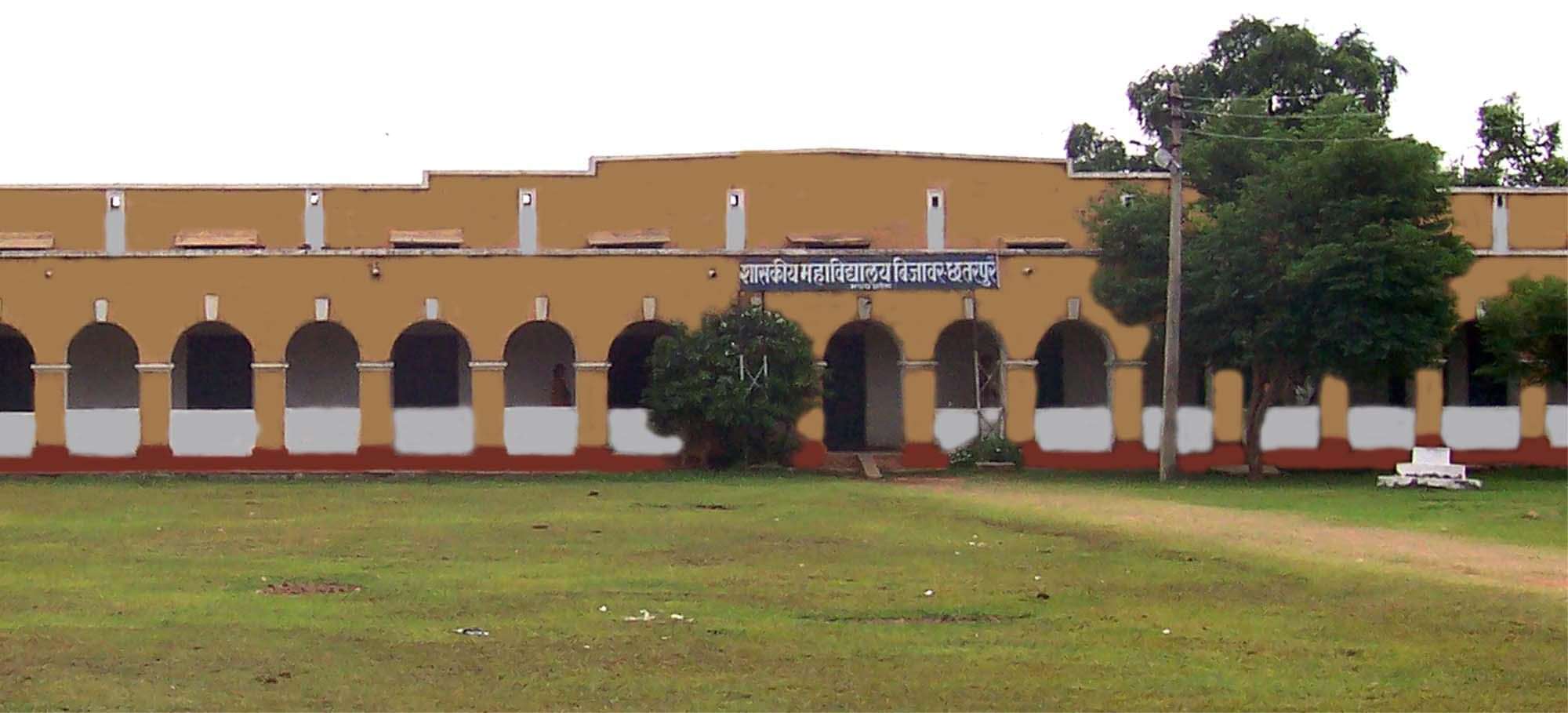
Govt. Degree College, Chhatarpur
About
OfficialGovt. Degree College, Chhatarpur is a public institution in Chhatarpur, established in 1990. Govt. Degree College, Chhatarpur is a government-aided institution established in 1947 as part of Madhya Pradesh's expansion of higher education infrastructure post-independence. Located in Chhatarpur district, approximately 280 km southeast of Bhopal, it serves as a significant educational hub for the Vindhya region. The college was initially founded to provide access to higher education for students from rural and semi-urban backgrounds in central India, addressing the acute shortage of degree colleges in the region during the 1940s. Over seven decades, it has evolved into a multi-disciplinary institution offering undergraduate and postgraduate programs across sciences, arts, and commerce. The institution is recognized by the University Grants Commission (UGC) and is affiliated with Rajiv Gandhi Proudyogiki Vishwavidyalaya (RGPV) for technical programs and Jiwaji University for general degree programs. The college operates with a clear social mission: to democratize education and provide quality learning opportunities to students from economically disadvantaged backgrounds, particularly first-generation learners. Its undergraduate programs are spread across three major discipline groups: Science (Physics, Chemistry, Mathematics, Botany, Zoology), Commerce (Accounting, Economics, Business Studies), and Arts (English, Hindi, History, Political Science, Geography). The institution runs several postgraduate diploma programs in Education, Library Science, and vocational training, making it one of the few options for PG studies in the district. Chhatarpur is known for its historical significance as the gateway to the Khajuraho temples, a UNESCO World Heritage Site, and the college benefits from the cultural richness and historical backdrop of the region. However, the college operates under significant constraints common to government institutions in tier-3 cities: limited research funding, aging infrastructure in some buildings, insufficient laboratory equipment, and lower faculty research productivity compared to urban colleges. The library holds approximately 28,000 volumes and subscribes to limited digital journals through the UGC-INFLIBNET consortium. Internet connectivity on campus is inconsistent, with WiFi coverage restricted to administrative areas. The college has no dedicated research centers or innovation labs. Faculty members, while generally dedicated, often lack PhDs (approximately 25% have doctoral qualifications), and research publication rates remain low. The placement ecosystem is weak: companies rarely visit for recruitment, and most placements are self-arranged by students through personal networks. The college functions as an affordable pathway to a bachelor's degree for rural students but offers limited value-addition through skill development, industry exposure, or career counseling. Notable aspects include the college's strong community integration, vibrant cultural programs during annual fests, and inclusive environment for students from all socioeconomic backgrounds. The institution struggles with gender-disparate infrastructure (women's hostel is overcrowded), inadequate sports facilities, and limited extracurricular opportunities beyond traditional college festivals. Student attrition is higher in science streams due to lack of quality practical education. The college is best suited for students seeking an affordable, degree-focused education in a peaceful, historically-rich setting, with realistic expectations about placement outcomes and career guidance. It serves as a valuable stepping stone for further education rather than direct employment, and many graduates pursue higher studies or professional certifications after graduation. The institution's strength lies in its accessibility and inclusive culture rather than academic excellence or placement records.