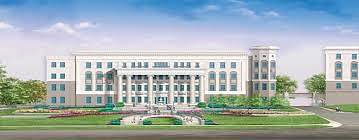
Government Polytechnic, Jaunpur
About
OfficialGovernment Polytechnic, Jaunpur is a public institution in Jaunpur, established in 1984. Government Polytechnic, Jaunpur, was established in 1981 as a government-funded polytechnic institution under the Department of Technical Education, Uttar Pradesh. Located in the historic city of Jaunpur, approximately 70 km south of Varanasi, the college serves as a significant technical education hub in eastern Uttar Pradesh. The institution operates under the AICTE (All India Council for Technical Education) and is affiliated with the State Board of Technical Education, Lucknow. The college evolved from a modest institution to become one of the prominent polytechnic colleges in the region, with a primary focus on providing quality diploma education in engineering and technology. Over the past four decades, it has trained thousands of skilled technicians and engineers who have contributed to various industrial sectors. The institution's mission centers on providing affordable, quality technical education to students from middle-class and economically weaker backgrounds, making it a significant pathway for social mobility in the region. Academic programs offered include diploma courses in Civil Engineering, Mechanical Engineering, Electrical Engineering, Electronics & Communication Engineering, Computer Science & Engineering, and Automobile Engineering. Each program follows a 3-year structure with a curriculum aligned to industry requirements. The college recently introduced specialized programs in emerging fields like IoT and renewable energy systems to keep pace with technological evolution. The academic calendar adheres to SBTE norms with regular practical classes, workshops, and industrial visits integrated into the curriculum. Faculty at Government Polytechnic comprises experienced educators with qualifications ranging from Bachelor's degrees to Master's degrees and some with professional experience in industry. The faculty-to-student ratio is approximately 1:14, allowing reasonable interaction between instructors and students. Faculty members are encouraged to attend training programs and skill development workshops conducted by AICTE and state technical education authorities. However, the college lacks a strong research culture compared to premier polytechnics or engineering colleges; research publications and patents are limited. The campus infrastructure includes well-equipped laboratories for all engineering disciplines, a library with approximately 8,000 books covering technical and general subjects, a computer center with 200+ systems running on a dedicated server, and classrooms equipped with multimedia projectors. The college has recently upgraded its electrical laboratory and mechanical workshop. However, infrastructure remains basic compared to private polytechnics—for instance, the computer lab operates on aging equipment (5-7 years old), and laboratory upkeep shows signs of wear. The cafeteria serves basic food options, and the medical center provides routine health services. Placement record at Government Polytechnic has been steadily improving. For the 2023-24 academic year, the overall placement percentage stood at approximately 68-72% across all programs, with median salaries ranging from 250,000 to 320,000 INR annually for diploma holders. Computer Science & Engineering consistently records the highest placement percentage (85-90%) and salary packages (median 340,000 INR). Civil Engineering and Mechanical Engineering placements range from 65-75% with median salaries around 260,000-280,000 INR. Top recruiters include companies like NTPC, Power Grid Corporation, L&T, Tata Steel, various automobile component manufacturers, IT consulting firms like Cognizant, and smaller regional manufacturing units. Many graduates find employment in government sectors through competitive recruitment processes. Notable alumni include Rajesh Kumar Singh (batch 1985), now a Senior Manager at NTPC; Anil Yadav (batch 1992), Chief Engineer at Power Grid; Dr. Pradeep Singh (batch 1988), who later pursued higher education and became a faculty member at an IIT; and Vinita Sharma (batch 1995), now Director of a successful skill development NGO. While the college lacks internationally renowned alumni, many graduates have established themselves in various technical and administrative roles in government and private sectors. Campus life at Government Polytechnic reflects a balanced mix of academics and extracurricular activities. The college operates dual hostels for male and female students, with basic but functional accommodation. Hostel facilities include shared rooms (4-6 students per room), common dining areas, and separate study halls. Internet connectivity in hostels remains inconsistent, with bandwidth limitations during peak hours. On-campus mess facilities serve vegetarian and non-vegetarian food at affordable rates (approximately 2,500 INR per month). The college has several student clubs including a Technical Club (coding and robotics), a Cultural Club, a Sports Committee, and an Entrepreneurship Cell. Annual events include a technical fest "Techvision" held in March, a cultural fest "Yuvarang" in February, and inter-college sports competitions. However, the scale and quality of these events are modest compared to larger institutions. Safety and discipline are taken seriously at the college. There have been no significant ragging incidents reported in recent years due to strict anti-ragging policies and awareness programs. The campus is relatively secure with basic security measures including gates, security personnel, and CCTV coverage in key areas. However, the surrounding area is semi-urban with limited late-night activities, which some students find restrictive. Women students report feeling generally safe on campus and in hostels, though the city itself requires standard precautions. One unique aspect of Government Polytechnic is its affordability—annual tuition fees are among the lowest for technical education in India at approximately 8,000-12,000 INR per year for general category students, with further concessions for reserved categories and economically weaker sections. This makes quality technical education accessible to students from modest economic backgrounds. The college also facilitates skill certification programs in partnership with NASSCOM and other industry bodies, providing additional employment avenues. Who should apply: This institution is ideal for students from middle-class and economically weaker backgrounds seeking quality, affordable diploma-level technical education. It suits students who prioritize practical skills, hands-on training, and direct industry exposure over theoretical research. The college is particularly suited for those planning to enter the workforce immediately after graduation or pursue further technical education. Students should be prepared for basic infrastructure, a focus on core technical skills rather than modern amenities, and a regional job market that includes substantial government sector opportunities. Students seeking world-class facilities, cutting-edge research opportunities, or a cosmopolitan campus environment should consider premier institutions. However, for a genuine pathway into technical employment with minimal financial burden, Government Polytechnic, Jaunpur, represents excellent value.