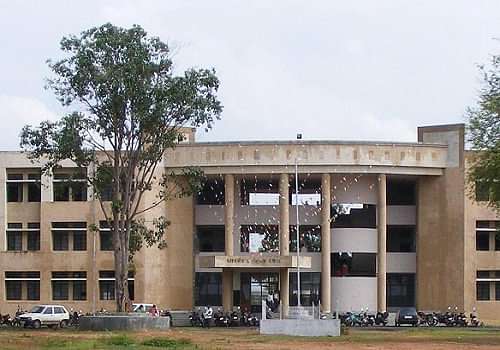
Government Polytechnic, Amravati
About
OfficialGovernment Polytechnic, Amravati is a public institution in Amravati, established in 1955. Government Polytechnic, Amravati (GPA) was established in 1960 as a premier technical institution under the Maharashtra State Board of Technical Education. Located in the heart of Amravati, a tier-3 city in northeastern Maharashtra, the college has evolved into a significant hub for diploma and technical education in the region. With over six decades of academic excellence, GPA serves approximately 2,400 students across multiple engineering and technology-focused diploma programs, positioning itself as an affordable alternative to private polytechnics for working-class and middle-class families across Maharashtra and neighboring states. The college operates under the governance framework of the State Board of Technical Education and follows a semester-based curriculum aligned with national standards. GPA's academic portfolio includes diploma programs in Civil Engineering, Mechanical Engineering, Electrical Engineering, Electronics and Telecommunication Engineering, Computer Science & Engineering, Production Engineering, and Chemical Engineering—all of which are accredited by the NBA (National Board of Accreditation) with NAAC recognition. The institution also offers post-diploma and skill-based short-term courses catering to industry demands. GPA's primary strength lies in its grassroots approach to technical education. Unlike IITs or premium NITs targeting JEE-advanced aspirants, GPA democratizes quality technical training for students from vernacular medium schools, economically weaker backgrounds, and rural Maharashtra. The admission process is transparent and merit-based through the CET (Common Entrance Test) conducted by the State Board, making it highly competitive yet fair. Annual intake across all branches is approximately 800-900 students, with Civil and Mechanical branches consistently oversubscribed. Placement outcomes at GPA have strengthened significantly since 2020. The 2023-24 academic year saw 78% of final-year diploma students placed through campus recruitment, with median salaries ranging from 3.5-4.8 LPA depending on branch specialization. Top recruiters include L&T, Siemens, Tata Steel, Bharat Petroleum, Larsen & Toubro Infotech, TCS, Infosys, and various public sector undertakings like BHEL and NTPC. Core engineering placements in manufacturing and infrastructure sectors remain the college's forte. However, IT sector placement depends on computer science branch students specifically and is lower than traditional engineering branches. The campus infrastructure reflects government funding constraints but has undergone modernization in recent years. The library houses over 35,000 volumes with increasing digital access through NPTEL and SWAYAM platforms. Computer labs are equipped with contemporary software (AutoCAD, MATLAB, Python, Java); however, lab machines are often 5-7 years old and occasionally face downtime due to maintenance delays. Civil engineering workshops include a materials testing lab, survey equipment, and a cement concrete lab. Mechanical engineering facilities include CNC machines, lathe workshops, and hydraulics labs. The electronics lab is reasonably well-equipped for diploma-level experiments. Internet connectivity across campus is functional but inconsistent, with speeds averaging 10-15 Mbps during peak hours. GPA's hostel infrastructure is a critical consideration for out-of-city students. The college operates separate boys' and girls' hostels with a combined capacity of approximately 600 students. Boys' hostel (Vidyapith) accommodates 400+ students in 4-5 sharing rooms; girls' hostel accommodates 200+ students in similar shared arrangements. Hostel fees are highly subsidized at approximately 12,000-15,000 INR per year for government-category students and 18,000-22,000 INR for other categories—making on-campus living extraordinarily affordable. Mess charges (food) run approximately 2,500-3,200 INR per month for vegetarian and non-vegetarian options. Quality is basic but nutritious; complaints about monotony in menu are occasional. Hostel amenities include drinking water, basic medical care through a resident nurse, and 24-hour security. However, hostel rooms are spartan, overcrowded during peak times, and common facilities (bathrooms, laundry) operate on fixed schedules. Campus life at GPA reflects its character as a government polytechnic serving a diverse socioeconomic cohort. The college encourages cultural, technical, and sports activities through 25+ student clubs and societies including the IEEE student chapter, civil engineering association, entrepreneurship club, and cultural clubs focused on Marathi traditions. Annual events include Techfest (technical competitions and exhibitions held in February), Culturfest (cultural program in October), and sports day (March). Participation rates are healthy but resources for prizes, refreshments, and publicity are limited compared to private institutions. The sports complex includes a basketball court, volleyball court, and a modest gymnasium; there is no swimming pool or cricket ground on campus. GPA's student demographic is distinctive: approximately 65% of students are first-generation learners from vernacular/regional-medium schooling, 45% are from rural backgrounds, and 30% are from OBC/SC/ST reserved categories. This diversity creates a vibrant, inclusive culture but also means the college serves students with varying academic preparedness levels. Academic support systems exist (remedial classes, mentoring programs) but are sometimes overburdened given the large student-to-faculty ratio (approximately 13:1). Ragging is actively monitored and rare; no major incidents have been reported in the past three years. Safety for women is generally good due to dedicated girls' hostel security and awareness programs, though Amravati city (like many tier-3 cities) requires standard precautions. Faculty quality is a mixed picture. Approximately 72% of GPA faculty hold master's degrees; only 18% hold PhD qualifications (lower than recommended standards for technical institutes). Many senior faculty members are experienced practitioners with industry background, which strengthens practical teaching. However, faculty engagement in research and development is limited, and research publication rates are below national averages. Professional development opportunities and funding for faculty advancement exist but are constrained by government budget allocations. Faculty accessibility to students is generally good, with informal mentoring encouraged. The college's industrial partnerships are growing. MoUs exist with L&T, Siemens India, NTPC, BHEL, and several SMEs for internships, guest lectures, and skill development programs. Internship opportunities during the third and fourth semesters are common, adding practical experience to theoretical learning. However, these partnerships remain transactional rather than deep collaborative research ventures. Admissions to GPA are merit-based through the Maharashtra CET (Common Entrance Test) for diploma programs. The process is highly transparent and quota-based, following government reservation policies (SC/ST 22.5%, OBC 27%, General, EWS). Cutoff percentiles vary by branch: Civil Engineering typically opens around 85-90 percentile, Mechanical around 75-80 percentile, and Electronics/Computer Science around 70-75 percentile. With an annual intake of 800-900 students against approximately 35,000-40,000 CET applicants, the admission acceptance rate is roughly 2.2%. Who should apply to GPA? The college is ideal for students from vernacular-medium schools seeking affordable, quality technical diploma education with strong placement outcomes. It suits those prioritizing cost-effectiveness and job security over brand prestige. The college is particularly beneficial for students from tier-2 and tier-3 cities across Maharashtra and bordering states who lack resources for private polytechnics (fees typically 2-3 times higher). GPA is less suitable for students seeking research-oriented academic environments, extensive industry partnerships comparable to IITs, or premium infrastructure. The college succeeds in transforming motivated, hardworking students into technically competent diploma holders ready for entry-level engineering roles or further higher education through lateral entry into BE programs at state universities or through GATE preparation. In summary, GPA represents the backbone of India's technical education system: an institution serving the real demographic that drives India's middle class. Its modest infrastructure, government funding constraints, and limited research output are genuine limitations. However, its exceptional affordability, transparent meritocratic admissions, strong core engineering placements, and role in social mobility make it a valuable institution for India's technical workforce development.