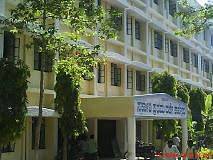
Government First Grade College
About
OfficialGovernment First Grade College is a public institution in Shimoga, established in 2013. Government First Grade College (GFGC) Shimoga is a co-educational state government institution established in 1947, making it one of the oldest and most respected colleges in the Shimoga district. Originally founded during the pre-independence era as a high school, it expanded to a junior college format and eventually became a full-fledged undergraduate institution offering science, arts, and commerce programs. The college operates under the direct oversight of the Department of Pre-University Education and Higher Education, Government of Karnataka, and serves as a focal point for educational excellence in the region. The institution has evolved significantly over the decades, particularly after receiving the first-grade college status. It currently offers undergraduate degree programs across Science (Physics, Chemistry, Botany, Zoology, Mathematics, Electronics), Commerce (with specializations in Accountancy and Business Studies), and Arts (History, Political Science, Economics, Kannada, English, Sanskrit). The college maintains strong academic infrastructure with well-stocked laboratories for physics, chemistry, and biology disciplines. The library houses over 15,000 volumes including reference materials, journals, and digital resources, though the digital collection remains limited compared to premier institutions. Academically, GFGC Shimoga has maintained respectable standards with consistent pass rates above 85% across most disciplines. The college has earned NAAC accreditation (currently Grade B), validating its academic and administrative practices. Faculty members are predominantly postgraduate-qualified, with approximately 35% holding doctoral degrees. The institution has published research papers in peer-reviewed journals, particularly in environmental sciences and plant biotechnology, though research output remains modest compared to research-intensive universities. Placement outcomes vary significantly by program. Commerce and Science graduates, particularly those in Physics and Chemistry, secure placements in banking, education, and retail sectors with median starting salaries around 280,000-350,000 INR annually. However, placements are not guaranteed, with approximately 55-70% of graduating batches securing formal employment within 6 months. Most placements are in tier-2 and tier-3 companies, and salary growth depends heavily on candidates pursuing further certifications like CA, CS, or competitive examinations. Arts graduates typically pursue civil service, teaching, or further studies, with limited direct campus recruitment. The campus spans approximately 18 acres in a suburban location within Shimoga city, offering a relatively peaceful academic environment away from the most congested parts of the city yet accessible by local transport. The infrastructure includes separate hostels for boys and girls with limited accommodation capacity (approximately 300 seats combined), forcing most students to seek private accommodation. The college has a functional canteen, sports grounds including a volleyball court and badminton court, and basic health center facilities. WiFi coverage is patchy, primarily available in administrative blocks rather than throughout the campus, which remains a consistent complaint among students. Campus life is moderately active with student clubs focused on literature, music, sports, and academics. The college organizes annual fests including "Shimoga Utsav" (cultural fest) and sports meets, though these are modest in scale compared to private institutions. Ragging has been historically controlled through strict anti-ragging committees and awareness programs, with minimal reported incidents in recent years. The student community is predominantly local or regional (75% from Karnataka), creating a less cosmopolitan environment but stronger regional language support. Notable aspects of the institution include its affordability (annual tuition fees under 10,000 INR for science and commerce), commitment to inclusive education with strong presence of SC/ST/OBC students (approximately 45% of the student body), and its role as a stepping stone institution where students from modest socioeconomic backgrounds access quality higher education. The college actively encourages students to appear for competitive examinations including UPSC, KAS, IBPS, and GATE, though success rates are not exceptionally high. The college is particularly suitable for students from lower-middle-class backgrounds seeking affordable quality education, students aiming for civil services or teaching careers, and those who prioritize academic rigor without the pressure of premium private institutions. It is not ideal for students seeking cutting-edge research opportunities, world-class infrastructure, or aggressive placement drives in multinational corporations. International exposure is minimal, with no active exchange programs or foreign collaborations. Key strengths include low costs, strong community values, experienced faculty in traditional disciplines, and access to quality science laboratories. Primary limitations include outdated technology infrastructure, limited placement cell resources, average digital library facilities, and geographic remoteness from major metropolitan job markets. The college represents excellent value for tier-3 students but requires additional competitive exam preparation for premium career placements.