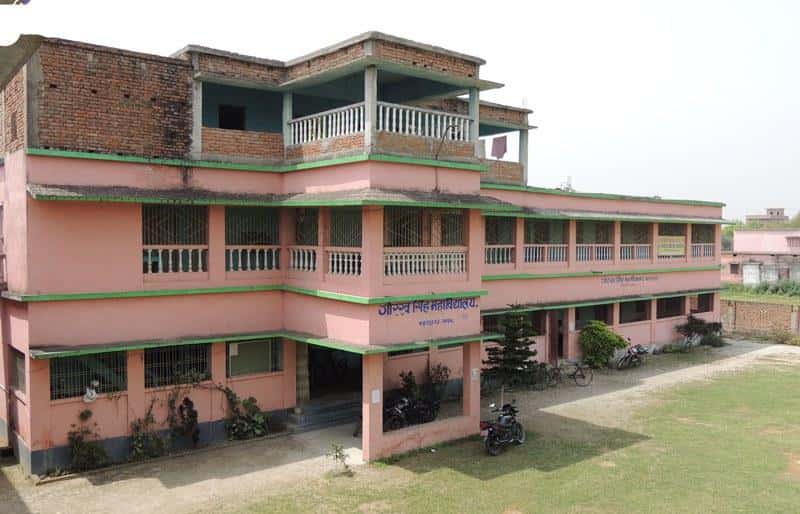
Gorakh Singh College
About
OfficialGorakh Singh College is a other institution in Siwan, established in 2008. Gorakh Singh College, established in 1946 in Siwan, Bihar, is one of the older and more established colleges in the eastern Bihar region. Named after the 15th-century saint-poet Gorakh Singh, the institution has served as an educational hub for students from Siwan, West Champaran, and surrounding districts for nearly eight decades. The college was founded during India's independence movement and has maintained a steady trajectory as a general degree college offering undergraduate and postgraduate programs across Sciences, Arts, and Commerce disciplines. The college is affiliated with Lalit Narayan Mithila University (LNMU), which is a state university governing several colleges in the North Bihar region. Gorakh Singh College occupies a modest 12.5-acre campus in a suburban setting on the outskirts of Siwan town, with adequate space for academic and recreational activities. The institution serves a predominantly local student population, with approximately 2,800 students enrolled across all programs. The college has 145 faculty members across various disciplines, many of whom hold postgraduate and doctoral qualifications from reputed universities. Academically, the college offers 14 undergraduate programs in Sciences (Physics, Chemistry, Biology, Mathematics, Computer Science), Arts (Hindi, English, History, Political Science, Philosophy, Sociology), and Commerce (Commerce, Economics). At the postgraduate level, the college offers M.Sc. programs in Physics, Chemistry, and Botany, along with M.A. programs in Hindi and History. The curriculum follows the LNMU syllabus and is periodically updated to align with national educational standards. Research at Gorakh Singh College is limited but emerging, with faculty members conducting minor research projects in chemistry (particularly organic chemistry and material science), botany (plant tissue culture), and physics (semiconductor studies). The college does not have a dedicated research center but encourages faculty to pursue PhD guidance and publish papers in peer-reviewed journals. The institution has received NAAC accreditation with a B grade, indicating satisfactory performance in academics, infrastructure, and institutional governance. However, the college faces typical challenges of tier-3 institutions in North Bihar: limited research funding, modest infrastructure compared to metropolitan colleges, and reliance on traditional teaching methods alongside gradual digital integration. The placement scenario at Gorakh Singh College is moderate. While the college maintains a placement cell and has some recruiters visiting campus, the majority of placements are concentrated in teaching positions (school and college), civil service preparation, and small local businesses. IT companies rarely visit, and placement percentages vary significantly by branch and semester. For Science students, particularly those in Biology and Chemistry, opportunities in pharmaceutical companies, diagnostic labs, and government teaching positions are available. Commerce graduates find placement in banking, accounting firms, and small-scale financial services. Arts graduates primarily pursue further education or government service preparation. The college does not produce notable placements in top-tier tech companies, consulting firms, or major financial institutions. Campus life is modest but active. The college has a functional library with approximately 12,000 volumes, a basic computer lab with outdated equipment, sports facilities including a basketball court and volleyball ground, and a small auditorium used for college programs and local community events. Student clubs exist for various disciplines and cultural activities, though participation rates are moderate. The college conducts an annual fest (Gorakh Utsav) in November featuring cultural programs, academic seminars, and sports competitions. However, infrastructure for extracurricular activities is limited compared to urban colleges. Hostel facilities are available for both male and female students, though rooms are basic and somewhat crowded. Many students commute daily or live in private accommodations rented from Siwan town. The college has been working on improving WiFi connectivity and has partial campus-wide internet coverage, though speeds are inconsistent during peak hours. Safety on campus is generally good, with male and female students moving freely, though women's hostel has stricter gate timings. Ragging is officially prohibited and not widely reported, though informal incidents may occur as in most Indian colleges. Who should apply: Gorakh Singh College is ideal for students from the Siwan district and surrounding North Bihar regions who cannot afford or relocate to metropolitan centers but seek quality undergraduate education in Sciences, Arts, or Commerce. The college suits students who prioritize affordability, local cultural familiarity, and home proximity over urban campus lifestyle and high-powered placements. It is particularly suitable for students aspiring for government services (teaching, civil service) or further higher education rather than corporate careers. The college provides a stepping stone to postgraduate studies at better institutions and is known for producing teachers, researchers, and civil servants. However, students seeking top-tier corporate placements, modern tech infrastructure, international exposure, or vibrant cosmopolitan campus life should consider tier-1 or tier-2 colleges in metropolitan areas. The college's strength lies in its affordability, accessibility to local communities, and role as a genuine educational institution serving underserved populations in North Bihar. Its limitation is the modest placement infrastructure and limited corporate industry linkage typical of colleges in tier-3 cities.