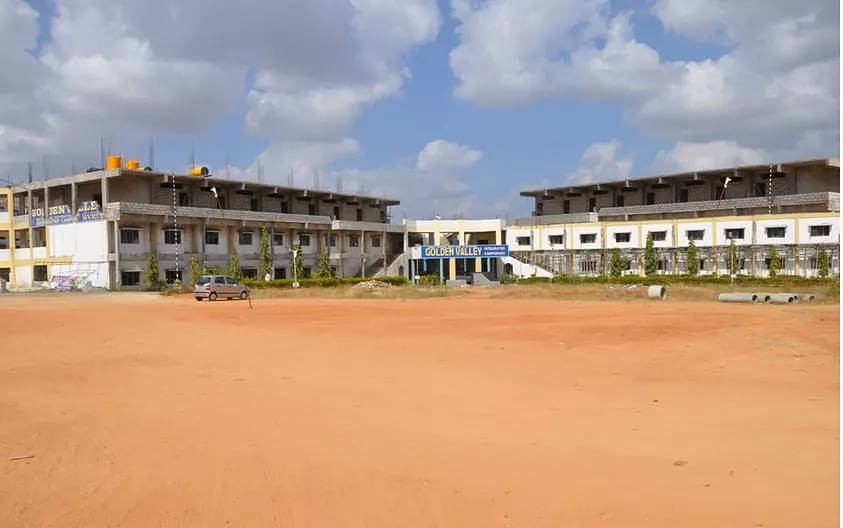
GOLDEN VALLEY INTEGRATED CAMPUS
About
OfficialGOLDEN VALLEY INTEGRATED CAMPUS is a other institution in Madanapalle, established in 2006. Golden Valley Integrated Campus, established in 2005 in Madanapalle, Andhra Pradesh, is a private multi-disciplinary institution offering undergraduate, postgraduate, and integrated degree programs across engineering, management, sciences, and arts. Located approximately 140 km south of Hyderabad and 90 km from Bangalore, the campus serves as an affordable alternative to metro-centric institutions while maintaining reasonable academic standards. The institution operates with the philosophy of combining theoretical rigor with practical skill development, though execution quality remains inconsistent across departments. Founded by the Golden Valley Educational Trust, the campus was designed with emphasis on green initiatives, sprawling over 120 acres of relatively underdeveloped terrain in rural Andhra Pradesh. The location offers natural tranquility but presents logistical challenges for students seeking urban exposure and internship opportunities. Academically, the engineering programs in Civil, Mechanical, and Computer Science attract approximately 2,000 undergraduate students annually. The management school offers MBA programs with focus on entrepreneurship and sustainability sectors. Faculty strength stands at approximately 280, with roughly 25-30% holding doctoral degrees—below the standards of top-tier institutions. Research output remains modest, with limited publication records in peer-reviewed journals and minimal external funding for research projects. The institution is UGC-approved and holds NAAC accreditation at the B+ level (as of 2021), indicating baseline compliance with academic standards but not excellence. NBA accreditation covers select engineering programs including Civil and Mechanical Engineering. Placement statistics for 2023-24 show overall placement rates of 62-68% across engineering disciplines, with median salaries ranging from 3.5 to 5.2 lakhs annually—adequate for tier-3 colleges but below NIT/IIIT standards. Technology and finance sectors dominate placements, though core engineering opportunities remain limited. Campus infrastructure includes functional but aging hostel facilities, a 50,000-book library with limited digital resources, basic sports infrastructure, and an established placement cell. Wi-Fi connectivity across campus is partial, with reliable internet access limited primarily to academic buildings and select hostel blocks. The student body comprises primarily local Andhra Pradesh students (65%), with remaining representation from Karnataka, Tamil Nadu, and Telangana. The institution is known for reasonable fees compared to other private engineering colleges in southern India, making it accessible to middle-income families. However, students consistently report challenges with faculty quality consistency, limited research opportunities, and insufficient industrial partnerships for meaningful internships. Campus culture emphasizes academic discipline over innovation, with moderate student engagement in extracurricular activities. The institution has produced graduates working in IT services companies (TCS, Infosys, Wipro), banking sector (ICICI, Axis, HDFC), and core engineering roles in mid-tier manufacturing firms. Notable limitations include: geographical isolation from major tech hubs (requiring significant effort for external internships), limited networking with premier institutions, moderate alumni presence in leadership positions, and inconsistent faculty research culture. The college is best suited for academically motivated but geographically/financially constrained students from semi-urban backgrounds seeking engineering or management degrees without competing at JEE-Advanced or CAT excellence levels. Students expecting world-class research infrastructure, international collaborations, or guaranteed placement in FAANG companies will find the institution inadequate. The value proposition lies in affordable quality engineering education for students targeting mid-tier IT services or manufacturing sectors rather than specialized domains. Student attrition is notable in second and third years, primarily due to limited campus vibrancy, minimal cultural programming, and growing frustration with placement outcomes among higher-achieving students who later attempt lateral transfers to better-ranked institutions.