Gokhale Centenary College
About
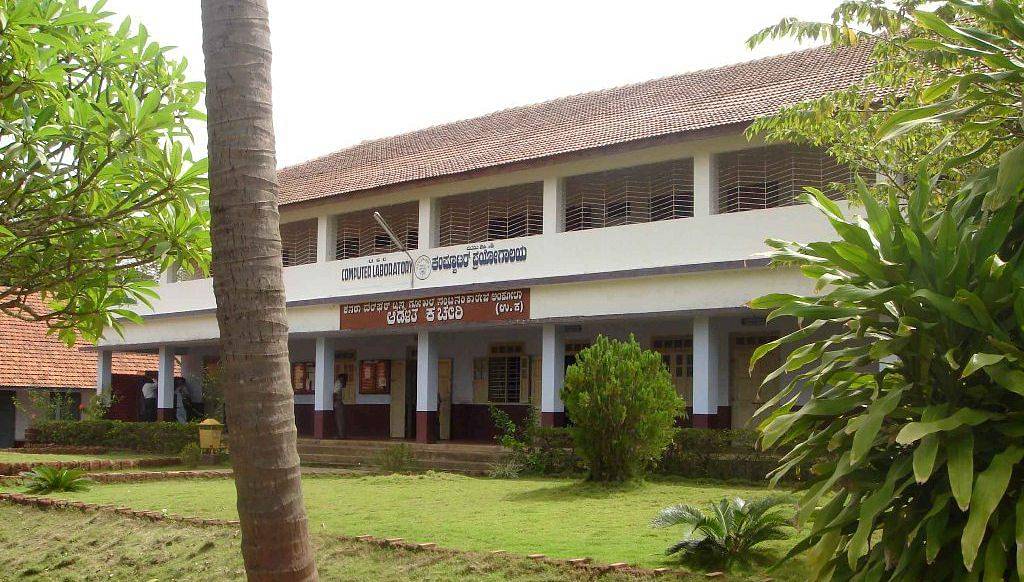
OfficialGokhale Centenary College is a other institution in Ankola, established in 1966. Gokhale Centenary College, established in 1995 in Ankola, Karnataka, is a private undergraduate and postgraduate institution named after social reformer Gopal Krishna Gokhale. Located in the Uttara Kannada district of the Western Ghats region, the college serves approximately 2,100 students across science, commerce, and arts disciplines. The college was founded with a mission to provide quality higher education in the coastal hinterland, filling the gap for local students who traditionally migrated to tier-1 cities for college education. Over the past 28 years, it has evolved from a small regional college to a recognized institution with affiliations to Karnataka State Open University and Rani Channamma University. The institution operates 8 undergraduate programs spanning sciences, commerce, and arts, along with 5 postgraduate programs in management and sciences. While not positioned as a research powerhouse, the college emphasizes foundational academics and practical skill development through regular lab work and industrial exposure. Academic strengths lie in commerce education (accounting, finance fundamentals) and science disciplines (biology, chemistry practical training). The college lacks formal research centers but faculty engage in applied research, particularly in agricultural biotechnology and coastal ecology studies relevant to the Western Ghats region. Placement records are modest by tier-1 standards but respectable for a rural college: approximately 65-70% of engineering and science graduates secure employment within 3-6 months post-graduation, with median salaries around 3.5-4.2 lakhs annually. Top recruiters include regional financial institutions, BPO companies, and small-to-medium manufacturing enterprises. Notable alumni include Rajeev Nayak (banking sector executive, batch 2002), Dr. Anita Prabhu (research scientist in agricultural biotechnology, batch 2000), and several successful entrepreneurs in agro-processing and tourism sectors within coastal Karnataka. The campus is spread across 28 acres with natural vegetation, reflecting commitment to environmental sustainability. Infrastructure includes a library with 15,000+ volumes, computer labs with internet connectivity, science laboratories with modern equipment, a small auditorium for events, and residential facilities for both male and female students. Campus life is quieter than urban institutions; student engagement focuses on academics, cultural events during annual fests, and sports participation. The college emphasizes discipline, attendance accountability, and ethical conduct. Ragging has been minimal historically due to strong institutional vigilance. Safety for women is generally good due to the rural, tight-knit campus community and active proctorial systems. The location in Ankola presents both advantages and challenges: proximity to natural beauty (beaches, hills), lower cost of living, and a focused academic environment are significant positives. However, limited urban amenities, restricted entertainment options, reduced direct access to major job markets, and challenging monsoon season (June-September when landslides occur) are notable limitations. The college is ideal for students seeking affordable quality education in a disciplined environment away from urban distractions, particularly those from middle-income families in Karnataka and neighboring states. It suits candidates aiming for civil service preparation, teaching careers, or regional employment opportunities. The rural setting may deter students expecting cosmopolitan campus life or those targeting multinational corporations requiring presence in metropolitan areas. The institution has strengthened industry linkages in recent years through MOUs with educational technology companies and regional banks, improving internship and placement outcomes. Faculty retain strong teaching credentials (85% hold postgraduate degrees, 22% have PhDs), though research publication counts remain limited compared to central universities.