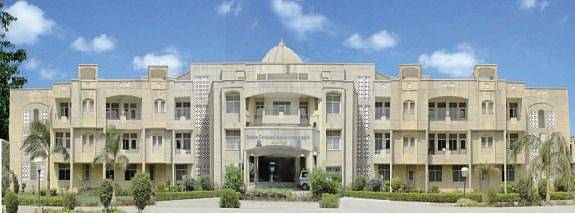
GJ Patel Institute of Ayurvedic Studies & Research
About
OfficialGJ Patel Institute of Ayurvedic Studies & Research is a other institution in Anand, established in 2005. GJ Patel Institute of Ayurvedic Studies & Research (GJPASR), located in Anand, Gujarat, is one of India's premier institutions dedicated exclusively to Ayurvedic education and research. Established in 1992, the institute was founded with a vision to preserve, promote, and modernize traditional Ayurvedic medicine through rigorous academic training and contemporary research methodologies. Situated in Anand, a city with deep historical connections to dairy industry excellence and agricultural innovation, GJPASR has positioned itself as a bridge between ancient Ayurvedic wisdom and modern scientific validation. The institute operates under the regulatory framework of the Ministry of AYUSH, Government of India, and is recognized by the Central Council for Indian Medicine (CCIM). It is one of the few Ayurvedic colleges in Western India that has successfully integrated classical Ayurvedic texts with evidence-based research protocols. The campus spans 12.5 acres in a peaceful suburban setting, providing an environment conducive to serious academic pursuit without urban distractions. Academic programs at GJPASR include Bachelor of Ayurvedic Medicine & Surgery (BAMS), Master of Science (M.Sc.) in Ayurveda with specializations in Dravyaguna (Pharmacology), Samhita (Classical Texts), Roga Nidana (Pathology), and Kayachikitsa (Internal Medicine), along with PhD programs in various Ayurvedic disciplines. The BAMS program is a five-and-a-half-year integrated course with mandatory 6-month internship, designed to produce clinically competent Ayurvedic practitioners. The institute emphasizes both theoretical knowledge of classical Ayurvedic texts (Charaka Samhita, Sushruta Samhita, Ashtanga Hridaya) and practical clinical training. Research strengths at GJPASR are particularly notable in ethnobotanical studies, validation of traditional formulations, clinical research on chronic diseases, and pharmacological investigations of Ayurvedic herbs. The institute operates dedicated research centers including the Ayurvedic Pharmacology Lab, Herbal Garden with over 200 medicinal plant species, Dravyaguna Research Center, and Clinical Research Unit. Faculty members have published extensively in peer-reviewed journals, both national and international, establishing the institution's credibility in the scientific community. Campus infrastructure includes a 100-bed teaching hospital (Ayurvedic hospital with OPD and IPD facilities), well-equipped laboratories, a comprehensive herbal garden, digital library with access to Ayurvedic journals and research databases, and dedicated research wings. The hospital sees approximately 150-200 OPD patients daily, providing extensive clinical exposure to students. Classrooms are equipped with modern audio-visual systems, and practical sessions utilize authentic Ayurvedic equipment alongside modern diagnostic tools. Placement outcomes for GJPASR graduates are significantly different from mainstream engineering/management institutions due to the nature of Ayurvedic practice. Rather than corporate placements, graduates primarily pursue: (1) Clinical practice through their own clinics or partnership practices, (2) Hospital positions in government and private Ayurvedic hospitals across India, (3) Research positions in government laboratories and AYUSH institutions, (4) Academic roles as lecturers in Ayurvedic colleges, (5) Pharmaceutical company positions in product development and quality assurance, and (6) International opportunities in countries with strong Ayurveda interest (USA, UK, Germany, Canada, Australia). Approximately 70-75% of graduates establish independent clinical practice within 2-3 years of graduation. Those pursuing hospital positions secure roles at institutions like AIIMS Ayurveda in New Delhi, Government Ayurvedic Hospitals in major cities, and premium private wellness centers. Average income for practicing clinicians ranges from 50,000-150,000 INR monthly depending on patient base and location. Notable alumni include Dr. Rajendra Sharma (Clinical researcher, published 45+ papers on Ayurvedic formulations), Dr. Priya Desai (Director of Ayurveda at a major wellness chain with 35 centers across India), Dr. Vikram Patel (Government Ayurvedic Hospital Director in Mumbai), and Dr. Anjali Mishra (Research scientist at Central Ayurveda Research Institute, Delhi). The institute is unique in its rigorous integration of classical Ayurvedic education with modern research methodology. Unlike some Ayurvedic colleges that lean heavily toward traditional teaching, GJPASR mandates publication of student research, collaborative projects with conventional medical researchers, and exposure to biostatistics and research ethics. The herbal garden serves as a living laboratory, and the emphasis on crop-to-clinic understanding is rare in Indian Ayurvedic education. Campus culture emphasizes intellectual discourse on Ayurvedic philosophy, research-oriented thinking, and professional practice standards. Student societies include the Research Club, Classical Text Study Group, and Clinical Skills Forum. Annual fest 'Ayu-Sammelan' features research presentations, case study competitions, and seminars by distinguished Ayurvedic practitioners. Students should consider GJPASR if they are: (1) Genuinely interested in Ayurveda as a medical system and not treating it as a backup option, (2) Willing to build independent clinical practices, (3) Interested in research and validation of traditional medicine, (4) Comfortable with the reality that Ayurvedic practice income is variable and depends on patient base building, (5) Interested in wellness industry opportunities, (6) Seeking niche positioning in international health sectors. The institution is NOT suitable for those seeking guaranteed corporate placements, rapid salary growth, or viewing Ayurveda as an easy alternative to modern medicine. Anand is a tier-3 city requiring adjustment for students from metros; campus placements in conventional sense do not exist. However, for genuinely passionate Ayurveda students, the education quality and research opportunities are excellent, and the alumni network supports practice establishment across India and abroad.