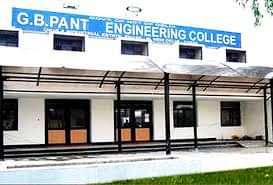
G.B. Pant Govt. Engineering College
About
OfficialG.B. Pant Govt. Engineering College is a public institution in New Delhi, established in 2007. G.B. Pant Government Engineering College (GBPEC), established in 1983 in New Delhi, is one of Delhi's premier engineering institutions and one of the few government engineering colleges in the National Capital Region. Named after Govind Ballabh Pant, a freedom fighter and architect of Indian democracy, the college has evolved from its foundational years to become a significant contributor to India's technical workforce. The college operates under the jurisdiction of the Delhi government and has maintained consistent academic excellence over four decades. Located in Dwarka, South-West Delhi, GBPEC occupies a sprawling 22-acre campus with modern infrastructure designed to support both classroom learning and hands-on engineering practice. The college is not an NIT but functions as a Delhi government engineering college with standards comparable to many Tier-2 engineering institutions across India. Academic Structure and Programs: GBPEC offers undergraduate (B.Tech) programs in seven engineering disciplines: Civil Engineering, Mechanical Engineering, Electrical Engineering, Electronics and Communication Engineering, Computer Science and Engineering, Information Technology, and Production and Industrial Engineering. Each undergraduate program runs for 4 years with an intake capacity ranging from 60 to 120 students per branch, totaling approximately 650 undergraduate students per batch. The college also runs M.Tech programs in several specializations including Structural Engineering, Thermal Engineering, Power Systems, VLSI Design, and Computer Network Engineering, with combined intake of around 100 postgraduate students. The curriculum is continuously updated to align with AICTE (All India Council for Technical Education) guidelines and industry requirements. The college emphasizes a balance between theoretical knowledge and practical application, with laboratory work starting from the first semester. Most undergraduate programs follow the choice-based credit system (CBCS), allowing students flexibility in elective selections from second year onwards. Academic Strengths and Faculty: The faculty strength of approximately 180 across all departments brings a mix of academic credentials and industry experience. Approximately 65% of faculty members hold PhD qualifications, which is reasonable for a government engineering college. The faculty-student ratio stands at approximately 1:13, allowing for reasonable accessibility to faculty members despite the college's size. Faculty members are actively engaged in research and have published papers in national and international journals. Several faculty members have industry experience and maintain connections with practicing engineers, bringing real-world context to classroom teaching. Key research areas include structural optimization, renewable energy systems, embedded systems design, advanced manufacturing techniques, and information security. The college has established research labs with funding from government sources and industry partnerships. However, research output remains modest compared to IITs and older NITs, and the college's research infrastructure is gradually being upgraded. Placement and Career Outcomes: Placement records have shown improvement over the past five years, with approximately 85-90% of undergraduate students securing employment or higher education offers. Median starting salaries for engineering graduates range from 5.5 LPA to 9 LPA depending on the branch, with Computer Science and Information Technology branches attracting the highest packages. Core engineering branches (Civil, Mechanical) typically see placements in the 4.5-6.5 LPA range. The college has established relationships with major IT companies, consulting firms, and manufacturing companies. Top recruiters include TCS, Infosys, Cognizant, Deloitte, Microsoft, Amazon, Samsung, and various PSU companies like BHEL, NTPC, and Indian Oil. The placement cell is reasonably active but faces the challenge of many students from Delhi preferring local opportunities, which sometimes limits the pool of candidates for outstation placements. Campus Infrastructure and Facilities: The 22-acre campus includes separate academic buildings for each engineering discipline, a central library with approximately 45,000 volumes and digital access to engineering journals, well-equipped laboratory facilities with modern instruments, a computer center with over 400 systems, a sports complex with facilities for cricket, basketball, volleyball, and badminton, a gymnasium, a health center with resident medical officer facilities, cafeteria and mess facilities, hostel blocks (separate for men and women), administrative offices, and recreational spaces. Wi-Fi coverage is available across most of the campus, though connectivity is sometimes inconsistent during peak hours. The college has been gradually modernizing its infrastructure with recent additions including upgraded computer labs and research facilities. Hostel and Campus Life: The college provides hostel accommodation for both boys and girls on campus. Boys' hostel accommodates approximately 350 students across multiple blocks with basic amenities including individual beds, study tables, and common areas. Girls' hostel accommodates approximately 150 students with slightly better amenities and stricter security measures. Hostel monthly rent is approximately 2,500-3,500 INR including basic facilities. Mess facilities operate separately with monthly charges around 4,000-5,000 INR for vegetarian and 5,000-6,000 INR for non-vegetarian mess. Food quality in mess is average to good, with variety improving in recent years. Many students prefer to live in private accommodations near the campus or with family in Delhi, as the college allows off-campus living. Student life at GBPEC is reasonably vibrant with approximately 30-35 student clubs and societies covering technical, cultural, sports, and entrepreneurship domains. The college hosts the annual technical festival "Innovision" typically in March, which showcases student projects, technical competitions, and industry exhibitions. Cultural programs and sports competitions are organized regularly. Student participation in inter-college competitions has brought recognition in several technical and sports events. The college has active placement and entrepreneurship clubs supporting students in career development and startup ventures. Admissions and Student Profile: Admissions to undergraduate programs are through the Joint Entrance Examination (JEE) Main followed by the Delhi state counseling process managed by the Delhi Directorate of Training and Technical Education (DTTTE). The college receives strong applicant interest from Delhi and surrounding states, with cutoff ranks typically in the range of 15,000-45,000 for General category depending on the branch and year. Computer Science typically has the highest cutoffs (around 15,000-20,000 rank), while Civil Engineering has lower cutoffs (around 40,000-45,000 rank). The college admits approximately 650 undergraduate students annually. Postgraduate admissions are through GATE examination with counseling through the Delhi state process. The college does not conduct its own entrance examination but follows government regulations and reservations policies (SC, ST, OBC, EWS as per government norms). Notable Alumni and Impact: Graduates from GBPEC have found positions in leading companies both nationally and internationally. Alumni include engineers working in major IT companies, PSUs, research organizations, and academia. While the college has not produced as many highly visible or acclaimed alumni as older IITs or established private universities, it has a steady track record of producing competent engineers who contribute to India's technical and industrial development. Alumni networks are gradually becoming more organized with periodic reunions and mentorship programs being initiated. Strengths and Competitive Positioning: As a government engineering college in Delhi, GBPEC offers high-quality engineering education at a fraction of the cost of private engineering colleges. The college benefits from its location in the national capital, providing proximity to government organizations, research institutes, and corporate offices. The college has strong laboratory facilities and maintains reasonable academic standards. Faculty quality is decent with good mix of experienced and young faculty members. The college's historical reputation and government backing provide stability and recognition in the job market. Challenges and Concerns: The college faces several challenges common to government engineering institutions in India. Infrastructure development is dependent on government budget allocations, sometimes leading to delays in upgrades. The college is relatively smaller compared to major NITs, which can limit the number of top-tier recruiters who visit campus. Research output and innovation are not at the level of premier institutions. Some facilities like the library and computing infrastructure, while adequate, are not as advanced as private institution equivalents. The college's ranking in national engineering college rankings (NIRF, etc.) is typically in the 100-150 range, which is respectable but behind top NITs and leading private colleges. Faculty attrition has occasionally been an issue as talented faculty members move to better-resourced institutions. The geographic concentration of admissions in Delhi sometimes leads to less diversity in the student body compared to national-level engineering colleges. Who Should Apply: GBPEC is an excellent choice for students from Delhi and surrounding NCR region who score reasonably well in JEE Main (rank below 45,000 for most branches). The college is particularly valuable for students seeking quality engineering education at affordable costs, with strong preference for placement-oriented curriculum. Students should be comfortable with the Delhi location and understand that while the college is prestigious within Delhi's government engineering education system, it does not carry the pan-India brand recognition of IITs or older NITs. The college suits students who value practical engineering education, decent placement outcomes, and lower educational costs. Students expecting world-class research facilities or highly specialized advanced programs should consider IITs, NITs, or leading private institutions. The college is also a good choice for students pursuing core engineering careers in manufacturing, infrastructure, or PSU sectors rather than only IT consulting placements. Overall Assessment: G.B. Pant Government Engineering College represents a solid middle-ground option for engineering education in India. It provides quality education, decent placements, and modern infrastructure at government-subsidized costs. While it may not match the prestige of IITs or be equally recognized across India as top NITs, it serves its purpose well as a premier engineering college for Delhi and surrounding regions. The college has the potential to improve its standing through enhanced research output, better industry partnerships, and continued infrastructure modernization.