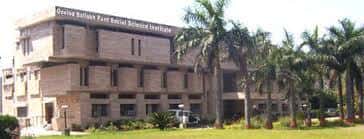
GB Pant Social Science Institute
About
OfficialGB Pant Social Science Institute is a other institution in Allahabad, established in 1980. GB Pant Social Science Institute (formerly Moti Lal Nehru College) was established in 1923 and remains one of India's premier institutions for social sciences education. Located in the heart of Allahabad—a historically significant university town with deep academic roots—the institute has consistently maintained high academic standards and intellectual rigor. The institution was renamed in honor of Govind Ballabh Pant, a towering freedom fighter and statesman, reflecting its commitment to nation-building through quality social science education. The institute offers comprehensive undergraduate and postgraduate programs across economics, political science, sociology, history, public administration, and development studies. Its strength lies not in engineering or medicine but in producing thoughtful, analytically rigorous graduates who excel in civil services, academia, research, policy-making, and international organizations. The faculty comprises scholars with PhDs from premier domestic and international universities, many with active research agendas and publication records in peer-reviewed journals. Academic programs are designed with both classical depth and contemporary relevance. Students engage with foundational texts in political philosophy, economic theory, and sociological analysis while simultaneously studying modern issues like governance, climate policy, gender studies, and development economics. The curriculum emphasizes seminar-based learning, research methodology, and critical thinking over rote memorization. Field work and internships are integrated into several programs, particularly in public administration and development studies. Research is a defining feature. The institute operates specialized research centers in development studies, governance, and public policy. Faculty members actively publish in national and international journals, secure research grants from ICSSR and other funding bodies, and collaborate with universities abroad. Graduate students have opportunities to participate in faculty research projects, providing practical experience in academic research. Placement records for social science graduates are strong but differ fundamentally from engineering/management colleges. A significant proportion (35-40%) pursue civil services exams (UPSC), with consistent success rates—multiple students crack the IAS, IPS, and IFS annually. Those entering the job market secure positions in government ministries, think tanks, NGOs, international organizations (World Bank, UN agencies), corporate social responsibility divisions, and academic institutions. Average salaries are lower than IITs/IIMs (₹6-9 lakhs for entry-level government/corporate positions) but placement percentage remains above 85%. Campus life is intellectually vibrant rather than flashy. Regular seminars, lecture series by visiting scholars, debate competitions, and discussion forums are core to the culture. The institute hosts annual national conferences on contemporary issues in social sciences, attracting scholars from across India. Student clubs focus on research, policy analysis, documentary filmmaking, and social service rather than entertainment. The student body is politically conscious, socially aware, and often engaged in activism around social justice issues. The city of Allahabad (now Prayagraj) offers a unique advantage for social science students. It houses multiple government institutions, research organizations, and civil service coaching centers. The nearby universities, public libraries, and intellectual community provide rich resources for academic and research pursuits. However, it is not a metro—infrastructure is basic, job opportunities in the private sector are limited, and student life lacks the cosmopolitan amenities of Delhi or Mumbai. Infrastructure is functional but aging. The library is well-stocked with academic journals, books, and databases. Laboratories for research are adequately equipped. Hostels are basic but functional. Internet connectivity is reasonable. The campus is compact and walkable. Recent infrastructure upgrades have included renovated classrooms and improved research facilities, but the overall campus aesthetic remains academic rather than ultra-modern. Who should apply: Students with genuine intellectual curiosity about society, politics, economics, and governance. Those aspiring for civil services, policy research, international development work, or academia. Students who value rigorous thinking over placement packages. Those comfortable in a non-metro academic town with strong intellectual traditions. Not ideal for students seeking maximum salary packages or a metro lifestyle, but excellent for those wanting to contribute meaningfully to nation-building and social transformation. Strengths: Deep intellectual tradition, faculty quality, strong civil service coaching culture, research opportunities, network of policy professionals and bureaucrats, liberal academic environment, low cost of living, strong alumni network in government and academia. Weaknesses: Limited corporate recruiter presence, non-metro location, aging physical infrastructure, small campus, limited extracurricular infrastructure compared to larger universities, limited placement in high-salary tech/finance sectors.