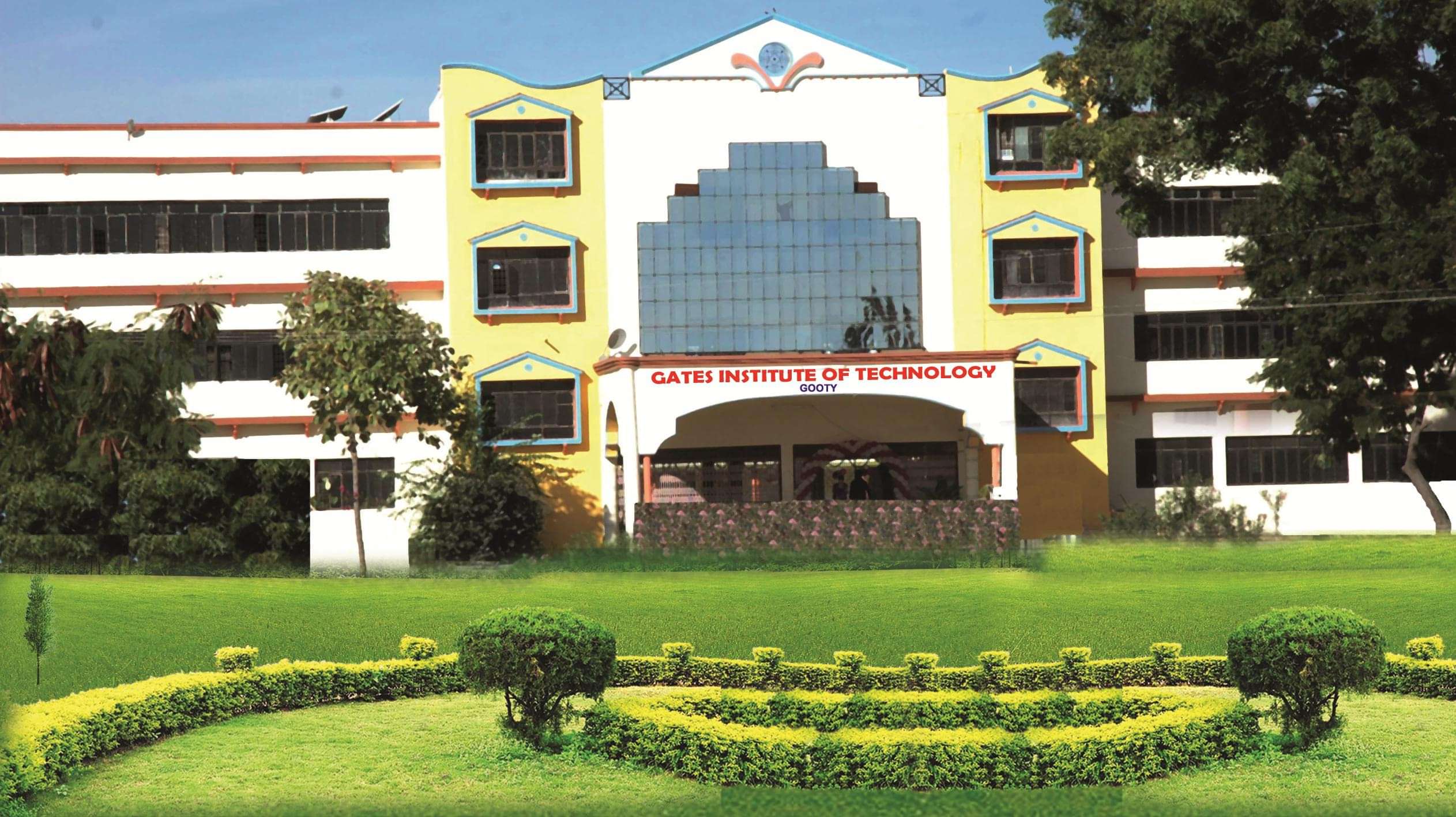
Gates Institute of Technology
About
OfficialGates Institute of Technology is a other institution in Anantapur, established in 2001. Gates Institute of Technology, located in Anantapur, Andhra Pradesh, was established in 2008 as a private engineering institution with a mission to provide quality technical education at affordable costs. The institute operates under the aegis of the Sri Sai Ravi Shankar Educational Trust and has steadily grown to become one of the notable engineering colleges in the Rayalaseema region. The campus is situated approximately 14 km from Anantapur city center on the Kurnool Road, providing a serene yet accessible location for academics and research activities. The institution is approved by AICTE (All India Council for Technical Education) and is affiliated with Jawaharlal Nehru Technological University, Anantapur (JNTU). Gates Institute offers undergraduate engineering programs in six major disciplines: Civil Engineering, Mechanical Engineering, Electrical and Electronics Engineering, Electronics and Communication Engineering, Computer Science and Engineering, and Information Technology. The institute also offers integrated M.Tech programs and PhD opportunities in select disciplines. All undergraduate programs are 4-year full-time courses with an annual intake of approximately 540 students across all branches. Academically, the institute emphasizes a curriculum-driven approach with a focus on both theoretical knowledge and practical skills. The faculty strength of 280 includes PhD holders from reputed institutions, though the percentage of faculty with doctoral qualifications stands around 45%, which is moderate compared to top-tier institutions. The institute has been actively involved in organizing student projects, internships, and industrial collaborations to bridge the gap between academics and industry requirements. The academic environment is characterized by regular seminars, workshops, and guest lectures from industry professionals. Research at Gates Institute is emerging but not extensive. The institute has established research centers in areas like renewable energy, structural engineering, embedded systems, and network security. Faculty members have published papers in national and international journals, though the publication rate is not comparable to premier institutions. The institute encourages research culture through student projects and final year capstone projects that often result in patent filings and publications. However, research funding and facilities remain limited compared to government-supported institutions like NITs. Placement performance is a key strength of Gates Institute. The placement percentage for recent batches (2023-24) has been approximately 82-85%, with an average salary package of around 4.2 lakhs and median salary of 3.8 lakhs. The highest package recorded was approximately 12 lakhs. Major recruiters include HCL Technologies, Wipro, TCS, Infosys, Tech Mahindra, Amazon, and various smaller IT companies. The institute has a dedicated placement cell with experienced coordinators who actively engage with industry to create placement opportunities. Engineering services companies and core manufacturing firms also recruit from the institute, though IT sector dominates the placement statistics. Campus infrastructure is functional but not state-of-the-art. The campus includes well-equipped laboratories for CSE, ECE, EEE, and mechanical engineering disciplines. The library holds approximately 35,000 books and provides access to digital journals and databases. The institute has a health center, cafeteria, sports complex with facilities for volleyball, badminton, and cricket, and a swimming pool. Wi-Fi connectivity is available across the campus. The computer labs have modern systems with industry-standard software. However, the infrastructure lacks some advanced facilities like world-class research centers, advanced manufacturing labs, or state-of-the-art auditoriums compared to top institutions. Student life at Gates Institute is moderately vibrant. The institution encourages formation of technical clubs (robotics, coding, data analytics), cultural societies, entrepreneurship cells, and sports teams. Annual fests like 'Technofest' (technical fest) and 'Culturfest' provide platforms for student participation and showcase. The cultural environment is diverse, reflecting the pan-Indian student population. Ragging is strictly prohibited and monitored, with no significant incidents reported in recent years. The campus safety protocols are in place with security personnel and CCTV surveillance. Hostel facilities are available for both male and female students, with separate accommodations. The hostels are adequate but basic, with 2-4 students per room, attached bathrooms, and basic furnishing. The mess provides vegetarian and non-vegetarian food, though quality and variety vary. Monthly hostel charges range from 8,000 to 12,000 rupees depending on room type and year of study, with mess charges around 3,000-4,000 rupees monthly. The hostel facilities meet basic comfort standards but lack luxury amenities. Anantapur is a tier-3 city in Rayalaseema region, which is an important consideration for students planning to relocate. The city has a rich historical significance (being the site of Sri Sai Baba of Shirdi's ashram) but limited modern urban amenities. The cost of living is significantly lower than metros or tier-1 cities, making it budget-friendly for students. However, exposure to startup ecosystems, high-end food and entertainment options, and job opportunities beyond education are limited. The city experiences hot, semi-arid climate with temperatures reaching 38-42°C in summers. The monsoon period (July-September) is relatively mild. Placement cell effectiveness is reasonable for a private institute of this tier. The cell maintains relationships with 150+ companies across IT, engineering services, manufacturing, and other sectors. However, placement offers are heavily concentrated in IT and related sectors, with limited diversity in domain options. Core engineering placements in fields like manufacturing, power, infrastructure, and automotive are relatively fewer compared to IT placements. Faculty quality is mixed. While many faculty members are competent and hold advanced degrees, the turnover rate is moderate to high, particularly for talented younger faculty who migrate to larger cities or better-paying institutions. The faculty-student ratio of approximately 1:11 is reasonable. Regular faculty development programs and training are conducted, but compared to premier institutions, the research environment and academic rigor expectations are moderate. Financial aspect: The institute offers relatively affordable engineering education compared to top private institutions. Fees are approximately 95,000-105,000 rupees per semester (or 1.9-2.1 lakhs annually), making it accessible to middle-class families. Scholarships are available based on merit (for high EAMCET scores) and means, though the quantum is limited. EMI options are available for fee payment. Who should apply: Gates Institute is suitable for students seeking affordable, quality engineering education in a calm, focused environment. It's ideal for those aiming for IT sector placements or pursuing core engineering. Students with EAMCET ranks in the range of 20,000-40,000 (based on 2024 patterns) are realistic candidates. The institute is NOT recommended for those seeking world-class research opportunities, international collaborations, or extensive industry internships. It suits students preferring a smaller city environment and those prioritizing value for money over brand prestige. The institute would be excellent for students unable to secure seats in top NITs or well-known private colleges but seeking structured, decent quality engineering education with reasonable placement prospects. The semi-rural, quiet campus environment appeals to students seeking focused academics away from urban distractions.