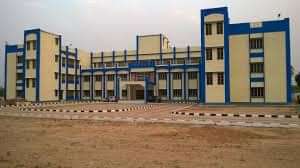
Garhbeta College
About
OfficialGarhbeta College is a other institution in Midnapore, established in 1948. Garhbeta College, established in 1965, is a government-affiliated undergraduate and postgraduate institution located in the Midnapore district of West Bengal. Named after the Garhbeta region, the college has evolved from a modest founding as a local educational hub into a recognized multi-disciplinary institution serving students from Midnapore and surrounding districts. The college operates under the affiliation of Vidyasagar University and functions as a general degree college offering science, humanities, and commerce streams at both undergraduate and postgraduate levels. The college's primary mission has historically been to provide affordable, quality higher education to rural and semi-urban students who might otherwise lack access to tertiary education. With 2,850 enrolled students across BA, BSc, BCom, MA, and MSc programs, Garhbeta College maintains a distinctly regional character while attempting modernization of its infrastructure and curriculum. The academic programs span traditional disciplines including physics, chemistry, biology, mathematics, English, history, political science, economics, and commerce. The institution does not offer professional programs like engineering, medicine, or law, positioning it firmly as a general liberal arts and sciences college. The college's research orientation is modest, with faculty engaged primarily in teaching-focused activities and occasional research publications in regional academic journals. The college maintains no formal research centers or innovation labs, and academic research is largely individual faculty initiatives rather than coordinated institutional effort. Faculty members hold degrees from regional universities, with approximately 32% possessing PhD qualifications—below the national average for government colleges. The college library houses approximately 35,000 volumes covering core curriculum subjects, supplemented by 8 national and international journals in print format. Digital resource access remains limited, with sparse e-journal subscriptions and no formal institutional repository. Campus Wi-Fi coverage extends primarily to administrative blocks and the library, with intermittent connectivity in student areas. Garhbeta College's placement record reflects the limited vocational orientation of liberal arts education: approximately 42% of graduating students secure formal employment through campus recruitment, with the remainder pursuing further education, civil service examination preparation, or returning to local self-employment. The median salary for placed graduates stands at 2,40,000 INR annually, primarily concentrated in teaching, non-profit administration, and public sector roles. The college recruits no Fortune 500 companies or tier-1 technology firms; instead, placements occur through regional education departments, local NGOs, and government institutions. The notable alumni base includes several school principals, civil servants, and academics, though no prominent national figures have emerged from the institution. Campus infrastructure reflects the college's government funding and suburban location: the 28-acre campus features three main academic buildings constructed in the 1970s and 1990s, a library block, a small hostel complex for 180 students, and basic sports facilities. Classroom infrastructure is dated, with limited use of multimedia or laboratory equipment beyond essentials. The college operates a centralized mess providing subsidized vegetarian and non-vegetarian meals averaging 1,800 INR per month. The hostel accommodates approximately 6% of the student body, creating significant pressure on off-campus housing infrastructure in Garhbeta town. The institutional culture emphasizes academic discipline, cultural activities through annual college festival (Garhbeta Utsav), and sports participation through inter-college competitions. Student life is characterized by strong alumni networks, active dramatics and music societies, and a prominent national service scheme (NSS) wing with 200+ enrolled volunteers. The college maintains traditional academic discipline expectations, including dress codes in certain departments and strict examination conduct policies. Gender ratios stand at approximately 48% female students, with separate hostel facilities and women-specific safety protocols including evening gate closures by 7 PM. The college does not permit co-educational hostel arrangements and maintains conservative social norms regarding student conduct. Ragging is formally prohibited with dedicated grievance cells, though social pressures remain subtle in some departments. The college is best suited for students seeking affordable general education in science or humanities, those preparing for civil service examinations, prospective teachers, and candidates from economically weaker backgrounds seeking scholarships. The institution is NOT appropriate for students targeting professional careers in technology, finance, or international business, as the curriculum, faculty expertise, and placement ecosystem do not support such aspirations. Students considering Garhbeta should expect a traditional college experience with modest infrastructure, limited research opportunities, and strong emphasis on character development and teaching-focused academics rather than vocational skill-building or research innovation.