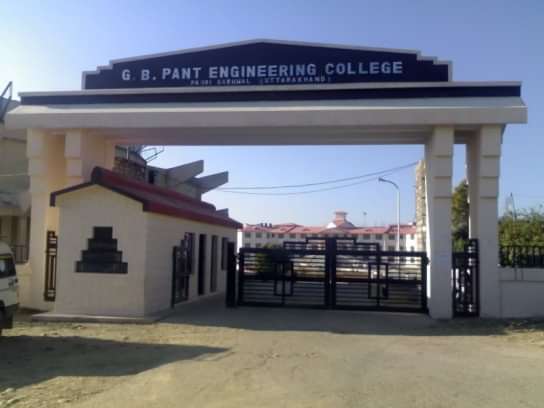
G. B. Pant Institute of Technology
About
OfficialG. B. Pant Institute of Technology is a other institution in New Delhi, established in 1961. G.B. Pant Institute of Technology (formerly Govt. Engineering College, Delhi) is one of Delhi's premier government engineering institutions, established in 1963 as Govt. Engineering College and later renamed after Dr. Govind Ballabh Pant, former Chief Minister of Uttar Pradesh. Situated in the densely populated but education-rich Kasturba Nagar area of South Delhi, GBPIT represents the evolution of Indian engineering education during the post-independence era. The institute transitioned to an engineering college model and eventually became affiliated with Delhi Technological University (formerly DCE) in 2009, marking a significant shift in governance and academic structure. GBPIT is recognized as a Degree Awarding Institution by the UGC and maintains autonomous status in certain academic matters. The campus, though compact at 12.5 acres, is purposefully designed with adequate infrastructure for engineering education. The institution offers undergraduate and postgraduate programs in core engineering disciplines including Computer Science & Engineering, Mechanical Engineering, Electrical Engineering, Electronics & Communication Engineering, Civil Engineering, and Information Technology. Each program is structured with a strong emphasis on both theoretical foundations and practical applications. The institute has developed specialization tracks in emerging areas such as machine learning, renewable energy, IoT, and structural health monitoring. GBPIT's academic calendar follows the semester system with continuous internal assessment and end-semester examinations. The curriculum is regularly updated to align with industry requirements and NBA (National Board of Accreditation) standards. Faculty members across disciplines hold BTech, MTech, and PhD qualifications, with approximately 65% having doctoral degrees. The institute encourages research and has established research centers in areas including Structural Engineering, Power Systems, and Nanotechnology. Industry partnerships exist with companies like TCS, Infosys, HCL, and Wipro for curriculum development and student mentoring. The teaching pedagogy increasingly incorporates case-based learning, project-based assignments, and industry-relevant capstone projects. Most programs integrate internship requirements, typically requiring students to complete 8-12 weeks of industrial training before graduation. The placement cell is actively engaged with recruiting organizations, though placement records vary significantly across branches. Computer Science and IT branches consistently achieve 95%+ placement rates with median packages between 7-9 LPA, while core engineering branches (Civil, Mechanical) experience 70-80% placement rates with median packages between 4-6 LPA. The institute maintains an active alumni network of over 12,000 professionals across India and abroad, with notable alumni in software development, infrastructure, manufacturing, and research sectors. Campus life at GBPIT is vibrant despite spatial constraints. The institution hosts a central annual festival called 'Geeks Garage' which showcases technical innovations and cultural performances. Students can participate in over 30 clubs and societies covering technical domains (coding, robotics, embedded systems), sports (cricket, football, badminton), cultural activities (dance, music, theater), and entrepreneurship (startup incubation, business case competitions). The hostel accommodates approximately 40% of the student body, with separate facilities for male and female students. Mess facilities operate on a monthly subscription basis with vegetarian and non-vegetarian options. Internet connectivity across campus is provided through an institutional Wi-Fi network with average speeds of 15-20 Mbps. The library houses approximately 25,000 books and provides access to digital journals through UGC-INFONET. A modern sports complex includes a badminton court, basketball court, and outdoor cricket pitch. A health center staffed with a full-time doctor and nurse addresses student medical needs. The campus has a bank ATM, cafeteria, and provision for student grievance redressal. GBPIT's location in South Delhi, near metro stations and within 15 km of Delhi's business centers, makes it accessible for internships and placement drives. However, the institute faces infrastructural constraints common to older government colleges: limited space for expansion, aging facilities in some departments, inadequate parking for students' personal vehicles, and occasional water scarcity issues. The institute is pursuing infrastructure upgrades through government allocations and industry collaborations. The academic environment is generally rigorous, with a focus on fundamental engineering concepts and problem-solving. Many faculty members are involved in research projects funded by AICTE, DST, and CSIR, providing opportunities for interested students to participate in research work. However, the balance between teaching load and research focus varies across departments. Student support services include an academic counseling cell, career guidance office, and mentoring programs pairing senior and junior students. Admission to GBPIT is highly competitive, primarily through JEE Main rankings with separate cutoffs for general, OBC, SC, ST, and EWS categories. Postgraduate programs (MTech) admit students through GATE examinations. The institute has implemented measures to address gender balance, with increasing female enrollment over the past decade, currently representing approximately 25-30% of the undergraduate cohort. GBPIT is particularly suitable for students seeking: solid engineering fundamentals in a rigorous academic environment, placement opportunities in IT and software sectors (for CSE/IT branches), exposure to research and development within limited resources, an experience of government engineering college culture in India's capital, and networking with the alumni ecosystem. The institute is less ideal for students prioritizing: ultra-modern infrastructure and facilities, guaranteed placement across all branches, specialized programs in emerging technologies (though some emerging areas are being introduced), or an expansive campus experience. The institution represents a transitional phase in Indian engineering education—maintaining the discipline and fundamental focus of traditional government engineering colleges while gradually incorporating modern pedagogical approaches and industry partnerships. Success at GBPIT largely depends on student initiative, self-directed learning, and proactive engagement with mentors and placement opportunities.