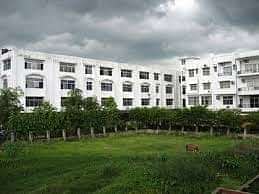
Future Institute of Engineering & Management
About
OfficialFuture Institute of Engineering & Management is a other institution in Kolkata, established in 2001. Future Institute of Engineering & Management (FIEM) was established in 2002 in Kolaghat, Medinipur, West Bengal, approximately 90 km from Kolkata. The institute operates as a private engineering college affiliated with Maulana Abul Kalam Azad University of Technology (MAKAUT), formerly WBUT. FIEM emerged during the period when India was experiencing rapid expansion of engineering education, and it positioned itself to cater to students from eastern India seeking quality technical education outside the IIT/NIT framework. The founding vision was to create an institute that combines theoretical rigor with practical industry exposure, bridging the gap between academic learning and professional practice. Over two decades, FIEM has developed a moderate reputation in West Bengal's engineering education landscape, particularly strong in certain branches like Information Technology and Electronics. The institute has progressively built infrastructure and faculty expertise, though it remains a regional player rather than a nationally recognized institution. FIEM's undergraduate engineering programs span 6 disciplines with annual intakes ranging from 60-120 students per branch, resulting in a total undergraduate population of approximately 2,000 students. The postgraduate division offers Master's programs in Engineering and Management with combined intakes of around 400 students. The campus is situated in Kolaghat, a semi-rural area in the Medinipur district, which provides a relatively quiet academic environment but limits immediate access to metropolitan resources. The decision to establish FIEM away from major urban centers was deliberate—to create a focused academic atmosphere while keeping operational costs manageable. However, this location presents significant challenges for student life, as Kolaghat lacks the vibrant student ecosystem, entertainment options, and job market access that major cities offer. Transportation to Kolkata takes 2-3 hours via car or bus, making regular commuting impractical for students. The institute's academic programs are structured around 4-year BTech degrees, 2-year MTech programs, and 2-year MBA programs. Faculty strength has grown to approximately 180 members, with varying credentials—most hold Master's degrees and several have PhDs, though the percentage of PhD-qualified faculty remains below 35%, which is relatively low compared to central universities or top private institutions. Research output remains modest, with limited publication records in high-impact journals. The institute has attempted to foster an entrepreneurial culture through innovation labs and incubation centers, though these remain underdeveloped compared to premier institutions. Placement records show improvement over recent years, with approximately 75-80% of students securing jobs, driven largely by IT companies and BPO sectors hiring from the Kolkata region. Engineering graduates from core disciplines (Mechanical, Civil) face moderate challenges securing placements in their specializations. Management graduates from the MBA program show better placement statistics, with recruiters primarily from finance, consulting, and retail sectors. Starting salaries for engineering graduates typically range from 3-5 lakhs annually, with IT roles commanding the higher end. The institute has established connections with various organizations for internships and placements, though the recruiter base remains concentrated in mid-tier IT and non-IT companies rather than multinational corporations or prestigious firms. Academic rigor is maintained through regular internal assessments, practical laboratory work, and project-based learning. Most programs include internship requirements, typically 8-12 weeks during final year, though the quality and relevance of internship placements vary significantly by branch. The institute emphasizes continuous evaluation rather than end-semester examinations, which provides better feedback mechanisms but sometimes compromises on summative assessment depth. Industry interfaces are developing gradually, with guest lectures from professionals and industry visits forming part of the curriculum. However, sustained industry collaboration for curriculum development remains limited. Campus facilities have expanded over the years but lag behind well-established private institutions. The library holds approximately 45,000 books with digital access to selected journals, though coverage is significantly less comprehensive than tier-1 institutions. Computer labs are well-equipped with modern systems and internet connectivity has been upgraded to broadband across campus, though speed and reliability during peak hours remain concerns. Laboratory facilities for engineering disciplines are functional but equipment tends to be 2-3 years behind cutting-edge standards. The institute has recently invested in upgrading mechanical, electrical, and electronics laboratories. FIEM operates student accommodation on-campus, though the hostel infrastructure was built in phases and shows varying quality across buildings. New hostels have better amenities, while older blocks require renovation. Off-campus accommodation is limited due to the rural location; most students either stay in hostels or commute from nearby towns like Haldia or Medinipur city. The student-to-hostel ratio is favorable, with available capacity for most first-year students and space for select final-year students seeking accommodation. Campus life at FIEM reflects both advantages and limitations of its location. The focused academic environment reduces distractions, and the student community tends to be tightly-knit. However, limited entertainment options and social activities create a somewhat dull campus atmosphere compared to urban-based institutions. Student organizations exist in technical and cultural domains—there is a robotics club, coding clubs, cultural groups, and sports teams—but their activities and reach remain modest. Annual technical and cultural fests occur but with limited external participation due to the remote location. Sports facilities include a cricket field, volleyball and badminton courts, and a small gymnasium, though facilities for niche sports are absent. The institute takes academic integrity seriously, with a formal code of conduct and regular proctored examinations. Ragging is officially prohibited with strict penalties, and no major ragging incidents have been reported in recent years. The institute maintains a reasonable gender ratio in most engineering branches (typically 25-35% women), though certain disciplines like Mechanical Engineering remain male-dominated. Safety measures for women students include a dedicated women's hostel, campus security patrols, and an anti-sexual harassment cell, though the effectiveness of these measures in a semi-rural environment requires ongoing vigilance. Internet connectivity on campus covers hostels and academic buildings adequately, though speeds of 10-20 Mbps can become congested during peak usage hours. Social environment is generally constructive, with peer groups oriented toward academics and placements. Mental health support is available through counseling cells, though awareness and accessibility could be improved. Notable alumni include software engineers working in MNCs, entrepreneurs who have founded startups, banking professionals, and civil engineers in infrastructure projects. However, FIEM has not yet produced widely recognized leaders in academia, research, or industry at national levels, which limits its prestige and alumni networks compared to premier institutions. The institute functions under the regulatory oversight of the All India Council for Technical Education (AICTE) and maintains affiliation with MAKAUT. Regular accreditation reviews and quality assurance mechanisms are in place, though most programs do not hold specialized NBA accreditation in their specific disciplines. The financial sustainability model depends on student fees, with annual revenue utilization directed toward faculty development, infrastructure upgrades, and academic initiatives. The institute's competitive advantage lies in its moderate fees compared to major private institutions in India, developing infrastructure, and an increasingly industry-aware curriculum. Weaknesses include geographic isolation limiting student-life quality, modest faculty research output, moderate placement records compared to central universities, and limited alumni networks. FIEM is best suited for students seeking engineering or management education who prioritize affordability and growing institutional reputation over established prestige. Ideal candidates are those comfortable in semi-rural environments, motivated by academic goals rather than campus social life, and targeting IT or management career paths. Students aspiring for pure research or seeking elite corporate placements immediately after graduation should consider institutions with stronger national recognition. Prospective students should visit the campus, speak with current students, and carefully evaluate whether the location and resources meet their expectations before enrolling.