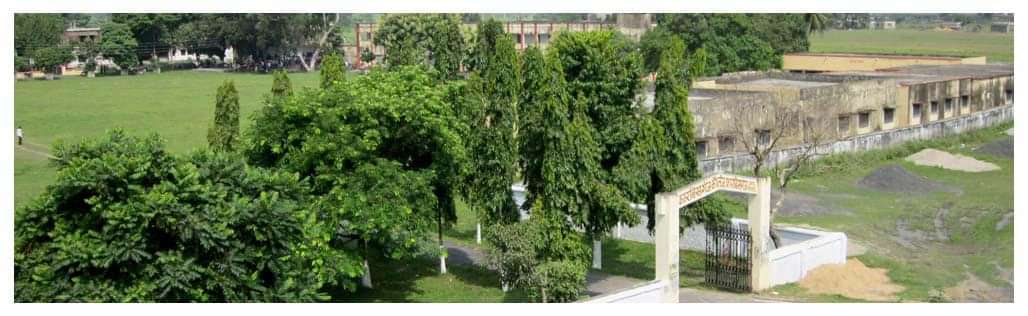
Forbesganj College
About
OfficialForbesganj College is a other institution in Araria, established in 1959. Forbesganj College, established in 1948, is one of the oldest and most reputable colleges in Araria District, Bihar. Named after the historical Forbesganj town, the college has served as a beacon of higher education for the predominantly agrarian and underserved regions of North Bihar for over seven decades. The institution was founded during India's independence struggle era and has maintained its commitment to accessible, quality education despite infrastructural and resource constraints typical of rural Bihar colleges. The college operates under the affiliation of Jai Prakash University, Chapra, and offers a diverse range of undergraduate and postgraduate programs spanning Science, Commerce, Arts, and emerging technical disciplines. The academic structure reflects both traditional liberal arts education and contemporary vocational training needs, catering to students from economically diverse backgrounds, predominantly first-generation learners from agricultural communities. Academic strengths lie primarily in pure sciences (Physics, Chemistry, Botany, Zoology), where dedicated faculty and modest but functional laboratories support foundational learning. Commerce programs attract significant enrollment with emphasis on accountancy and business studies. The Arts stream maintains strong humanities presence with history, geography, and political science drawing engaged student cohorts. Recently, the college has introduced computer science diploma and certificate programs to bridge the digital skills gap in the region. Research capacity remains limited compared to urban institutions, with faculty research primarily confined to classroom-based projects and minor funded studies through state-level grants. However, several faculty members hold PhD qualifications and actively mentor student research in agriculture-related sciences, aligning with the region's economic base. The college has signed memoranda with nearby agricultural colleges for collaborative research initiatives. Campus life reflects the rural setting—while less cosmopolitan than metropolitan colleges, it fosters tight-knit communities and strong local connections. Students come primarily from surrounding districts (Araria, Madhubani, Purnea, Saharsa) with many commuting daily or living in modest hostels and private accommodations within Forbesganj town. The college organizes annual cultural festivals, sports days, and academic seminars that engage the broader community. Placement outcomes are modest but improving. Around 35-40% of graduates secure employment within 6-12 months of passing, primarily in teaching, clerical roles in government sectors, and small-scale private enterprises. Many graduates pursue further education—civil service examinations, teacher training, and distance-based master's programs. The college maintains an active placement cell but faces structural limitations due to the region's limited industrial base and corporate presence. Notable alumni include civil administrators, educators, and prominent figures in local governance who have contributed to education and public service in Bihar. The college takes pride in its role as a social mobility channel for rural youth, with many graduates becoming school teachers, college lecturers, and government officials in their regions. Unique aspects include its deeply rooted presence in an underserved region, commitment to affordability, and practical focus on preparing students for civil service and teaching careers—pathways most accessible to rural graduates. The college's contribution to agricultural education through interdisciplinary programs and its informal network with farming communities distinguishes it from purely urban-focused institutions. The college is ideally suited for students from rural and semi-urban backgrounds seeking quality foundational education at minimal cost, those with strong local connections to North Bihar, and candidates aspiring toward teaching or civil service careers. It is less appropriate for students seeking advanced research opportunities, corporate recruitment pipelines, or urban lifestyle amenities. Infrastructure limitations and internet connectivity issues are real constraints compared to metro colleges, requiring realistic expectations from prospective students.