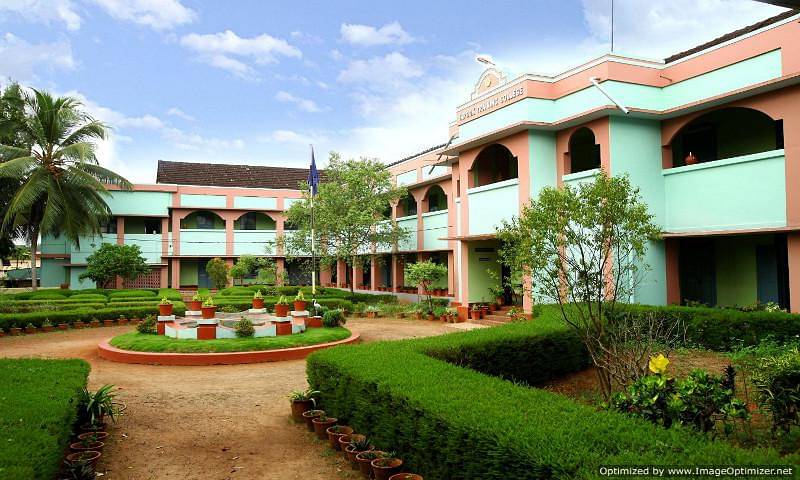
Farook Training College
About
OfficialFarook Training College is a other institution in Calicut, established in 2005. Farook Training College, established in 1962, is one of Kerala's pioneering teacher training institutions located in Calicut (Kozhikode), a city renowned for its educational heritage and progressive academic culture. The college was founded with the vision of producing quality teacher educators who could transform the educational landscape of Kerala and beyond. Over six decades, it has earned recognition as a center of excellence in teacher education, consistently producing educators who have made significant contributions to schools and colleges across India and internationally. The institution operates under the umbrella of educational excellence that Calicut has historically maintained, positioned strategically between the Arabian Sea and the Western Ghats, creating a unique environment conducive to holistic development. Farook Training College primarily focuses on Bachelor of Education (B.Ed) and Master of Education (M.Ed) programs, making it a specialized institution for aspiring educators rather than a multi-disciplinary university. This specialization is its core strength—the college does not dilute its focus across multiple disciplines but instead concentrates deeply on pedagogical excellence, educational research, and teacher training methodologies. The B.Ed program (2-year integrated course) is the flagship offering, accepted by the National Council for Teacher Education (NCTE) and recognized by Kerala University. The curriculum balances theoretical knowledge of educational philosophy, psychology, and curriculum design with practical classroom management techniques and microteaching experiences. Students engage in extensive school internships during their final semester, working under experienced mentor teachers in partner schools across Kozhikode district. The M.Ed program attracts working professionals and research-oriented graduates seeking specialization in educational leadership, curriculum development, or special education. The college has increasingly focused on research in educational technology, inclusive education, and pedagogical innovations suited to India's diverse classroom contexts. Research output has grown substantially in recent years, with faculty publishing in national journals and presenting at educational conferences. The institution has partnerships with schools in Calicut, Kannur, and Malappuram districts, providing internship placements and collaborative research opportunities. The college maintains connections with Delhi University's Institute of Teacher Education and other premier teacher training institutions, facilitating knowledge exchange and faculty development programs. Campus life at Farook Training College reflects the Kerala student culture—academically intense but also socially conscious. Students engage actively in seminars, educational conferences, and curriculum development workshops. The annual Education Fair brings together student teachers, school administrators, and educational technology vendors, providing networking opportunities. Cultural programs are limited compared to engineering or arts colleges, but the college does host an annual college fest featuring educational innovations, teaching demonstrations, and cultural performances. Sports facilities exist but are modest; emphasis remains on academics and professional development. The hostel infrastructure is functional but basic, typical of teacher training colleges in Kerala. Mess food is vegetarian-dominant with occasional non-vegetarian options, reflecting the socially conscious student body. Internet connectivity across campus is adequate though not exceptional—students primarily use data plans for online learning resources. The college library holds approximately 15,000 books focused on education, psychology, and social sciences, with digital access to educational journals through institutional subscriptions. The placement scenario for Farook Training College differs fundamentally from engineering or management colleges—graduates do not pursue traditional corporate placements but instead secure teaching positions in schools, coaching institutes, or pursue further research. Around 85-90% of B.Ed graduates secure teaching positions within 6 months of graduation, either in government or private schools. Salary structures for teachers in Kerala schools range from 25,000-35,000 INR monthly for fresh graduates, with significant increases after 5-10 years of service and permanent government appointment. M.Ed graduates typically pursue roles in educational administration, curriculum development, or doctoral research. The college does not publish conventional placement statistics as it measures success through teaching careers rather than corporate salaries. Notable alumni include Dr. A.P. Joseph, who served as Director of the State Institute of Educational Research and Training (SIERT) Kerala, and Dr. Neelakanta Pillai, who developed innovative teacher training models adopted across South Indian schools. These alumni represent the college's core mission—producing educational leaders and reformers rather than corporate professionals. The college's unique positioning makes it ideal for students genuinely passionate about teaching and educational development, not for those viewing teaching as a fallback option. Admission is merit-based through the Teacher Aptitude Test (TAT) conducted by Kerala University, assessing subject knowledge, teaching aptitude, and general awareness. The competitive environment is less intense than IITs or top management colleges but still selective—merit rank is crucial. The college is NOT suitable for students primarily motivated by high salaries or corporate career trajectories; it attracts idealistic, socially-minded students interested in educational transformation. The institution prides itself on ethical teaching practices and includes components on inclusive education, education of marginalized communities, and critical pedagogy. Women comprise approximately 65% of the student body, reflecting teaching's gender demographics in India. The college has implemented strong anti-ragging policies and maintains a supportive environment for women students. The surrounding Calicut area provides a reasonable living environment for students—the city has established educational institutions, established residential areas with affordable PGs, and reasonable food costs. However, Calicut lacks the cosmopolitan entertainment infrastructure of metropolitan cities; students seeking vibrant nightlife or shopping malls will find fewer options. The climate is tropical with heavy monsoon rainfall from June-September, requiring adjustment for students from drier regions. In summary, Farook Training College represents a specialized, mission-driven institution for students committed to teaching careers, educational research, or working in the nonprofit educational sector—not a stepping stone to other professions.