Falakata College
About
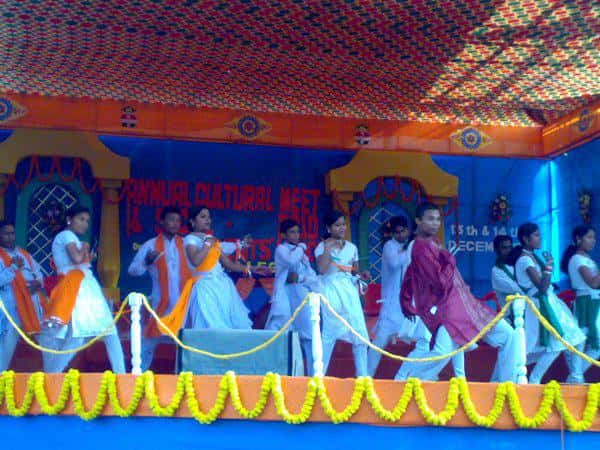
OfficialFalakata College is a other institution in Alipore Rto, established in 1981. Falakata College is a government-aided institution located in the Alipuri area of Falakata, in the Darjeeling district of West Bengal. Established in 1986, the college has served as a critical educational hub for students from the foothills of the Himalayas and surrounding hilly terrains for nearly four decades. Originally founded to address the acute shortage of higher education facilities in the remote and underdeveloped regions of North Bengal, the institution has evolved into a modest but functional multi-disciplinary college offering undergraduate and postgraduate programs across Sciences, Arts, and Commerce. The college operates under the affiliation of the University of North Bengal and follows the academic curriculum prescribed by the university. The institution caters primarily to first-generation learners and students from economically weaker backgrounds, making it an important social mobility gateway for the hill district population. Falakata College is housed on a sprawling semi-rural campus characterized by open green spaces, natural surroundings, and relatively affordable operations, which translates to low fees for students. The college building architecture is functional rather than modern, with classrooms, laboratories, and administrative blocks spread across the campus. The campus enjoys good connectivity to the main town of Falakata and has reasonable proximity to larger urban centers like Siliguri (approximately 75 km away). Academically, the college offers undergraduate honors and general programs in subjects like English, Bengali, History, Political Science, Economics, Philosophy, Physics, Chemistry, Biology, Botany, Zoology, and Mathematics, along with B.Com and B.A. general streams. At the postgraduate level, the college offers Master's degrees in English, Bengali, History, and Physics. The faculty comprises mostly PhD-qualified educators with teaching experience ranging from 5-25 years, though many hail from state universities rather than premier national institutions. Research output from the college is modest, with occasional faculty publications in regional and national journals, primarily in humanities and basic sciences. The library holds a collection of approximately 28,000 books with limited access to digital resources due to budgetary constraints. Laboratory facilities for science programs are functional but not state-of-the-art, with equipment from the 2000s and early 2010s. The college operates a modest placement cell that conducts annual recruitment drives, though placement rates are significantly lower than metro-based or well-established private institutions, reflecting the rural location and industrial gaps in the region. Campus life is subdued compared to urban colleges, with limited co-curricular activities, fewer student clubs, and infrequent annual events. Sports facilities are basic, with a small ground for cricket and football, badminton courts, and a basic gymnasium. The hostel accommodates approximately 180 students in two separate buildings (men and women), providing affordable accommodation at approximately 3,500-4,500 INR per month including mess facilities. Internet connectivity is limited to partial campus coverage with slow speeds (4-6 Mbps), creating challenges for digital learning and online research. Student strength has remained relatively stable around 1,800-1,900 students, with 60% attending colleges from the local district and surrounding regions. Social cohesion is strong due to geographic and cultural homogeneity, with minimal ragging and a family-like atmosphere. The college has produced several bureaucrats, teachers, social workers, and local administrators who serve in government positions, though it has not yet generated nationally or internationally recognized alumni in corporate or academic spheres. The institution is best suited for students from economically disadvantaged backgrounds seeking affordable higher education in a secure, close-knit community environment, first-generation learners who value personal mentorship, and those planning to pursue careers in teaching, civil services, or local administrative roles. It is NOT recommended for students seeking world-class research facilities, extensive placement opportunities in multinational corporations, or a vibrant cosmopolitan campus experience. The college's strength lies in its accessibility, affordability, and focus on holistic personality development rather than purely career-driven outcomes.