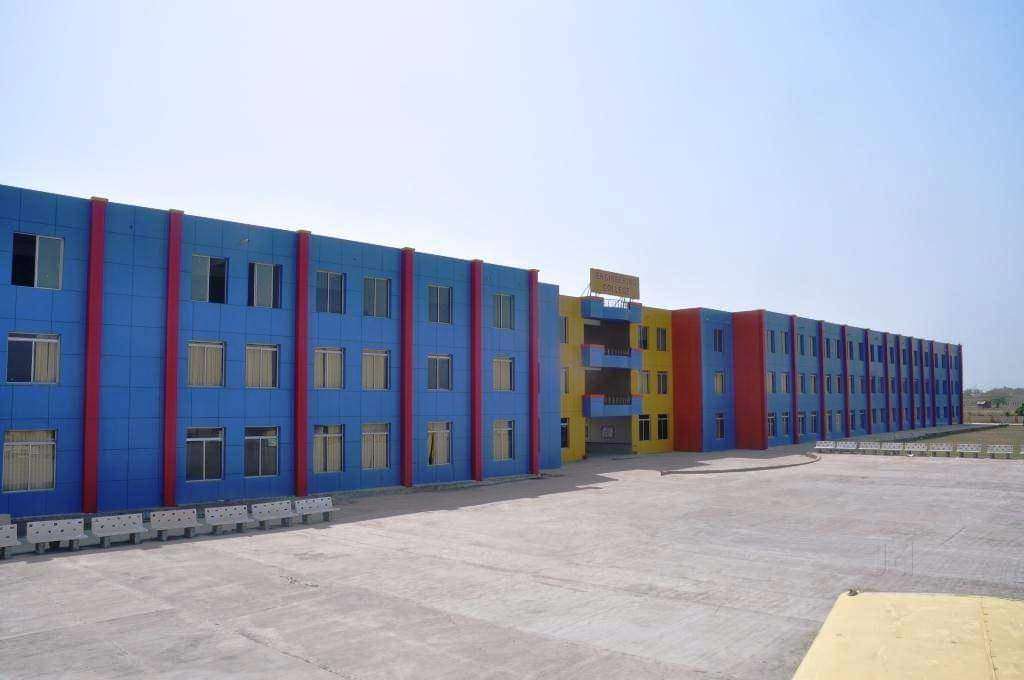
ENGINEERING COLLEGE, TUWA
About
OfficialENGINEERING COLLEGE, TUWA is a other institution in Panchmahal, established in 2009. Engineering College, Tuwa (ECT) was established in 2003 as a government-aided institution in the Panchmahal district of Gujarat, serving as a critical engineering education hub for rural and semi-urban Gujarat. Located approximately 45 km from Vadodara city, the college was founded with the vision of bridging the skill gap in central Gujarat and providing quality engineering education to students from economically weaker sections and rural backgrounds. The institution is affiliated with Maharaja Sayajirao University of Baroda (MSU) and is recognized by the All India Council for Technical Education (AICTE). With an intake of approximately 1,850 undergraduate and 200 postgraduate students across 10 engineering disciplines, ECT has grown into a moderate-sized engineering college with reasonable infrastructure and an emerging reputation for practical engineering education. The college operates 8 undergraduate branches: Civil Engineering, Mechanical Engineering, Electrical Engineering, Electronics & Communication Engineering, Computer Science & Engineering, Information Technology, Agricultural Engineering, and Chemical Engineering, along with 4 postgraduate programs. The institution prides itself on being accessible to economically disadvantaged students—approximately 45% of the student body qualifies for scholarships or fee waivers under various government schemes. ECT's placement record has improved markedly over the past 5 years, with 2023-24 seeing 74% overall placement. However, placement quality varies significantly across branches: CS/IT averages 8.2 LPA while Civil averages 4.5 LPA. The college maintains partnerships with companies like TCS, Infosys, Wipro, Mahindra & Mahindra, Larsen & Toubro, and various state PSUs. Research infrastructure is limited but growing—the college has established 6 research centers focused on renewable energy, water resource management, and agricultural mechanization, reflecting the region's development needs. Academic programs emphasize practical learning through industry collaborations, live projects, and internship mandates. Faculty strength stands at 125, with approximately 35% holding PhDs; however, faculty turnover is a persistent challenge due to salary competitiveness compared to urban institutions. The campus spans 28 acres with basic but functional infrastructure: library with 45,000+ volumes, 45 classroom blocks, 8 well-equipped laboratories per branch, computer center with 800+ systems, sports complex, and a 500-seater auditorium. The college maintains strict academics with CGPA-based promotions and mandatory 75% attendance. Student life is characterized by a mix of technical clubs (IEEE, SAE, Coding Club) and cultural societies, with annual fests like 'TechnoFest' and 'Culturefest' drawing participation from neighboring institutions. The hostel facility accommodates approximately 60% of students; hostels are gender-segregated with basic amenities including attached bathrooms, WiFi, and a common mess. The mess operates both vegetarian and non-vegetarian options at approximately ₹3,500/month. Safety records are good with no major ragging incidents in the past 5 years, though the isolated rural location means limited nightlife and entertainment options on campus. The college has produced notable alumni in sectors including civil administration (IAS officer Rajesh Patel, batch 2008), manufacturing (plant managers at major OEMs), and public sector undertakings. A significant percentage of graduates pursue further studies—approximately 18% pursue M.Tech/MBA, with many joining NIT/IIT postgraduate programs. The institution remains a solid choice for students seeking quality engineering education in a focused, academically rigorous environment without urban distractions, particularly those from Gujarati-medium backgrounds or economically weaker sections. However, prospective students should be aware of the rural location's limitations regarding internship diversity, immediate job market access, and lifestyle amenities compared to urban engineering colleges.