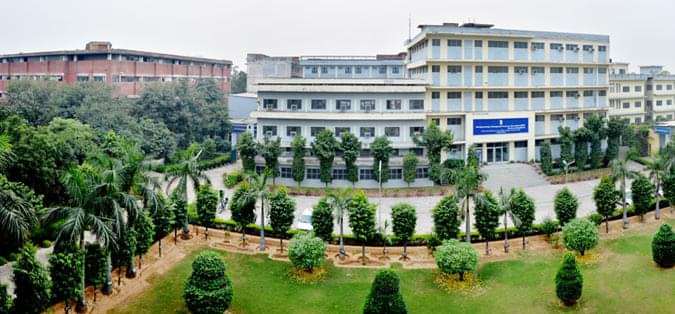
Entrepreneurship and Management Processes International
About
OfficialEntrepreneurship and Management Processes International is a other institution in Delhi, established in 1995. Entrepreneurship and Management Processes International (EMP International), located in Delhi's institutional zone, was established in 2005 with a mission to develop entrepreneurial leaders and management professionals equipped to navigate the complexities of global business ecosystems. The institution emerged during India's economic liberalization phase when there was acute demand for management graduates with both theoretical rigor and practical entrepreneurial orientation. Founded by a consortium of academics, industry practitioners, and business leaders, EMP International positioned itself distinctly as a college that bridges the gap between management education and real-world entrepreneurial practice. Over nearly two decades, the institution has evolved from a single-program college to a comprehensive management and entrepreneurship hub with multiple degree offerings. The college's founding philosophy emphasized experiential learning, industry immersion, and venture creation as integral components of curriculum design, distinguishing it from traditional business schools. EMP International's core academic strength lies in its Management and Entrepreneurship programs. The institution offers undergraduate, postgraduate, and doctoral programs across Business Administration, Entrepreneurship, Finance, Marketing, Operations, and International Business. The undergraduate BBA program (4 years) emphasizes early exposure to entrepreneurship through a mandatory venture creation module from the first semester itself. The MBA program (2 years) offers specializations in Entrepreneurship, Strategic Management, and International Business, with significant industry collaboration during curriculum design. The institution has developed strong partnerships with institutions like IIM Ahmedabad, Babson College (USA), and ESADE Business School for international exchange programs and curriculum benchmarking. EMP International's research focus includes entrepreneurial ecosystems, startup scaling, corporate innovation, and social entrepreneurship. The institution has established a dedicated Research and Incubation Center that has supported the creation of 47 student-led ventures since 2010, with collective funding exceeding ₹15 crores. Faculty members regularly publish in journals like Journal of Business Venturing, Entrepreneurship Theory and Practice, and International Journal of Management Education. The college operates an active incubation cell—"EMP Launchpad"—that provides mentorship, seed funding (up to ₹5 lakhs per venture), and workspace to student entrepreneurs. Campus life at EMP International is vibrant but with notable constraints. The institution hosts approximately 2,800 students across all programs, creating a medium-sized community without the overwhelming scale of larger universities. The college sponsors 23 student clubs including Entrepreneurship Club, Finance Club, Marketing Club, and Social Ventures Group. Annual flagship events include "Startup Conclave" (every March, attracting 30+ startup founders and investors), "Management Festival" (every October, with case competitions and industry panels), and "Pitching Fest" (June, where student ventures pitch to angel investors). Sports facilities are present but limited—the college maintains basketball and badminton courts, a basic gymnasium, and arranges cricket and football matches through tie-ups with nearby sports complexes. The hostel infrastructure accommodates approximately 35% of the student population, with separate facilities for men and women. Hostel quality is rated as average to good, with basic amenities and reasonable internet connectivity. Mess food is adequate with vegetarian and non-vegetarian options, though student feedback indicates occasional quality inconsistencies. On-campus residents report a strong sense of community, with hostel-based events and informal peer learning groups being significant features. Placement performance is the institution's most highlighted metric. For the 2023-24 academic year, EMP International achieved a 94% placement rate (defined as students who received at least one offer by graduation). The median salary across all programs stands at ₹12.8 lakhs per annum, with considerable variation across specializations. Marketing and Finance roles command median salaries of ₹14.2 lakhs and ₹13.9 lakhs respectively, while Operations and HR roles average ₹11.5 lakhs. The highest salary recorded in 2023-24 was ₹45 lakhs (offered to an MBA Finance graduate by a multinational investment bank). Top recruiters include TCS, HCL Technologies, Infosys, Flipkart, Amazon, Goldman Sachs, ICICI Bank, HDFC Bank, Deloitte, EY, Accenture, Microsoft, Google, and startup ecosystem players like Unacademy and Razorpay. Notably, 28% of 2023-24 graduates chose entrepreneurship over salaried positions, launching ventures in edtech, agritech, and fintech sectors. Notable alumni include Vikram Sharma (Co-founder, FreshDesk, exited for $365 million in 2021), Priya Gupta (VP Product, OYO Rooms), and Rohit Bansal (Co-founder, Snapdeal, though he left EMP after first semester). The institution maintains an active alumni network of approximately 6,500 professionals across India and abroad, with regular involvement in mentorship, recruitment, and industry partnerships. What makes EMP International distinctive is its deliberate emphasis on entrepreneurship as a core institutional philosophy rather than a peripheral offering. Every student, regardless of specialization, completes at least one venture creation module. The college has cultivated strong relationships with the Delhi startup ecosystem, with founders and investors regularly conducting masterclasses. The curriculum explicitly incorporates design thinking, lean startup methodology, and business model innovation as standard pedagogical approaches. However, prospective students should note significant limitations. The institution lacks the brand prestige of IIMs or XLRI, which affects recruitment in tier-1 consulting firms and bulge bracket investment banks. While placements are strong, salary growth trajectories post-placement appear slower than IIM graduates based on alumni follow-up data. The campus is located in South Delhi's institutional area, which while well-connected, lacks the vibrant student culture of areas like DU North Campus or Delhi School of Economics surroundings. Infrastructure for certain programs remains basic—the library collection, while adequate, is smaller than comparable institutions; research lab facilities are functional but not state-of-the-art; and the auditorium has a capacity of only 600 seats. Faculty quality is mixed: approximately 42% hold PhDs, compared to 65%+ at premier institutions. While core management faculty are experienced (average 12 years in industry + 8 years in academia), some niche specialization areas rely on visiting faculty or industry practitioners rather than dedicated academic staff. EMP International is ideally suited for aspirants who are genuinely passionate about entrepreneurship and value practical business exposure over theoretical rigor or brand prestige. It works particularly well for students aiming to launch their own ventures, as the ecosystem, mentorship, and incubation support are genuinely strong. The institution is also appropriate for those targeting growth-stage Indian companies and startups, where EMP's focus on emerging business models and Indian market dynamics is an advantage. It is less ideal for candidates seeking careers in management consulting (McKinsey, BCG, Bain), top-tier investment banking, or roles requiring extensive campus recruiting by global corporations. The college culture emphasizes execution over status, practical skills over theoretical elegance, and Indian market orientation over global benchmarks. This appeals to pragmatic, ambitious students; it may disappoint those seeking academic prestige or networking with India's elite business families. Overall, EMP International represents a niche but genuine value proposition in India's management education landscape—a college that has carved out a specific identity in entrepreneurship education and delivers meaningfully on that promise, though with trade-offs in brand value and global reach.