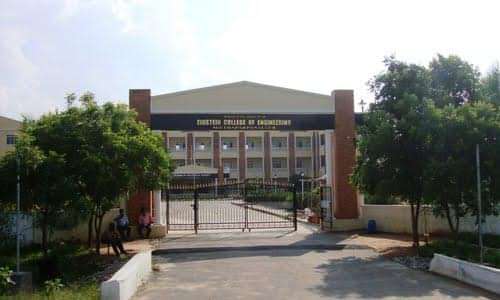
Einstein College of Engineering
About
OfficialEinstein College of Engineering is a other institution in Tirunelveli, established in 2004. Einstein College of Engineering (ECE), established in 1997, is a private engineering institution located in Nagercoil, Tirunelveli district, Tamil Nadu. Founded by the Radhakrishnan Educational Trust, the college has evolved over 27 years into a recognized center for engineering education in South Tamil Nadu, serving primarily students from the southern districts and neighboring Kerala. The college operates four undergraduate programs (Civil, Mechanical, Electrical & Electronics, and Electronics & Communication Engineering) with an annual intake of approximately 480 students across all branches. At the postgraduate level, ECE offers Master's programs in Structural Engineering, Power Electronics, and VLSI Design, attracting about 120 PG students annually. The institution also conducts doctoral research programs in collaboration with affiliated universities, though research volume remains modest compared to top-tier institutions. Academically, ECE follows the Tamil Nadu Anna University curriculum with AICTE approval for all undergraduate and postgraduate programs. The college maintains affiliations with Anna University (Chennai) and conducts examinations under its framework. While the institution emphasizes classroom-based theoretical instruction, practical exposure through laboratory work is standard across core engineering disciplines. Faculty strength stands at approximately 280 members, with roughly 35% holding doctoral degrees, primarily from Indian universities. Most faculty pursue their research within university-defined frameworks rather than through independent externally-funded projects, which limits research output compared to premier institutions. Placement outcomes have shown consistent improvement over the past five years. In 2023-24, the overall placement rate stood at 82%, with 78% of graduating students securing positions at recruitment drives conducted on campus. Average package across all branches was approximately 5.2 LPA, with highest packages reaching 14 LPA in core technology and consulting roles. Primary recruiters include IT services companies (TCS, Infosys, Wipro, Cognizant), financial services firms (ICICI Bank, HDFC Bank), and select manufacturing organizations. However, recruitment is heavily skewed toward IT/ITeS sectors, with limited opportunities in core engineering domains like heavy manufacturing or infrastructure projects. For students targeting careers in core engineering or R&D roles, on-campus recruitment offers limited options, necessitating off-campus placement efforts. Campus infrastructure spans 42 acres with adequate classroom buildings, computer labs, and general engineering laboratories. The institution has invested in wireless connectivity across campus, though network reliability can be inconsistent during peak usage hours. Library resources include approximately 35,000 books and limited digital journal access. Research and innovation facilities are modest—the college operates an incubation center and maker space, but these lack the equipment, funding, and ecosystem of larger institutions. Hostel facilities accommodate approximately 900 students in gender-segregated dormitories with basic amenities including attached bathrooms, regular housekeeping, and 24-hour security. Student life at ECE reflects a typical mid-tier engineering college culture. The college conducts an annual technical fest (Innovita) in January and a cultural fest (Parivartan) in October, drawing participation from regional colleges. Technical clubs focusing on robotics, coding, and entrepreneurship exist but operate with student enthusiasm rather than institutional resource allocation. Sports facilities include a cricket ground, basketball and volleyball courts, and a gymnasium. Inter-college sports participation is encouraged, with the college fielding teams in regional tournaments, though competitive success remains limited. The surrounding region of Nagercoil and Tirunelveli offers moderate living infrastructure. The city serves as a district headquarters with reasonable connectivity to Chennai (approximately 350 km) and Kochi (approximately 120 km). For students accustomed to metropolitan cities, Tirunelveli presents a quieter, slower-paced environment with limited entertainment and commercial options compared to tier-1 cities. This can be a significant adjustment for out-of-state students. However, the lower cost of living and reduced distractions can benefit students focused on academics and skill development. ECE is particularly well-suited for Tamil Nadu domicile students seeking affordable engineering education with decent placement outcomes, especially those targeting IT/ITeS careers through campus recruitment. The college serves as a reasonable stepping stone for students who may not have secured admission to older NITs or top-tier private institutions, offering a functional engineering education at approximately 1/5th the cost of elite private colleges. However, students seeking world-class research exposure, cutting-edge innovation facilities, international collaborations, or careers in specialized engineering domains should realistically assess that this institution's strengths lie elsewhere. The college's competitive advantages include reasonable affordability, consistent placement outcomes in IT sector roles, and a relatively safe, distraction-free campus environment in a smaller city.