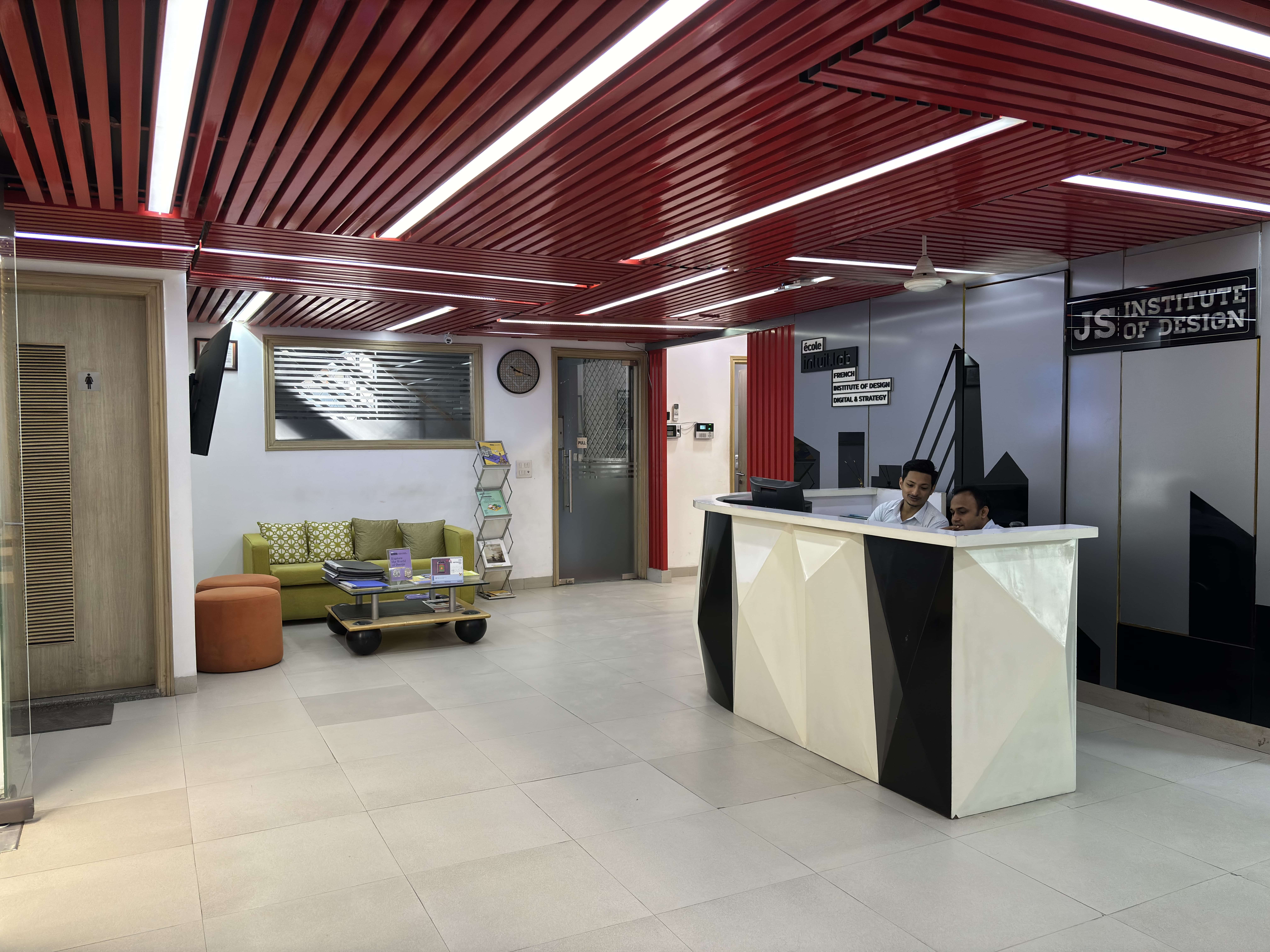
Ecole Intuit Lab Delhi
About
OfficialEcole Intuit Lab Delhi is a other institution in Delhi. Ecole Intuit Lab (EIL) is a relatively young design and innovation-focused institution established in 2012 in Delhi. Unlike traditional engineering or management colleges, EIL positions itself as a design school that bridges the gap between art, technology, and entrepreneurship. The institution is modeled on French design education principles while being contextualized for the Indian market. EIL operates from an urban campus in Delhi, making it accessible to the national capital's vibrant ecosystem but also constraining physical space for traditional sports and hostel facilities. The college gained regulatory recognition as a self-financed educational institution under the Ministry of Education, though it remains outside the mainstream IIT/NIT/IIIT ecosystem. Founded with the vision of creating 'design thinking leaders' rather than conventional engineers, EIL has deliberately carved a niche in design education, particularly in product design, interaction design, and design management. The curriculum emphasizes project-based learning, industry collaboration, and entrepreneurial mindset from day one. Students are exposed to live projects with real companies, startup incubation, and international exchange programs. The institution has developed partnerships with European design schools, allowing select students semester-abroad opportunities. Academically, EIL offers undergraduate and postgraduate programs primarily in Design disciplines, complemented by specialized diplomas. The faculty comprises a mix of industry practitioners, academicians, and design consultants, creating an environment closer to a design studio than a traditional college. Research at EIL is practice-oriented, focusing on sustainable design, social design, and digital innovation rather than fundamental research. Placements are notably strong in design-centric roles at tech companies, startups, and design consultancies globally. The institution has successfully placed graduates at companies like Uber, Google Design, Microsoft, Adobe, McKinsey, IDEO, and numerous Indian startups. However, the college explicitly does not focus on mass campus placements like IITs; instead, it emphasizes entrepreneurship and independent practice. Notable alumni include several successful design entrepreneurs and startup founders who have raised significant funding. The institution is unique in India for its design-first philosophy and European pedagogical approach, making it ideal for students passionate about design, innovation, and problem-solving rather than conventional software or core engineering roles. EIL is particularly suited for students from diverse educational backgrounds—not just pure science/mathematics—as admission considers portfolio and design aptitude alongside academics. The biggest limitation is its urban location with minimal hostel facilities, high fees compared to state-sponsored institutions, and limited brand recognition outside design and tech circles. For students seeking traditional engineering placement at tier-1 tech companies, EIL is not the optimal choice; however, for aspiring designers, UX/UI professionals, and innovation leaders, it is a pioneering option in India.