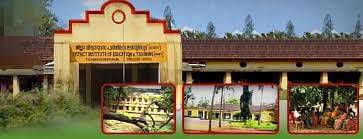
D. S. R. Hindu Law College
About
OfficialD. S. R. Hindu Law College is a other institution in Hyderabad, established in 1983. D. S. R. Hindu Law College, established in 1957, is one of Hyderabad's most respected legal education institutions, with a deep-rooted legacy spanning nearly seven decades. Founded with the vision of promoting quality legal education rooted in Indian constitutional values and modern jurisprudence, the college has consistently maintained high academic standards and professional integrity. Located in the prime Somajiguda area of central Hyderabad, the campus benefits from its urban positioning while maintaining a serene academic environment distinct from the hustle of the city center. The institution offers comprehensive undergraduate and postgraduate legal education through its Bachelor of Laws (B.L.) and Master of Laws (LL.M.) programs. The B.L. program is a 5-year integrated course available in regular and distance modes, designed to prepare students for both judicial services and private practice. The college has earned recognition for producing lawyers who have made significant marks in constitutional law, corporate law, international law, and criminal jurisprudence. The faculty comprises senior advocates, retired judges, and accomplished legal academics who bring practical courtroom experience and theoretical rigor to classroom teaching. Research and academic specialization are core strengths. The college maintains dedicated research centers focusing on constitutional law, environmental law, intellectual property rights, commercial law, and ADR (Alternative Dispute Resolution). Faculty members regularly publish in national and international law journals, and the college encourages student research through its moot court competitions, law review publications, and seminars with visiting judges and legal luminaries. The library houses over 25,000 volumes of legal texts, case reports, and reference materials, supplemented by digital access to LexisNexis, SCC Online, and AIR databases—essential resources for rigorous legal research. Placement outcomes consistently reflect the college's academic rigor. Graduates secure positions in top law firms, government organizations, judiciary preparation programs, corporate legal departments, and public interest litigation organizations. The college maintains strong ties with leading law firms like Luthra & Luthra, Nishith Desai Associates, Shardul Amarchand Mangaldas, and AZB & Partners, who recruit regularly from the campus. Government placements include positions in the Indian Police Service (IPS), Indian Revenue Service (IRS), and state administrative services. The placement cell actively facilitates internships, networking with legal professionals, and career counseling, ensuring students have clear pathways post-graduation. Campus life emphasizes both intellectual rigor and holistic development. The college hosts annual seminars featuring Supreme Court judges, senior advocates, and law commission officials. Student organizations include the Moot Court Club, Constitutional Law Society, Environmental Law Forum, and various other discipline-specific bodies. The annual college fest combines cultural events, legal debates, and panel discussions on contemporary legal issues. The debate and public speaking culture is particularly strong, with students regularly winning national moot court competitions and debate championships. Notable alumni include several sitting judges of the High Court of Hyderabad, senior advocates practicing before the Supreme Court, and accomplished corporate counsel in multinational companies. The college maintains active alumni networks that facilitate mentorship, job placements, and knowledge exchange. The alumni community, though selective in size, is highly influential in legal circles across India. What distinguishes D. S. R. Hindu Law College is its commitment to balanced legal education—combining constitutional and public law emphasis with practical training in litigation and dispute resolution. The college does not compromise on admission standards; applicants typically score in top percentiles of entrance examinations. The relatively small batch sizes (around 170 B.L. students per year) ensure personalized mentoring and close faculty-student interaction, a significant advantage over mass-scale law colleges. However, students should note that the college's focus on traditional legal practice may be less aligned with emerging tech-legal and legal process outsourcing sectors. The institution is ideal for students aspiring toward judicial services, constitutional law practice, high-end litigation, or government law positions. It appeals to students with intellectual curiosity about India's constitutional framework and those seeking mentorship from experienced practitioners. The college demands substantial self-study and engagement; passive attendance alone will not yield the promised outcomes. Students relocating to Hyderabad should be prepared for an academically demanding environment with high expectations for legal reasoning, writing, and courtroom decorum.