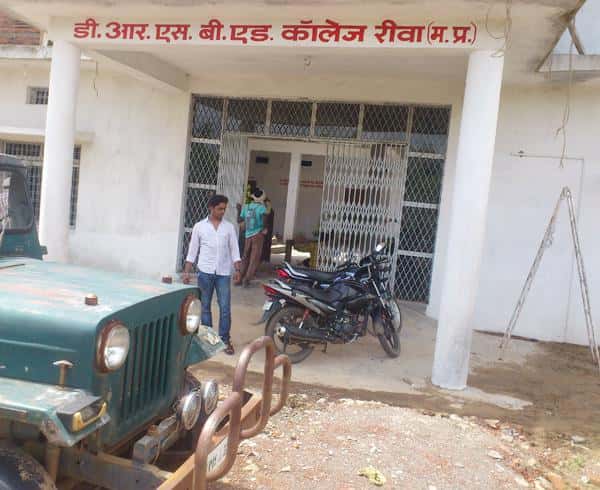
DRS B.Ed. College
About
OfficialDRS B.Ed. College is a other institution in Rewa, established in 2012. DRS B.Ed. College, established in 1994, is one of the prominent teacher education institutions in Madhya Pradesh, located in Rewa, a historical city in the state's eastern region. The college was founded with the mission to develop skilled, socially conscious educators equipped to transform the Indian education system at grassroots levels. Over three decades, it has evolved into a comprehensive teacher training center recognized by the National Council for Teacher Education (NCTE) and affiliated with Devi Ahilya Vishwavidyalaya, Indore. The institution operates under the DRS Educational Trust, a non-profit organization dedicated to educational excellence and community service. Academic Programs: DRS B.Ed. College offers a 4-year integrated B.Ed. (Bachelor of Education) program designed for post-secondary students aspiring to become teachers across various subject disciplines. The curriculum integrates theoretical foundations of pedagogy, psychology, and educational philosophy with extensive field experience and practice teaching. Subject specializations include English, Hindi, Mathematics, Science (Physics, Chemistry, Biology), and Social Studies. The college has recently introduced specialized add-on courses in Digital Literacy for Teaching, Environmental Education, and Gender Sensitivity in Classrooms. Additionally, the institution offers M.Ed. (Master of Education) programs in Educational Administration, Curriculum Development, and Educational Psychology for experienced teachers seeking advanced qualifications. Academic Strengths: The college emphasizes experiential learning through micro-teaching, simulated teaching, and real classroom practice across affiliated schools in Rewa and surrounding districts. Faculty members are trained in contemporary pedagogical methods including Constructivism, Competency-Based Teaching, and Inclusive Education. The institution maintains partnerships with government and private schools in the region, providing students practical exposure to diverse teaching environments. Research activities focus on Teacher Education Reform, Student Learning Outcomes, and Educational Equity in rural schools. The college library houses approximately 12,000 volumes covering educational psychology, subject methodology, and curriculum studies, supplemented by digital access to national teacher education journals. Campus Infrastructure: The 8.5-acre campus includes a modern academic complex with specialized laboratories for Science education, a well-equipped Language Lab for English and Hindi teaching methodology, a Micro Teaching Unit with recording facilities, and a Psychology Lab. The college maintains a Learning Resource Center with educational technology tools including interactive whiteboards, projectors, and educational software. Separate hostel facilities for male and female students provide structured residential environments with recreational spaces. The campus includes a modest gymnasium, sports grounds for volleyball and badminton, and an auditorium with capacity for 400 people used for seminars, workshops, and cultural programs. Placement and Career Development: While teacher education focuses on school placements rather than corporate recruitment, DRS B.Ed. graduates secure teaching positions in government and private schools across Madhya Pradesh and neighboring states. The college's Placement Cell coordinates with state education departments facilitating eligibility for teaching recruitment exams. Approximately 78-82% of graduates secure teaching positions within 12-18 months of graduation, with additional graduates pursuing further studies or alternative careers in educational administration, curriculum development, and educational technology. Notable career paths include positions in state education departments, district education offices, and international NGOs focused on educational development. Campus Life and Student Culture: The college fosters a vibrant academic culture centered on professional development. Student activities include the Education Club (focusing on pedagogical innovations), Subject-Specific Teacher Forums, an English Literary Society, a Science Educators' Club, and a Social Awareness Club engaged in community education programs. Annual events include Teacher's Day celebrations, an inter-college educational symposium, and a research paper presentation competition. Sports activities emphasize wellness with regular tournaments in volleyball, badminton, cricket, and athletics. Cultural programs include teacher talent shows and academic seminars featuring visiting educators from universities. The student body comprises predominantly rural and semi-urban backgrounds, creating a socially conscious learning environment focused on inclusive education principles. Notable Achievements: The college has been recognized by the state government for excellence in teacher preparation and has received grants for curriculum innovation projects. Alumni hold positions as Master Trainers in state teacher training programs, education consultants with international development organizations, and principals of reputed schools across India. The institution has published research papers on effective teaching practices in Indian classrooms and has collaborated with universities on studies regarding teacher preparation quality. Who Should Apply: DRS B.Ed. College is ideal for candidates genuinely passionate about teaching and committed to social development through education. It suits students from middle-class backgrounds seeking affordable quality teacher education, those interested in working with rural and disadvantaged communities, and individuals seeking a structured, values-based educational environment. The college particularly appeals to graduates seeking secure teaching careers in government schools and those interested in educational research and policy work. It is less suitable for candidates seeking high-salary corporate placements or those primarily motivated by prestige rather than genuine teaching vocation. Challenges and Honest Assessment: The college's location in a tier-3 city limits exposure to metropolitan educational innovations and reduces access to contemporary urban teaching methodologies. Job placements depend heavily on government recruitment cycles, which can be unpredictable. The college's reputation, while solid regionally, carries limited national recognition outside teacher education circles. Infrastructure, though adequate, is modest compared to premier teacher education institutions in metro cities. Limited research opportunities restrict students interested in advanced educational research. The campus life, while wholesome, is relatively subdued compared to larger metropolitan institutions. Faculty expertise varies, with some faculty members requiring continued professional development in emerging pedagogical areas.