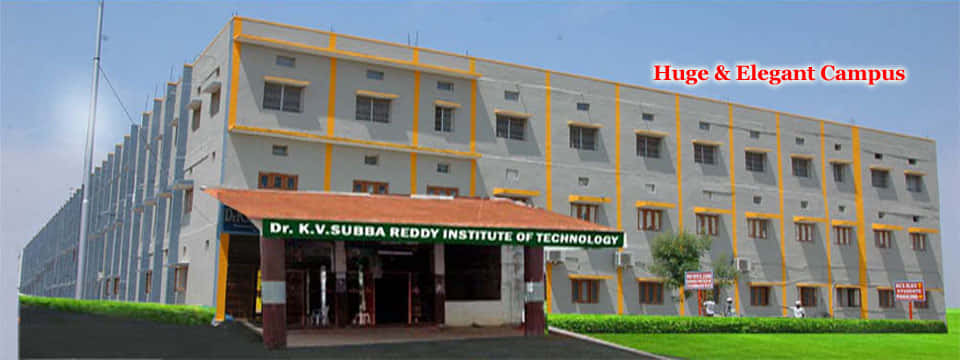
Dr. K.V. Subba Reddy Institute of Technology
About
OfficialDr. K.V. Subba Reddy Institute of Technology is a other institution in Kurnool, established in 2008. Dr. K.V. Subba Reddy Institute of Technology (KVSR IT) is a private engineering college located in Kurnool, Andhra Pradesh, established in 2007. Founded by the K.V. Subba Reddy Educational Trust, the institution emerged during India's engineering education expansion phase and has positioned itself as a regional engineering hub in the Rayalaseema region. The college operates under AICTE approval and is affiliated with Jawaharlal Nehru Technological University (JNTU), Anantapur, which governs its academic curriculum and evaluation processes. The campus is situated on the outskirts of Kurnool city, approximately 8 kilometers from the city center, in a suburban setting with moderate industrial activity nearby. The 45-acre campus was designed with a focus on accessibility and infrastructure development, though expansion has been gradual over the institution's 17-year history. The college primarily serves students from Andhra Pradesh and neighboring states, with a significant portion being first-generation engineering students from middle-class families seeking affordable engineering education. Academic programs span core engineering disciplines: Civil Engineering, Mechanical Engineering, Electrical & Electronics Engineering, Electronics & Communication Engineering, and Computer Science & Engineering at the undergraduate level. The college also offers postgraduate programs in a few specialized fields and has recently introduced diploma programs to diversify its student intake. The undergraduate intake is approximately 450 students across all branches, distributed through the merit-based admission process linked to AP EAMCET (Andhra Pradesh Engineering Agriculture and Medical Common Entrance Test) and JNTU's counseling system. The faculty strength is approximately 180 members, with subject specialization across engineering disciplines. The college reports that approximately 35-40% of faculty hold PhD qualifications, though this figure is lower than premier institutions. Faculty research output remains modest, with limited publication record in high-impact international journals. The institution has signed MoUs with a few technical organizations for student training and placement enhancement, but industry-academia collaboration is not as robust as tier-1 engineering colleges. Placement outcomes, a critical metric for engineering colleges, show variable performance across branches. For the 2023-24 academic year, overall placement rates ranged from 65-75% across branches, with Computer Science & Engineering achieving the highest placement percentage (around 80%) and Civil Engineering the lowest (around 60%). Median salary offers hover around INR 3.5-4.2 lakhs per annum, with highest packages reaching INR 12-15 lakhs primarily in IT sector placements. The college's placement cell operates actively and maintains relationships with approximately 80-100 regular recruiters, predominantly mid-tier IT companies, financial services firms, and some manufacturing organizations. Notably, campus placements are concentrated in entry-level software development, IT support, and business process outsourcing roles rather than specialized engineering or research positions. The college campus includes basic infrastructure: a central library with approximately 35,000 books and online resources, computer labs with recent systems, classrooms with projector facilities, and separate hostels for male and female students. The engineering workshop complex houses machinery for practical training, though equipment age varies. A dedicated placement cell manages recruitment drives, training, and student coordination with companies. The college operates a health center on campus and has tie-ups with nearby hospitals for medical emergencies. Student life at KVSR IT reflects a typical mid-tier engineering college environment. The college enforces strict academic calendars aligned with JNTU regulations, leaving moderate flexibility for extracurricular activities. Cultural and technical clubs exist on campus, including coding clubs, robotics, drama society, and sports teams, though participation rates and activity levels are modest compared to urban engineering colleges. An annual technical fest (typically in February) and cultural fest (March/April) are organized with varying scale and student involvement. Hostel facilities accommodate approximately 1,200 students (about 45% of total enrollment), with separate male and female hostels. Hostel quality is functional but basic—dormitory-style rooms, shared bathrooms, basic amenities. Monthly hostel fees range from INR 8,000-12,000 including mess charges for vegetarian and non-vegetarian options. On-campus mess operates at INR 3,500-4,500 per month. Internet connectivity is available across campus at approximately 10-20 Mbps speeds, adequate for basic coursework but occasionally insufficient for large downloads or streaming during peak hours. The campus is partially WiFi-enabled, with stronger coverage in academic blocks and weaker coverage in hostel areas. A campus shuttle service operates for students, though reliability and frequency are inconsistent. Kurnool city presents a unique study environment. As a tier-3 city of approximately 500,000 population, it lacks the cosmopolitan infrastructure of major metros but offers lower living costs and a relatively slower-paced atmosphere. The city is the administrative headquarters of Kurnool district and historically significant, but offers limited entertainment, dining, and shopping options compared to metropolitan areas. For students from urban backgrounds, the transition can feel isolating initially. However, the city provides authentic local culture exposure, lower expenses, and a focus-friendly environment for academics. The institution faces several challenges that prospective students should understand. Geographic isolation from major tech hubs and metro cities limits exposure to cutting-edge industry practices and makes off-campus internships difficult. The college's academic reputation, while locally respected, has limited recognition in national and international spheres, which can impact graduate study opportunities abroad or recruitment by multinational corporations. Faculty retention is a known concern, with several experienced faculty members migrating to larger institutions. Research output and innovation infrastructure lag behind premier engineering colleges, limiting opportunities for students inclined toward research careers. The quality of problem-solving and algorithmic training is variable, with some sections receiving strong mentorship while others face skill gaps. The college's location in a relatively underdeveloped region means limited access to secondary educational resources, specialized coaching, or industry exposure compared to colleges in metropolitan areas. Admission to KVSR IT is primarily through AP EAMCET scores and the JNTU counseling system. Typical cutoff ranks for Computer Science range between 800-1,500, Mechanical Engineering 2,000-3,500, and Civil Engineering 3,500-5,000 (these vary by category and seat availability). The college also admits a small percentage through management quota at higher fees. The acceptance rate is relatively high (approximately 40-50% of applicants are admitted), reflecting the college's position as a mid-tier institution without selective admissions criteria of premier colleges. The college is NAAC accredited at the B+ level (valid through 2026) and maintains AICTE approval. Individual engineering programs have not undergone specialized NBA accreditation, which some industry analysts note as a limitation compared to accredited tier-1 institutions. Who should apply? Students with AP EAMCET scores in the 800-4,000 rank range seeking affordable engineering education in a focus-conducive environment. The college suits disciplined, self-motivated learners who can leverage limited institutional resources effectively. It is particularly appropriate for students from Andhra Pradesh and Telangana regions (proximity, cultural alignment) and those prioritizing cost-effectiveness. The institution is less suitable for students with top EAMCET ranks seeking elite educational experiences, those planning higher studies abroad (limited research infrastructure), or individuals requiring vibrant metropolitan campus culture. For students committed to gaining core engineering fundamentals and competitive IT skills through self-study or external coaching, KVSR IT provides an adequate platform at reasonable cost.