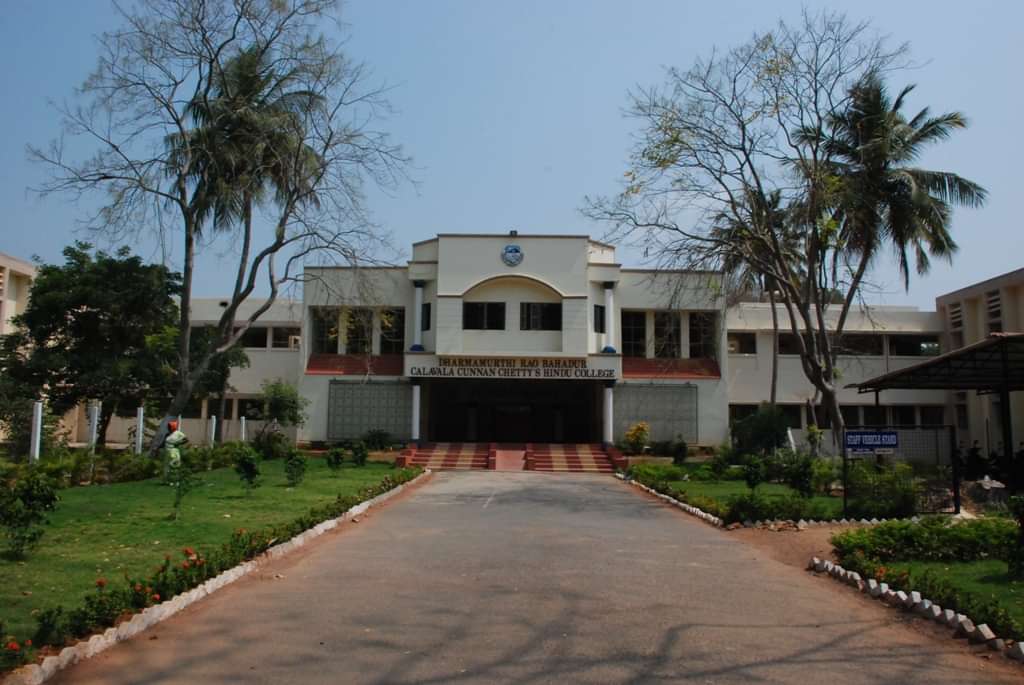
Dharmamurthi Rao Bahadur Calavala Cunnan Chetty's Hindu College
About
OfficialDharmamurthi Rao Bahadur Calavala Cunnan Chetty's Hindu College is a other institution in Chennai, established in 1969. Dharmamurthi Rao Bahadur Calavala Cunnan Chetty's Hindu College, established in 1817, is one of India's oldest colleges and stands as a flagship institution in Chennai with over two centuries of academic excellence. Located in the heritage Vepery area of Chennai, the college has evolved from its traditional roots to become a modern, dynamic institution while maintaining deep commitment to holistic education blending Indian values with contemporary scholarship. The college was founded with the vision of providing quality education to deserving students and has consistently upheld this mission through rigorous academics and comprehensive personality development. The institution offers a diverse range of undergraduate and postgraduate programs across Sciences, Arts, Commerce, and professional disciplines including Engineering, Law, and Management studies. With approximately 4,200 students and 185 faculty members, Hindu College maintains an intimate student-faculty ratio that enables meaningful mentoring and personalized attention. The academic environment is particularly strong in core sciences—Physics, Chemistry, and Mathematics—with well-equipped laboratories and research facilities that attract students seeking fundamental scientific training. The college's Commerce and Arts streams are equally respected, with dedicated faculty in Economics, History, and English literature. What distinguishes Hindu College is its emphasis on research and innovation within a liberal arts framework. Several faculty members hold UGC grants for research in diverse areas including environmental science, molecular biology, and social studies. The college maintains partnerships with international universities for student and faculty exchange programs, and hosts visiting researchers from abroad. The research culture is evidenced by the presence of active research labs in physics, chemistry, and botany, where undergraduate and postgraduate students engage in meaningful scientific inquiry. Placement outcomes have strengthened significantly over the past five years, with a placement rate of approximately 78-82% across programs. Top recruiters include TCS, Infosys, Cognizant, Accenture, and multiple financial institutions recruiting for analytics and management roles. The college's location in Chennai's IT corridor facilitates strong industry connections, with regular recruitment drives and internship opportunities. However, it's important to note that placement outcomes vary considerably by program—engineering and management graduates see higher placement rates (85-90%) compared to pure science graduates (65-70%), who often pursue research or higher education instead. The campus, though spread across 8.5 acres in an urban location, offers a blend of heritage architecture and modern facilities. The main campus features a historic library building constructed in the 1800s, renovated classrooms with multimedia facilities, well-stocked library with over 80,000 books, dedicated computer labs, and modern science laboratories. The college has invested significantly in digital infrastructure with campus-wide WiFi, though connectivity can occasionally be inconsistent during peak hours. The campus environment is serene despite being in the heart of the city, with mature trees and open spaces providing a studying atmosphere distinct from the surrounding urban bustle. Hostel facilities are available on campus for approximately 800 students, with separate accommodations for men and women. The hostels are relatively basic but functional, with rooms housing 2-4 students typically. The hostel experience is considered an important part of college life, fostering friendships and fostering a sense of community. Hostel life is well-regulated with proctors ensuring discipline, though some students feel the curfew timings are stringent. The college mess provides reasonably priced meals, though food quality is inconsistent and vegetarian options dominate given the college's cultural ethos. Many students prefer eating at nearby restaurants and food outlets in Vepery. Campus life extends beyond academics through numerous student clubs and societies covering technical, cultural, and social domains. The college hosts an annual technical festival "Tech Fest" typically in October, and a cultural festival "Hindu Fest" in February, both attracting participation from students across multiple streams. Sports facilities include a badminton court, basketball court, and cricket nets, though the urban location limits extensive sports infrastructure. The college actively encourages participation in inter-collegiate competitions, with students regularly competing in Tamil Nadu state-level sports tournaments. Notable alumni of Hindu College include M.S. Krishnan, the renowned geologist and founding member of the Atomic Energy Commission; C.V. Raman's contemporary scientists; multiple IAS and IFS officers; accomplished journalists and authors; and successful entrepreneurs in IT and finance sectors. The college maintains a strong alumni network that supports current students through mentoring, guest lectures, and career guidance. Alumni working in major corporations frequently visit campus to conduct workshops and internship drives. The college maintains NAAC accreditation (A grade, valid until 2027) and is affiliated with the University of Madras, ensuring degree recognition and academic credibility. The institution follows a semester system aligned with Indian higher education standards, though has increasingly adopted choice-based credit system for flexibility. Who should apply: Hindu College is ideal for students seeking a balanced education combining rigorous academics with cultural values in a historic institution. The college is particularly suited for those interested in sciences, especially if pursuing pure science with research aspirations, or those studying commerce, management, and humanities. It's recommended for students who value faculty mentoring, participate in campus activities, and seek preparation for competitive examinations like UPSC, GATE, or CAT. The institution is less ideal for those exclusively focused on maximum placement packages or those seeking cutting-edge IT infrastructure, as the college maintains traditional academic values while gradually modernizing. International students and those from non-Tamil backgrounds should note that Tamil is widely spoken and institutional processes often involve Tamil language documentation, though English remains the primary medium of instruction.