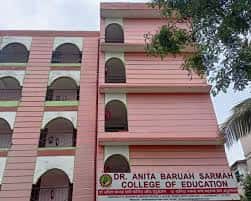
Dr. Anita Baruah Sarmah College of Education
About
OfficialDr. Anita Baruah Sarmah College of Education is a other institution in Guwahati, established in 2004. Dr. Anita Baruah Sarmah College of Education (DABSCE) is a premier teacher-training and education-focused institution located in Guwahati, Assam. Founded in 1996, the college is named after the renowned educationist Dr. Anita Baruah Sarmah and has established itself as a significant center for educational excellence in Northeast India. The institution operates under the framework of Assam University and offers undergraduate and postgraduate programs primarily in education, with specializations in various teaching methodologies, curriculum design, and educational psychology. The college has consistently maintained high academic standards and is recognized by the National Council for Teacher Education (NCTE) for its B.Ed programs. DABSCE has evolved over nearly three decades to become a comprehensive teacher education institution, preparing educators who serve schools across Assam and the Northeast. The campus, though compact at 2.5 acres, is strategically located in the heart of Guwahati's educational zone, providing easy access to libraries, research centers, and educational institutions. The college operates two main programs: Bachelor of Education (B.Ed) and Master of Education (M.Ed), with multiple specializations catering to contemporary educational needs. The B.Ed program follows a 2-year integrated model focusing on contemporary pedagogical approaches, experiential learning, and practical teaching internships in partnered schools across Guwahati and nearby areas. The M.Ed program is designed for working professionals and teachers seeking advanced qualifications, offered in both regular and part-time modes. DABSCE's academic strength lies in its faculty expertise in educational research, curriculum studies, and teacher development. Faculty members actively engage in research projects funded by educational bodies, contributing to publications in national and state-level journals. The college maintains partnerships with over 45 schools in Guwahati for practicum placements, ensuring students gain real-world classroom experience before graduation. The institution has produced over 3,500 teachers who work in government and private schools across Northeast India. Notable alumni have served as teacher trainers, curriculum consultants, and education policy advisors in state educational departments. The college maintains a library with 8,500+ educational texts, journals, and digital resources accessible to students. Campus facilities include a modern computer laboratory with internet connectivity, audio-visual production units for creating educational materials, a dedicated research center for educational studies, and well-equipped classrooms with smart boards. The college has adopted a flexible, student-centric approach to learning with emphasis on reflective practice, action research, and inclusive education. Campus life includes regular seminars featuring educational researchers, workshops on emerging pedagogies like digital literacy in education and NEP implementation, and cultural events that promote holistic development. The college organizes an annual education symposium attracting educators from across India. Student clubs focus on educational research, curriculum innovation, and social outreach. Placement and career progression for DABSCE graduates is strong—approximately 85% of B.Ed graduates secure teaching positions within 6-8 months of graduation in government and private schools, while M.Ed graduates transition into roles as subject coordinators, educational consultants, or pursue doctoral studies. Average salary for teachers placed through the college ranges from 250,000-350,000 annually for government school positions and 180,000-300,000 for private schools. The college maintains a dedicated placement cell that coordinates with educational institutions and conducts recruitment drives. The infrastructure, while functional and adequate, reflects the institution's focus on educational quality over luxury facilities. Hostels are basic but clean, with separate accommodations for male and female students. The mess serves home-style vegetarian and non-vegetarian meals suited to the local palate. Internet connectivity covers the hostel and campus areas, though speeds during peak hours can be inconsistent. For students from distant parts of Northeast India, the college offers subsidized hostel accommodation starting from 3,000-4,500 per month including meals. Safety standards are well-maintained with CCTV surveillance across campus and dedicated security personnel. The college has adopted a zero-tolerance policy on ragging, with formal orientation programs for new students emphasizing academic ethics and peer respect. For women students, the college provides enhanced security measures including dedicated female counselors and women-only hostel blocks with separate entry gates. The college culture emphasizes academic rigour, professional ethics in education, and social responsibility. Students are encouraged to participate in educational outreach activities, including teaching in rural schools and community education programs. The institution actively promotes gender equality and has specific scholarship schemes for underprivileged students and girls from economically weaker backgrounds. Who should apply: Individuals passionate about teaching and education development; graduates seeking to formalize their teaching qualification; working teachers pursuing advanced credentials; those interested in educational research and curriculum development; candidates from Northeast India seeking affordable, quality teacher training in a regional context; individuals committed to inclusive and equitable education; candidates interested in government teaching positions requiring B.Ed qualification; scholars interested in educational leadership and administration roles. The college is NOT ideal for: Candidates seeking primarily technical or engineering education; those unwilling to commit to teaching profession; students preferring urban metropolitan lifestyle and cosmopolitan campus; individuals seeking significant corporate training or skill development outside education domain.