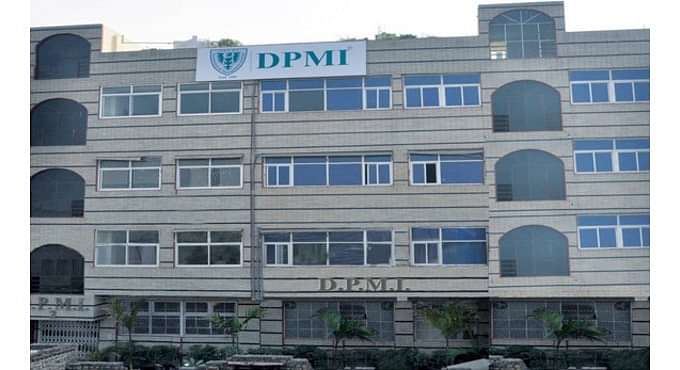
Delhi Paramedical & Management Institute
About
OfficialDelhi Paramedical & Management Institute is a other institution in New Delhi, established in 1996. Delhi Paramedical & Management Institute (DPMI), established in 2009, is a private institution located in Rohini, a suburban area of North-West Delhi. The institute was founded with the primary mission of providing high-quality education in healthcare, allied health, nursing, and management disciplines. Over the past 15 years, DPMI has evolved into one of Delhi's recognized centers for paramedical and healthcare professional training, with a particular focus on producing skilled healthcare professionals and managers for both India's public and private healthcare sectors. The institute operates under the governance of the Delhi Paramedical & Management Educational Society and offers programs ranging from undergraduate diplomas to postgraduate degrees. DPMI's founding was driven by the acute shortage of trained paramedical professionals in India, a gap that remains significant even today. The institute positioned itself as a bridge between theoretical knowledge and practical healthcare delivery, emphasizing clinical training and internship opportunities. Currently, DPMI houses approximately 2,800 students across various programs, with a faculty strength of around 185 trained professionals. The campus, spanning 8.5 acres in the suburban Rohini locality, provides a quieter learning environment away from the city center, though connectivity to other parts of Delhi is moderate. The academic programs offered at DPMI span across multiple disciplines within healthcare and management. The core strength lies in paramedical sciences, including courses like B.Sc. in Nursing, B.Sc. in Radiological Technology, B.Sc. in Medical Laboratory Technology, B.Sc. in Operation Theatre Technology, and B.Sc. in Dialysis Technology. Additionally, the institute offers programs in physiotherapy, occupational therapy, and respiratory therapy. Management programs include BBA in Healthcare Management and MBA in Hospital Management, which are designed to train managers who understand the nuances of healthcare delivery. The institute also offers diploma-level programs for students seeking shorter-duration, skill-based training. Research at DPMI is primarily focused on applied health sciences, with faculty engaged in projects related to patient care quality, healthcare service delivery, and paramedical education innovations. The institute has established partnerships with various hospitals and diagnostic centers across Delhi for clinical training and research. Key research areas include healthcare management, patient outcomes, nursing practice innovations, and diagnostic technology applications. While DPMI is not primarily a research institution like IITs or major universities, its research orientation is appropriate to its disciplinary focus. Campus life at DPMI reflects the reality of a professional healthcare and management institute. The student body is diverse, with representation from across India and a significant proportion of girls, particularly in nursing programs. The institute maintains separate hostels for boys and girls, with accommodations available for approximately 40% of students. Hostel facilities are basic to moderate, with shared rooms, common areas, and mess arrangements. The campus hosts various student clubs, including a healthcare professional forum, entrepreneurship cell, cultural association, and sports club. Annual events include medical camps, healthcare management symposiums, and cultural programs. The institute emphasizes practical skill development, with regular workshops, seminars, and guest lectures by healthcare professionals and hospital administrators. Placement outcomes at DPMI vary significantly by program. The nursing programs demonstrate the strongest placement rates, with approximately 85-90% placement within three months of graduation. Paramedical science graduates achieve 75-85% placements, while management program graduates show 70-80% placement rates. Median salary packages for nursing graduates range from 240,000-320,000 INR annually for entry-level hospital positions, while paramedical science graduates typically start at 200,000-280,000 INR annually. Management program graduates receive 280,000-400,000 INR annually in healthcare administration roles. Top recruiters include Apollo Hospitals, Max Healthcare, Fortis Healthcare, Medanta, Jindal Naturecure Institute, various Delhi government hospitals, and private diagnostic chains. However, it's important to note that many DPMI graduates work in middle and lower-middle management roles in hospitals rather than corporate healthcare strategy positions. A significant portion pursue careers in smaller private clinics, diagnostic centers, or accept positions with limited growth potential due to the paramedical nature of many programs. Notable alumni from DPMI include Priya Sharma (B.Sc. Nursing 2012, Senior Nurse Manager at Apollo Hospitals), Dr. Rajesh Verma (M.B.A. Hospital Management 2014, Healthcare Consultant at Deloitte), Neha Patel (B.Sc. MLT 2011, Pathology Lab Director), and Vikram Singh (B.Sc. Nursing 2013, Nursing Educator). While DPMI has produced successful professionals, it is not known for producing nationally renowned figures or leaders in healthcare policy. What makes DPMI unique is its focused expertise in paramedical education, which fills a genuine gap in healthcare professional training in India. The institute is appropriately designed for students seeking careers as nurses, laboratory technicians, radiographers, or healthcare managers rather than physicians or surgeons. The institute maintains good relationships with hospitals, ensuring practical training opportunities. However, potential students should be aware that DPMI's reputation, while solid in healthcare circles, is limited geographically to Delhi and some North Indian regions. The institute is not a preferred choice for international students or those seeking global recognition. Academic rigor at DPMI is moderate to good, with faculty who are practitioners in their respective fields. However, the research output is limited, and the institute's contributions to medical science are not significant. DPMI is best suited for students who are passionate about healthcare delivery, willing to pursue technical or middle-management roles in hospitals, and seeking practical, job-oriented education rather than research-oriented training. Students from economically disadvantaged backgrounds will find DPMI more affordable than premium private medical colleges, though more expensive than government nursing colleges. The institute is also appropriate for working professionals seeking part-time management degrees in healthcare, though such programs have limited recognition. Students expecting to study at a world-class research institution with iconic campus facilities, distinguished faculty with international recognition, or pathways to prestigious international careers should look at alternative institutions. DPMI's value proposition is best for students seeking practical, employment-focused healthcare training in the Delhi-NCR region.