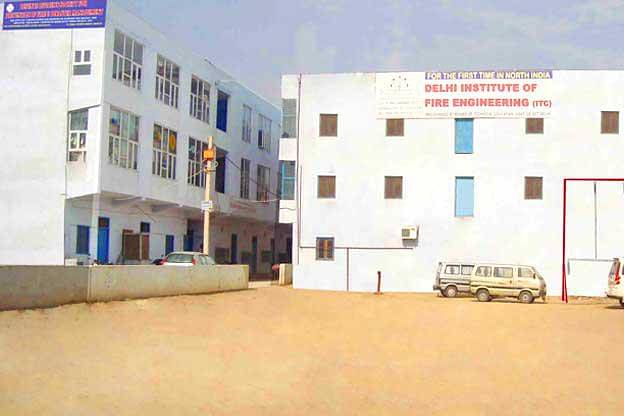
Delhi Institute of Fire Engineering
About
OfficialDelhi Institute of Fire Engineering is a other institution in New Delhi, established in 2005. Delhi Institute of Fire Engineering (DIFE) is a specialized institute established in 2003 under the Delhi Fire Service, dedicated to developing professionals in fire engineering, firefighting, and disaster management. Located on the outskirts of Delhi near Samaipur Village, DIFE operates under the umbrella of the Delhi Fire Service and is recognized by the Government of Delhi as an academic institution focused on creating technically sound fire safety professionals. The institute represents India's premier dedicated training ground for fire engineering and emergency response management. DIFE's founding was driven by the critical need to professionalize India's firefighting and fire safety sector beyond traditional recruitment-based firefighter training. The institute offers specialized undergraduate and postgraduate programs in fire engineering and allied domains, attracting students passionate about public safety, disaster management, and emergency response infrastructure. The curriculum is uniquely designed to bridge academic rigor with practical firefighting protocols, emergency response procedures, and fire safety system design. Students undergo both classroom-based learning and intensive practical training at on-campus fire training grounds equipped with live-fire training facilities, rescue simulation towers, and specialized equipment used in real firefighting scenarios. One of DIFE's significant strengths is its real-world operational environment. The institute operates within the Delhi Fire Service ecosystem, providing students direct exposure to operational firefighting units. Faculty members often include practicing fire officers and engineers with decades of field experience, ensuring curriculum remains aligned with actual firefighting challenges. The institute has established partnerships with international fire safety organizations and conducts regular knowledge exchange programs with fire departments globally. Campus infrastructure is purpose-built for fire engineering education, featuring specialized laboratories for fire behavior study, building material testing, hydraulics and pump systems, electrical fire safety, and chemical hazard analysis. The training ground includes multi-story training towers, vehicle fire training areas, and simulated industrial hazard zones. However, DIFE remains significantly less known than mainstream engineering colleges, resulting in lower overall brand recognition and limited alumni network in corporate sectors beyond firefighting and disaster management. Placements are primarily in government fire services, building safety departments, municipal corporations, and specialized consulting firms focused on fire safety compliance. Private sector absorption is limited compared to IITs or NITs. Student intake is deliberately restricted (around 180-200 annually across all programs) to maintain quality and ensure adequate hands-on training with specialized equipment and facilities. Notably, admission is merit-based but does not follow the JEE-Main/JEE-Advanced route; instead, DIFE conducts its own entrance examination. The institute attracts a niche student demographic genuinely interested in public safety careers rather than conventional engineering roles. Living on campus is common as the suburban location offers limited nearby accommodation options. The hostel culture is distinctive—students often describe it as professional and disciplined, reflecting the paramilitary nature of fire service training. Campus life revolves around academics, practical training drills, and community service initiatives related to fire safety awareness. Social and cultural events exist but are secondary to the academic mission. Students consistently report genuine passion for their chosen field, though some mention the curriculum's intensity and practical demands can be challenging. The institute has produced notable fire safety professionals, disaster management consultants, and government officers who have contributed to policy-making in India's fire safety framework. Alumni working in state fire services, national disaster management agencies, and international fire safety consulting firms represent significant career pathways. Ragging is strictly prohibited and enforcement is rigorous, with no reported incidents in recent years. The institute maintains exceptional safety standards for women students, reflecting the professional and structured environment. Faculty-student relationships are formal yet mentoring-focused, with emphasis on professional development. DIFE is ideal for students with genuine interest in firefighting, fire engineering, disaster management, or public safety careers who are willing to pursue a less conventional path than mainstream engineering. Students expecting high-salary corporate placements or startup ecosystem engagement should recalibrate expectations—this institution prioritizes societal impact and critical public safety infrastructure over financial returns. The institute remains underutilized by India's talented student pool, presenting an opportunity for genuinely motivated individuals to enter a critical yet less competitive domain with solid government career prospects and genuine societal contribution.