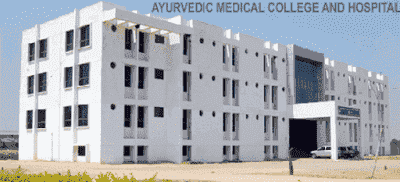
Danigond Ayurvedic Medical College and Padma Ayurvedic Hospital and Research Centre
About
OfficialDanigond Ayurvedic Medical College and Padma Ayurvedic Hospital and Research Centre is a other institution in Bagalkot. Danigond Ayurvedic Medical College and Padma Ayurvedic Hospital and Research Centre, established in 2008, represents a significant institutional effort to preserve and modernize India's ancient Ayurvedic medical tradition in rural Karnataka. Located in Bagalkot district—approximately 500 km northwest of Bangalore and historically known for its agricultural heritage—the college operates with the dual mission of undergraduate and postgraduate medical education while maintaining direct patient care through its affiliated 50-bed hospital. The institution is recognized by the Central Council for Indian Medicine (CCIM) and the National Board of Examination in Indian System of Medicine (NBEIM), placing it within India's formal regulatory framework for Ayurvedic practitioners. Unlike many private Ayurvedic colleges concentrated in urban metros, DAMC's rural location presents both strategic advantages and operational constraints. The college's founding vision emphasized accessibility for students from rural backgrounds and small towns, where Ayurvedic practice remains deeply embedded in community healthcare. The institution operates with modest infrastructure relative to allopathic medical colleges, reflecting the smaller scale of India's Ayurvedic sector overall—total student enrollment stands at approximately 420 across all programs, compared to allopathic medical colleges enrolling 300-500 per institution. Academic programs follow the Central Council for Indian Medicine curriculum framework, emphasizing traditional texts (Charaka Samhita, Sushruta Samhita, Ashtanga Hridayam) alongside modern scientific methodology in pharmacology, toxicology, and research ethics. The college operates an integrated 5.5-year Bachelor of Ayurvedic Medicine and Surgery (BAMS) program, India's primary qualification for Ayurvedic practitioners, with annual intake of 60 students. Postgraduate programs include Master's degrees in Swasthavritta (Ayurvedic Public Health), Dravyaguna (Pharmacology), and Rasa Shastra (Mineral Pharmacy), reflecting specializations where Ayurvedic training offers distinct advantages. The college's hospital serves as primary teaching facility—though a 50-bed capacity limits clinical exposure compared to 500-1000 bed teaching hospitals at major allopathic institutions. Patient demographics skew toward rural populations utilizing Ayurvedic treatment for chronic conditions, musculoskeletal disorders, and lifestyle diseases, providing authentic clinical learning but less diversity than urban teaching hospitals. Research productivity remains modest, with faculty focusing on medicinal plant authentication, formulation standardization, and efficacy validation of traditional treatments—areas where Ayurvedic institutions contribute meaningfully to integrative medicine literature. The college's research output appears in Indian journals of Ayurveda and alternative medicine rather than high-impact international publications. Career outcomes for BAMS graduates diverge significantly from allopathic medicine: employment encompasses private Ayurvedic practice, government Ayurveda department positions (typically available through state health services recruitment), wellness industry roles, and increasingly, integrative healthcare settings. Unlike MBBS graduates who face intense competition and saturated employment markets in many states, BAMS graduates find relatively stable niches, particularly in states with robust Ayurvedic infrastructure (Kerala, Uttarakhand, Madhya Pradesh). However, financial returns lag allopathic medicine substantially—private Ayurvedic practitioners typically generate lower income than allopathic doctors. The college's placement cell reports approximately 60-70% students entering government Ayurveda service positions within 2-3 years post-graduation through state-level recruitment, with remaining students establishing private practices or joining wellness centers. Notable institutional characteristics include the college's commitment to pharmaceutical research at its associated manufacturing unit, producing standardized Ayurvedic formulations used for teaching and hospital supply. This vertical integration provides practical exposure to drug manufacturing standards, quality control, and regulatory compliance often absent from standalone medical colleges. The faculty comprises approximately 48 members, predominantly BAMS or MD (Ayurveda) qualified, with approximately 30% holding doctoral credentials. Faculty retention presents challenges due to rural location—senior faculty members often relocated to urban centers after establishing credentials. The college maintains partnerships with Central Council for Research in Indian Medicine (CCRIM) institutes and Kerala Ayurveda University for research collaboration and faculty development. Campus infrastructure reflects rural institutional constraints: single-story building complexes rather than modern multi-story facilities, limited air conditioning, modest library with 5,000+ volumes focused on Ayurvedic texts, and internet connectivity dependent on local broadband availability. These limitations represent genuine disadvantages for students accustomed to metropolitan universities but pose minimal barrier for students from rural/semi-urban backgrounds or those prioritizing education over amenities. The college explicitly maintains low fees relative to private medical colleges—annual tuition approximately 180,000-200,000 INR—reflecting its non-profit educational mission and rural market positioning. However, below-standard infrastructure and limited clinical exposure represent legitimate quality concerns for prospective students. The institution suits students specifically committed to Ayurvedic medicine, possessing strong foundation in traditional texts, willing to develop practice in rural/semi-urban settings, or seeking government service positions in state Ayurveda departments. Students expecting medical college experience comparable to AIIMS or top private allopathic colleges should calibrate expectations significantly downward. The college's competitive advantage rests on authentic Ayurvedic education, affordable fees, and pathways to stable government employment—not research reputation, infrastructure, or metropolitan placement ecosystem.