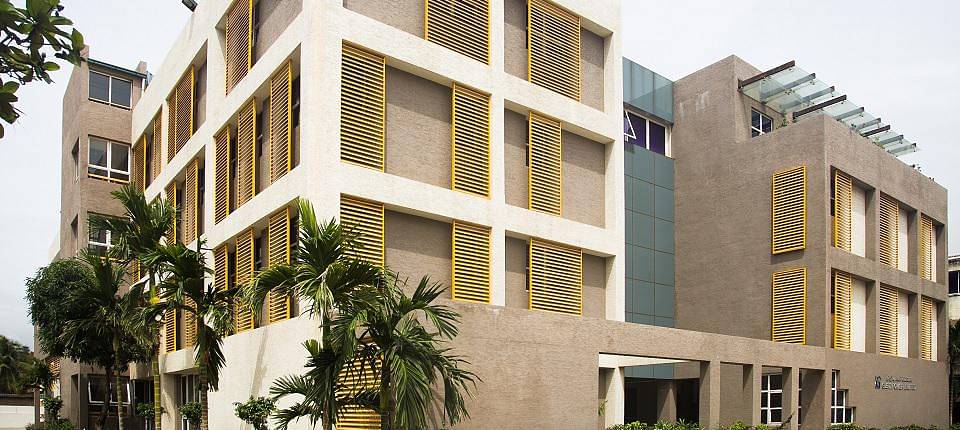
Dakshin Institute of Management Sciences
About
OfficialDakshin Institute of Management Sciences is a other institution in Chennai, established in 2013. Dakshin Institute of Management Sciences (DIMS) was established in 2001 as a private management and professional education institution in Chennai. Originally founded with a focus on business administration and IT management, DIMS has evolved into a multi-disciplinary institution offering undergraduate, postgraduate, and doctoral programs. The institute is located in Taramani, a knowledge corridor in south Chennai, approximately 15 km from the city center. The name 'Dakshin' (meaning 'South' in Sanskrit) reflects the institution's commitment to serving educational needs across South India while maintaining pan-Indian relevance. The campus spans 8.5 acres in a suburban setting with adequate green space, making it relatively peaceful compared to ultra-urban locations, though still connected to major city infrastructure. DIMS operates under a private trust structure and is approved by the All India Council for Technical Education (AICTE) for management programs and by the University Grants Commission (UGC) for degree-awarding authority. The institute has a total student population of approximately 2,850 across all programs with a faculty strength of 185, providing a student-faculty ratio of roughly 15:1, which is moderate for private institutions. Academically, DIMS offers a portfolio centered on Management, IT/Computer Science, Business Analytics, and specialized programs in Operations Management, Financial Management, and International Business. The institute has developed partnerships with several international universities for student exchange and collaborative research. Key research areas include business process optimization, supply chain management, data analytics applications in retail and manufacturing, and management of technology startups. DIMS has a dedicated placement cell that claims to facilitate internships and final placements, though like most tier-2 management institutes, placement outcomes vary significantly by program and student profile. The institute hosts annual tech fests and management conclaves that attempt to build industry connections, though these are smaller in scale compared to tier-1 institutions. Student life at DIMS includes multiple clubs covering technical, cultural, and entrepreneurial interests, though participation rates and visibility vary. The hostel facilities accommodate approximately 40% of the student population, with separate accommodations for women and men. The campus has a library with approximately 15,000 books and digital resources, computer labs with modern software licenses, a cafeteria, and sports facilities including a badminton court and gymnasium. Internet connectivity across campus is generally good with WiFi coverage in academic and common areas. Notable aspects include DIMS' focus on bridge programs for students with varying academic backgrounds, industry internship mandates as part of curriculum, and startup incubation support through an entrepreneurship cell. The institute maintains moderate academic standards with regular curricular updates aligned with industry trends. However, DIMS is positioned as a tier-2 private management institute without the brand recognition or placement outcomes of tier-1 institutions like IIM or XLRI. The institution attracts students who score reasonably well in entrance exams (CAT, GMAT) but may not have cleared IIM cutoffs, as well as students seeking specialized management programs or those from non-engineering backgrounds. The college experience at DIMS emphasizes practical learning through case studies, industry guest lectures, and project-based assignments. Alumni network is growing but still developing compared to older, more established institutions. Campus culture is moderately competitive with emphasis on academics and placement preparation, though social engagement and cultural activities exist at a moderate level. The student community is relatively diverse with representation from across India, though Tamil Nadu students form a significant proportion. For prospective students, DIMS represents a middle-ground option: better infrastructure and placement support than many tier-3 institutions, but with realistic expectations about job prospects and salary outcomes compared to tier-1 business schools. The institution is particularly suitable for students seeking management education with IT integration, those interested in specialized domains like supply chain or analytics, and candidates who value a campus experience in a major metropolitan area without the ultra-competitive tier-1 environment. Honest considerations include: placement outcomes are heavily dependent on individual performance and specialization chosen; salary packages are typically in the 8-14 LPA range (not 20+ LPA like top-tier institutes); the institute's brand recognition is primarily South-Indian with limited national presence; and fees are substantial (approximately 12-15 lakhs for 2-year MBA), requiring careful ROI analysis.