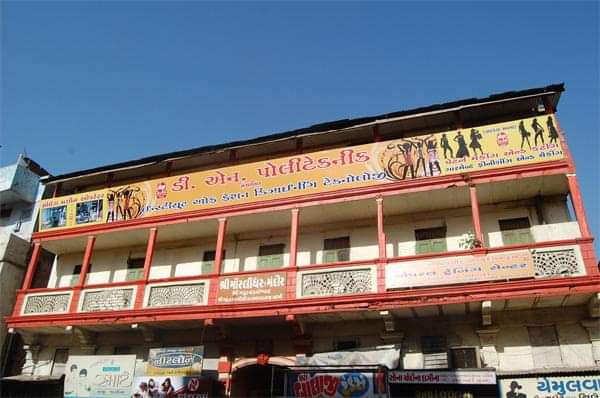
D. N. Polytechnic
About
OfficialD. N. Polytechnic is a other institution in Ahmedabad, established in 1975. D. N. Polytechnic, established in 1992, is one of Gujarat's leading private polytechnic institutions situated in Thaltej on Ahmedabad's expanding SG Highway corridor. Originally founded to address the acute shortage of skilled technical manpower in Gujarat, the institution has evolved into a comprehensive technical education provider offering diploma and undergraduate engineering programs across multiple disciplines. The polytechnic operates under the regulatory framework of the Gujarat Technological University (GTU) and maintains affiliation with the All India Council for Technical Education (AICTE). Over three decades, D.N. Polytechnic has developed a reputation for combining theoretical rigor with practical industry exposure, serving approximately 2,400 students across 15+ engineering disciplines. The institution's founding philosophy centered on creating technically competent professionals who could immediately contribute to Indian industry, a mission reflected in its curriculum design and pedagogical approach. The campus, sprawling across 8.5 acres in Thaltej, sits in one of Ahmedabad's rapidly developing IT and manufacturing hubs, offering students proximity to multiple Fortune 500 companies and emerging tech startups. D.N. Polytechnic maintains one of Gujarat's strongest placement records for diploma engineering graduates, with consistent 90%+ placements and average salary packages hovering around 3.2-3.8 LPA for diploma graduates and 4.5-5.5 LPA for degree graduates. The institution's academic strength lies in engineering disciplines: Mechanical Engineering commands strong industry linkage, Civil Engineering benefits from Ahmedabad's construction boom, Electronics & Communication Engineering maintains partnerships with semiconductor and embedded systems companies, and Computer Science/IT programs achieve near-100% placements with tech companies like Infosys, TCS, and Wipro recruiting heavily. The polytechnic has established industry partnerships with organizations including Bosch, Siemens, Schneider Electric, and numerous automotive suppliers, enabling students to gain hands-on exposure through internships and collaborative projects. Research activity remains modest compared to university-affiliated institutions, but faculty maintain active engagement with applied research in automation, renewable energy, and IoT applications. The campus infrastructure includes modern computer labs with latest development tools, well-equipped engineering workshops with CNC machines and 3D printers, a dedicated placement cell that proactively manages recruitment drives, and reasonable library facilities. What distinguishes D.N. Polytechnic from competing institutions is its pragmatic curriculum alignment with industry requirements—syllabi undergo regular revision based on employer feedback—and the strong informal network of alumni across Ahmedabad's industrial landscape who actively assist in placement drives. The student demographic predominantly comprises aspirants from Gujarat and neighboring states who couldn't secure admission to top NIT/IIT institutions or who prefer the 3-year diploma format for quicker workforce entry. Campus culture emphasizes practical learning over theoretical depth, with significant emphasis on industry certifications (Autodesk, Microsoft, Oracle) and skill-based workshops. The institution's honest assessment: it is not positioned as a premium engineering college competing with top NITs or IITs, but rather as a strong alternative for students seeking rapid skill development, job-ready education, and immediate industry integration at reasonable fees. Placement outcomes vary meaningfully by discipline—IT and ECE graduates secure 95%+ placements while Civil Engineering placement rates hover around 75-80%, reflecting broader market demand patterns. The polytechnic attracts students who are pragmatic about career outcomes, discipline-conscious, and comfortable with a structured, somewhat traditional pedagogical approach. Notable aspects include the institution's strong presence in automotive and manufacturing sectors due to historical ties with Ahmedabad's industrial ecosystem, active student clubs focusing on robotics and competitions, and consistent participation in technical fests and competitions at the regional level. Challenges include: infrastructure aging in some departments, limited research publication record compared to universities, modest campus amenities relative to private engineering colleges in metros, and the stereotypical perception that polytechnic graduates occupy a lower rung than degree engineers (though this gap is rapidly narrowing in industry). The institution serves best for students seeking immediate employment post-graduation, those prioritizing practical skills over academic credentials, and aspirants from middle-class backgrounds who need cost-effective quality technical education with strong placement support.