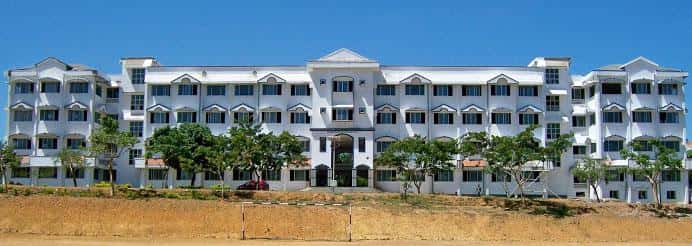
Coorg Institute of Technology
About
OfficialCoorg Institute of Technology is a other institution in Kodagu, established in 1999. Coorg Institute of Technology (CIT) was established in 2009 as a private engineering college in the picturesque Kodagu district of Karnataka. Located at an elevation of approximately 3,500 feet in the Western Ghats, the institute occupies a sprawling 45-acre campus in Virajpet, surrounded by coffee plantations and lush greenery. The college is approved by the All India Council for Technical Education (AICTE) and affiliated to Visvesvaraya Technological University (VTU). CIT has positioned itself as an emerging engineering institution with focus on experiential learning, industry collaboration, and holistic student development. The institute operates under a five-member management board and maintains administrative autonomy in academic matters within VTU framework. Founding vision centered on creating technically proficient engineers with strong ethical values and entrepreneurial mindset. The rural setting, while providing a serene academic environment away from urban distractions, presents significant logistical challenges for students accustomed to metropolitan facilities. CIT offers undergraduate and postgraduate engineering programs across 8 core disciplines, along with integrated 5-year B.Tech programs. Academic infrastructure includes modern laboratories for Electronics, Mechanical, Civil, Chemical, Computer Science, and Electrical engineering disciplines. The institute has established partnerships with over 40 companies including TCS, Infosys, HCL, Bosch, and ABB for internships and placements. Research focus areas include IoT applications in agriculture, renewable energy optimization, water resource management, and smart manufacturing. Faculty strength of 185 members includes 12 PhDs and 45 pursuing doctoral degrees, though the percentage remains below national averages for technical institutions. The college library houses 35,000+ volumes with digital access to IEEE Xplore, ACM Digital Library, and engineering databases. Campus computing infrastructure includes 8 computer labs with approximately 400 workstations, high-speed internet connectivity across campus, and cloud-based resource access. Campus life is structured around student clubs (35+ active clubs), annual technical fest 'TechnoXplore', cultural festival 'Coorg Fiesta', and sports tournaments. Hostel facilities accommodate approximately 60% of student population, with separate blocks for male and female students. Mess operations managed through institutional catering with provision for vegetarian and non-vegetarian options. The college maintains zero-tolerance ragging policy with dedicated anti-ragging committee and helpline. Placement statistics for 2023-24 academic year indicate 88% placement rate with median package of ₹4.2 lakhs and highest package reaching ₹9.8 lakhs. Key recruiters include technology majors (TCS, Infosys, HCL, Capgemini, Wipro), automotive sector (Bosch, BHEL, Toyota), and manufacturing firms (ABB, Siemens). Notable alumni include entrepreneurs who founded tech startups, senior engineers at multinational corporations, and civil servants in government departments. The institute emphasizes industry-driven curriculum with regular guest lectures from industry practitioners, industry mentorship programs, and collaborative projects. Student intake across programs totals approximately 480 per academic year. The college maintains active placement cell with dedicated staff for recruitment coordination, mock interviews, and skill development workshops. Unique differentiators include location in organic agriculture region enabling agri-tech research, partnerships with local coffee industry for sustainability projects, and focus on environmental conservation initiatives. The institution is particularly suited for engineering aspirants seeking quality technical education in a peaceful, focused environment away from urban pressures, with willingness to adapt to geographic isolation and limited immediate metropolitan amenities. Student profile typically includes candidates scoring 70-85 percentile in JEE Main, with reasonable seat availability compared to tier-1 institutions. Infrastructure challenges include limited access to specialized facilities (design studios, makerspaces) compared to metropolitan engineering colleges, occasional power supply interruptions during monsoon, and dependence on vehicular transport for city access. The college is progressively addressing these gaps through phased infrastructure expansion and virtual resource sharing with consortium institutions. Overall, CIT represents a middle-ground option for students prioritizing academic focus, personalized mentoring, and reasonable placement outcomes over metropolitan campus experience and brand prestige of top-tier institutions.