College of Medicine and JNM Hospital
About
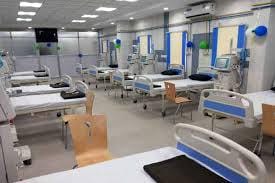
OfficialCollege of Medicine and JNM Hospital is a other institution in Nadia, established in 2010. College of Medicine and JNM Hospital, located in Kalyani, Nadia District, West Bengal, is a relatively younger medical institution established in 2010 under West Bengal state medical education framework. The college operates alongside JNM Hospital, a 500-bed tertiary care facility that serves as its primary teaching hospital and clinical training ground. Founded with the objective of increasing medical education capacity in eastern India and addressing healthcare professional shortages in underserved regions, the college has grown to become a significant contributor to medical education in West Bengal. The institution is recognized by the Medical Council of India (now National Medical Commission) and is affiliated with the West Bengal University of Health Sciences. The college offers MBBS (5.5 years including mandatory internship), Bachelor of Science in Nursing (4 years), and various post-graduate programs in clinical and pre-clinical disciplines. Academic programs are structured around a competency-based medical education approach, with emphasis on both theoretical knowledge and practical clinical skills developed through extensive patient exposure in the hospital wards and outpatient departments. The college maintains a strong focus on community medicine and has initiated several rural health camps in surrounding villages, particularly in Nadia and adjoining districts. Research opportunities exist in infectious disease epidemiology, maternal and child health, and chronic disease management, leveraging the hospital's patient demographics. The attached JNM Hospital functions as a tertiary referral center serving populations across Nadia, North 24 Parganas, and neighboring districts, providing students with exposure to complex clinical cases and emergency medicine. Campus infrastructure includes well-equipped anatomy and pathology laboratories with cadaver facilities, microbiology labs with modern diagnostic equipment, pharmacology labs with animal house facilities (ethical oversight through IAEC), biochemistry labs, and digital library access to journals through UGC-INFONET. The college library holds over 8,000 volumes of medical texts and maintains subscriptions to major medical journals. Clinical departments include Medicine, Surgery, Obstetrics & Gynaecology, Pediatrics, Psychiatry, Orthopedics, Radiology, Anesthesiology, and Emergency Medicine. Faculty comprises qualified medical professionals with MBBS, MD/MS, and doctoral qualifications; approximately 75% hold postgraduate degrees. The institution has demonstrated steady improvement in pass rates for licensing examinations, with MBBS graduates achieving 85-90% success rates in the National Exit Examination (NEET-SS equivalent assessments). Placement of graduates occurs primarily in government health services (NRHM contractual positions), private healthcare networks across eastern India, and continuing education in PG programs across medical colleges nationally. Notable alumni include several practicing physicians in tertiary centers across Kolkata and prominent positions in state health administration. The college's advantage lies in its location—Kalyani is a university town with proximity to Kolkata (approximately 60 km), offering urban amenities while maintaining lower living costs than central Kolkata. However, prospective students must acknowledge that this institution lacks the prestige of premier All India Institute of Medical Sciences or established government medical colleges. The infrastructure, while functional, is not comparable to well-funded institutions. Faculty-to-student ratio of approximately 1:7 is reasonable but not exceptional. Research output in indexed journals remains modest compared to older, well-established medical colleges. Internship placements have improved but remain competitive; approximately 65-70% of graduates secure PG seats in central Indian medical colleges, with remaining pursuing seats in regional institutions or private colleges. The hospital, while serving its regional purpose, sees high patient load during monsoon months (July-October) due to infectious disease prevalence, which can strain resources. Living environment in Kalyani is relatively safe and conducive to studies, with moderate social and entertainment options. The college is recommended for aspirants with strong NEET scores (securing All India Rank 8,000-15,000) who prioritize practical clinical training and direct patient contact over institutional prestige, or students seeking admission to medical colleges in eastern India as a pathway to practicing medicine in underserved regions. It is particularly suitable for candidates from West Bengal and northeastern states seeking to remain in their home regions while obtaining quality medical education.