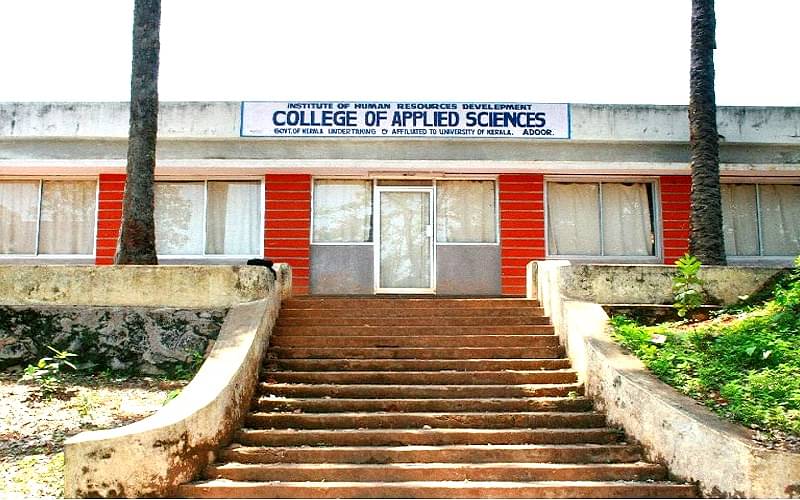
College of Applied Sciences
About
OfficialCollege of Applied Sciences is a other institution in Pathanamthitta, established in 2014. College of Applied Sciences (CAS) Pathanamthitta is a premier constituent college of Cochin University of Science and Technology (CUSAT), established in 1980 to bridge the gap between theoretical learning and practical industrial applications. Located in the serene town of Pathanamthitta in Kerala, it has evolved into a respected institution for engineering and applied sciences education in South India. Founding History and Evolution: The college was established with the vision of creating engineering professionals with strong practical skills and industry-relevant knowledge. Over 44 years, CAS has grown from a small engineering college to a multi-disciplinary institution offering programs across engineering, applied sciences, and management. The institution is deeply rooted in Kerala's educational tradition while maintaining contemporary relevance through continuous curriculum updates and industry alignment. Academic Programs: CAS offers a diverse range of undergraduate and postgraduate programs including Civil Engineering, Mechanical Engineering, Electrical Engineering, Electronics and Communication Engineering, Computer Science Engineering, Petroleum Engineering, Applied Physics, Applied Chemistry, and Master's programs in specialized engineering domains. The college has also recently introduced management and entrepreneurship programs to cater to diverse student interests. Each program is designed with significant industry input, ensuring relevance to market demands. Research and Innovation Strengths: The college has emerged as a notable research center in Kerala, with particular strengths in petroleum engineering, sustainable materials, and smart grid technologies. Faculty members have published over 800 papers in peer-reviewed journals and conferences in the last decade. The college operates several research centers including the Petroleum Research Center, Advanced Materials Lab, and Smart Systems Research Center. Industry partnerships with companies like IOCL, NTPC, and various consulting firms facilitate sponsored research and consultancy projects. Placement and Career Outcomes: CAS maintains a consistent placement rate of 78-85% with median salaries ranging from 4.2 to 5.8 LPA depending on the branch. Top recruiters include TCS, Infosys, Wipro, Accenture, HCL Technologies, and several core engineering companies. Petroleum engineering graduates command higher packages, with some securing placements up to 12 LPA. The college has a dedicated placement cell with strong alumni networks in major tech companies and PSUs. Campus Infrastructure and Facilities: The 45-acre campus is well-developed with modern academic blocks, well-equipped laboratories, and computing centers. The library holds over 85,000 volumes with digital access to international journals. Hostel facilities are available for both male and female students with separate buildings. The campus has a health center, sports complex, auditorium, and cafeteria. Internet connectivity covers most campus areas with average speed of 40 Mbps. However, some older laboratory equipment requires upgrades, particularly in civil engineering labs. Campus Life and Student Community: The college fosters a vibrant student life with over 35 clubs covering technical, cultural, and sports domains. Annual events include TechWave (technical festival), CAS Fiesta (cultural festival), and various inter-college competitions. Student-run publications and technical magazines are actively maintained. The hostel community is active, though communication between hostel and day scholars could be improved. Women's safety measures are in place with dedicated security and separate hostel wardens. Placement and Alumni Network: Notable alumni work at senior positions in companies like Shell, Reliance, Microsoft, and various government PSUs. The alumni association is active in mentoring current students and facilitating internships. However, the college could strengthen its international placement pipeline, as most placements are domestic. Unique Aspects: The college's strength lies in its focus on petroleum engineering, which has national-level relevance given India's energy sector needs. The close proximity to Cochin's industrial corridor provides real industry exposure. The faculty consists of a good mix of PhD holders (approximately 42%) and industry professionals, bringing practical perspective to teaching. The curriculum emphasis on mini-projects and seminars from first year itself is commendable. Limitations and Challenges: The college faces some limitations in terms of brand recognition outside Kerala. The infrastructure, while adequate, shows age in some areas and requires periodic modernization. Hostel facilities, though functional, are modest compared to some private institutions. The placement of female students in core engineering roles remains a challenge, though efforts are being made. Some students find the workload intense, particularly in the first year, requiring strong time management skills. Who Should Apply: CAS is ideal for students seeking quality engineering education with practical industry exposure, particularly those interested in petroleum, civil, or mechanical engineering. The college suits serious students willing to work hard, as academics are rigorous. Those comfortable with suburban living and looking for affordability combined with quality education will find CAS attractive. The college is particularly suitable for Kerala-domiciled students seeking to stay close to home while receiving quality education. Students from middle to upper-middle-class backgrounds will find the fees reasonable compared to private colleges. Best For: Students from Kerala or Southern India, those with specific interest in petroleum engineering, candidates seeking PSU career paths, students who value curriculum relevance and industry connect, and those seeking affordable quality education with hostel facilities.