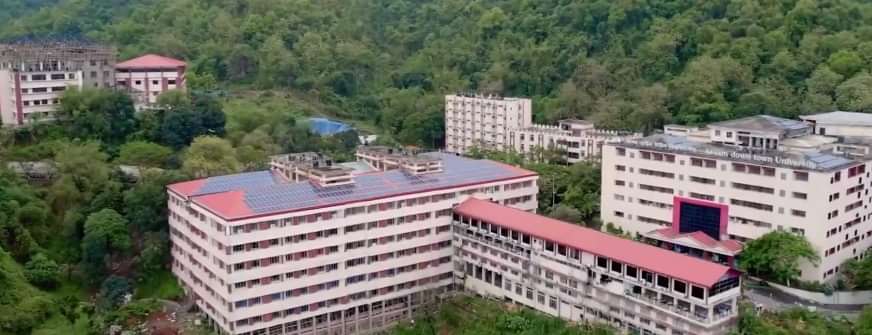
CODE Assam Down Town University
About
OfficialCODE Assam Down Town University is a other institution in Guwahati. CODE Assam Down Town University is a private engineering and technology-focused institution located in Guwahati, Assam's capital city. Established in 2009, the university emerged during a period of significant growth in India's private higher education sector, particularly in tier-2 and tier-3 cities. The institution was created with the explicit mandate to democratize quality engineering education in Northeast India, a region historically underserved by premier technical institutions despite having considerable talent. The university's name reflects its commitment to being deeply embedded in Guwahati's downtown area, making it accessible to students from across Assam and neighboring states. Academic Programs and Structure: CODE offers a diverse portfolio of engineering programs spanning Computer Science, Electronics & Communication, Mechanical, Civil, and Electrical Engineering at the undergraduate level. At the postgraduate level, the university provides specialized M.Tech programs in Data Science, Embedded Systems, Power Systems, and Structural Engineering. The university also offers integrated 5-year B.Tech programs and has recently introduced B.Sc programs in Physics, Chemistry, and Mathematics for students interested in science foundations. The curriculum emphasizes both theoretical rigor and practical applications, with mandatory industry internships during the academic calendar. Each undergraduate program typically admits 60-120 students per batch, with total undergraduate enrollment around 2,400 students. Postgraduate intake stands at approximately 400 students across all M.Tech specializations. Research and Academic Strengths: While CODE is not a research-intensive institution like the IITs, it maintains active research centers in Renewable Energy, IoT and Embedded Systems, Data Analytics, and Structural Health Monitoring. Faculty members are encouraged to pursue research grants, and the university has secured funding from various government schemes including DST and CSIR. However, the research output—measured by publications and citations—is modest compared to established institutions. The strength of CODE lies in teaching quality and industry-aligned curriculum design. The Computer Science faculty has particular expertise in machine learning applications, while Civil Engineering is known for structural analysis research. The institution has collaborative arrangements with universities in Singapore, Malaysia, and the UK, though student exchange programs remain limited due to funding constraints. Campus Infrastructure: The urban downtown location provides excellent connectivity to Guwahati's business districts and government offices. The campus spans approximately 12.5 acres and houses separate academic blocks for each engineering discipline, a modern central library with 85,000 volumes and digital access to major IEEE and ACM databases, well-equipped physics and chemistry labs, a computer center with over 500 systems, and a dedicated placement and internship cell. The campus does not have a hostel facility on-campus—a significant drawback for students from outside Guwahati. The university operates no official mess, leaving students to manage accommodation independently. The central cafeteria serves standard Indian and light continental fare at affordable rates (₹40-120 per meal). Internet connectivity throughout the campus is reliable (40 Mbps average) via a dedicated fiber connection. A campus shuttle service operates limited routes to major bus terminals and railway stations, but frequency is inconsistent, and many students rely on local auto-rickshaws or bike rentals. Placement Performance: CODE's placement record has improved incrementally over the past five years. In the 2023-24 academic year, the overall placement rate across all engineering branches was 82%, with Computer Science achieving 94% placements. The median salary across all branches stood at ₹6.2 lakhs, with Computer Science medians reaching ₹9.8 lakhs and core engineering branches averaging ₹5.1 lakhs. The highest salary offer received was ₹22 lakhs (for a CSE student at a fintech startup), though such outliers are rare. Top recruiters include Infosys, Cognizant, HCL, Wipro, TCS, and Accenture for software roles, alongside core companies like Bharat Heavy Electricals, Jindal Steel, and various state power utilities. A notable trend is increasing recruitment from startups and smaller product companies, particularly in Bangalore and Hyderabad. However, placement outcomes show clear tier-based stratification: students in the top 50% of their class consistently secure placements in 2-3 months, while students in the bottom quartile often remain unplaced until late, and some pursue further studies instead. The placement cell operates with a team of 8 professionals and maintains active relationships with approximately 180 organizations across IT, core engineering, and consulting sectors. Salary growth post-placement is typically modest (3-5% annually), a concern for students seeking rapid career acceleration. Campus Life and Student Experience: Student life at CODE is heavily shaped by the absence of on-campus hostel facilities. Most undergraduate students live in paying guest accommodations (PGs) or shared flats within 2-5 km of campus, creating an extended commute and limiting spontaneous campus interactions. Those commuting from home spend 1.5-2 hours daily on transport, impacting study time and participation in clubs. The student body is approximately 65% male across engineering disciplines, reflecting broader gender imbalances in technical education. The university actively promotes around 35 student clubs spanning coding (competitive programming, AI/ML), cultural activities (dance, music, theater), sports, and entrepreneurship. However, participation rates are modest—typically 15-20% of students per club—due to the decentralized living arrangement. Annual fests include TechFest (February, technical) attracting around 500 external participants, and CulturalFest (October, celebrating Northeast culture) with modest turnout. Sports facilities include a badminton court, table tennis setup, and basketball court within campus; however, there is no swimming pool, gymnasium, or cricket field on-campus, forcing sports-interested students to seek external facilities. The university organizes regular coding contests and hackathons, with winners receiving modest cash prizes (₹10,000-50,000). Ragging has been rare in recent years due to active anti-ragging committee oversight, though enforcement remains inconsistent. Safety for women students is considered average—while the campus itself is well-lit with CCTV coverage, women commuting via PG accommodations face typical urban safety challenges. The institution has dedicated women mentors and a grievance cell, though awareness among students about these mechanisms is limited. Faculty and Teaching Quality: The faculty comprises 280 members, of which approximately 45% hold a Ph.D., and 35% are pursuing doctoral degrees. Average faculty experience is 8-9 years, with a healthy mix of young researchers and experienced educators. Faculty publishing rates are modest—approximately 0.8 papers per faculty member per year on average, concentrated in Computer Science (1.2 papers/faculty) and negligible in Civil Engineering (0.3 papers/faculty). Teaching quality varies significantly by department: Computer Science and Electronics faculty are actively engaged with modern tools and frameworks; Civil and Mechanical departments rely more heavily on conventional textbook approaches. The student-faculty ratio is approximately 12:1, allowing for reasonable access, though office hours are inconsistently maintained. The university has invested in faculty development programs, sending around 15-20 faculty members annually for international workshops, funded through dedicated development budgets. However, faculty turnover remains a concern, with departures to IITs and better-paying private companies occurring at an annual rate of 5-8%. Admissions and Eligibility: CODE conducts its own entrance examination (CODE Entrance Test or CET) for undergraduate admissions, though students can alternately apply via JEE Main scores. The entrance test consists of Physics, Chemistry, and Mathematics questions at 10+2 level, conducted in multiple centers across Northeast India. For 2024-25, approximately 8,500 applications were received for around 600 undergraduate seats, resulting in an acceptance rate of approximately 7%. Postgraduate admissions are merit-based via GATE scores for M.Tech programs, with separate entrance tests for M.Sc programs. The university does not accept CAT for any program. Admission committees maintain reserved seats for SC, ST, OBC, and EWS categories as per government mandates (15% SC, 7.5% ST, 27% OBC, 10% EWS). A modest portion of seats (approximately 5%) are designated for students from economically weaker sections with fee concessions. International student admissions are minimal (fewer than 10 per year), typically from neighboring South Asian countries. Fee Structure and Financial Aid: Annual tuition fees for engineering undergraduates range from ₹2.20 lakhs to ₹2.40 lakhs depending on the branch (CSE at the higher end). Total 4-year program cost including all fees, lab charges, and development funds reaches approximately ₹10.50 lakhs. Postgraduate fees are higher at ₹3.50 lakhs per year (₹7 lakhs total). The university offers limited financial aid: merit scholarships to top 10% of each batch (covering 25-50% tuition) and need-based assistance to economically disadvantaged students (up to 10% of intake). Loans through government schemes like DISHA and SWAYAM are available but require standard bank documentation. Many families from Assam struggle with fee payments, resulting in approximately 8-12% of admitted students deferring or withdrawing before enrollment. This financial barrier is a key challenge for talented students from middle-income backgrounds. Why Students Choose CODE: Prospective students from Northeast India, particularly Assam, choose CODE primarily due to regional accessibility and comparatively lower fees than similar private institutions in metros. The institution's location in Guwahati—India's gateway to the Northeast—provides networking opportunities with government and public sector undertakings. Students seeking technical education without moving to hyper-competitive metros like Delhi, Bangalore, or Mumbai view CODE as a pragmatic middle ground. The curriculum emphasizes practical skills (internships, projects, industry visits), appealing to goal-oriented students. Increasing startup ecosystem engagement in Guwahati is beginning to attract entrepreneurship-minded students. However, students with strong JEE Main/Advanced scores typically aim for NIT Silchar or tier-1 private institutions, resulting in a selection bias toward students with average-to-good (not exceptional) competitive exam performance. Challenges and Limitations: Several factors limit CODE's perceived prestige and student outcomes. First, the institution lacks residential facilities, fragmenting campus community and limiting co-curricular engagement compared to IITs and leading NITs. Second, the location in Assam, while providing regional advantage, limits networking with metro-based tech companies and venture capital ecosystems critical for startups. Third, research output remains modest, limiting opportunities for academically inclined students pursuing doctoral degrees. Fourth, faculty retention challenges and modest salary packages (₹6-8 lakhs for junior faculty) compared to industry roles mean the institution loses talented young researchers. Fifth, while placements have improved, salary growth trajectories post-placement remain sluggish due to regional economic constraints. Sixth, the Guwahati talent market is smaller than metros, limiting internship diversity, particularly for non-CSE branches. Finally, perceptual bias—many parents and educators outside Assam view it as a secondary choice rather than a destination institution—affects student recruitment quality and institutional rankings. Who Should Apply: CODE Assam Down Town University is ideally suited for students meeting these criteria: (1) Aspiring engineers from Assam and Northeast India prioritizing accessibility and affordability without compromising academic rigor. (2) Students who score 60-85 percentile in JEE Main and seek a quality technical education without intense competitive pressure. (3) Those interested in core engineering disciplines (Civil, Mechanical, Electrical) with stable government/PSU career trajectories. (4) Computer Science enthusiasts from middle-class backgrounds seeking job-focused training in programming, data structures, and web/app development. (5) Students comfortable with self-managed accommodation and willing to develop independence through urban living. (6) Candidates interested in Northeast India's emerging development agenda (infrastructure, renewable energy, connectivity projects), where CODE alumni can contribute meaningfully. Students should avoid CODE if they: (1) Have strong JEE Main scores (90+ percentile) and access to better-ranked institutions. (2) Are pursuing highly specialized research interests requiring advanced lab facilities. (3) Require residential campus community and structured social infrastructure. (4) Seek immediate metro-level networking for startups or international opportunities. (5) Are internationally mobile and prefer institutions with strong global partnerships and exchange programs.