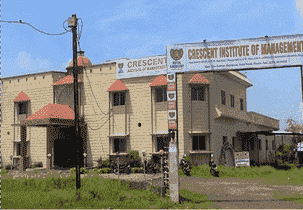
Crescent Institute of Management
About
OfficialCrescent Institute of Management is a other institution in Bhopal, established in 1999. Crescent Institute of Management (CIM), established in 2001, is a private management and commerce-focused institution located in suburban Bhopal, Madhya Pradesh. The institute was founded by the Crescent Education Society with a mission to develop management professionals equipped with contemporary business knowledge and ethical values. Over two decades, CIM has positioned itself as a significant player in business education in Central India, though it operates in a highly competitive landscape dominated by IIMs, XLRI, and other national-tier institutions. The institute offers primarily postgraduate and undergraduate programs in management, commerce, and business administration. Its flagship MBA program is offered on a full-time basis with specializations in Finance, Marketing, Human Resources, Operations, and International Business. Additionally, CIM provides Bachelor of Commerce (B.Com) programs with regular and honors tracks, BBA degrees, and diploma programs in various business disciplines. The academic structure follows semester-based systems with a blend of theoretical learning and practical case study methodology. Academic strength at CIM is built on a faculty base that includes academics from premier institutions and professionals with corporate backgrounds. Faculty members hold qualifications from universities like Delhi University, Banaras Hindu University, Rajasthan University, and some from international institutions. The institute emphasizes continuous faculty development through regular workshops, research seminars, and industry interface programs. However, the percentage of faculty with doctoral qualifications (approximately 35-40%) is lower than premier institutions, limiting original research output and doctoral program offerings. Research orientation at CIM is moderate. While the institute encourages faculty to pursue research projects and publish in peer-reviewed journals, it is not positioned as a research-intensive institution. Key research areas include business ethics, supply chain management, digital marketing, financial inclusion, and organizational behavior. The institute has limited funded research projects and minimal collaboration with national research bodies like UGC or ICSSR. Student research is primarily confined to thesis work for postgraduate programs rather than independent research opportunities. Campus infrastructure is functional but not exceptional for a tier-2 private management school. The 12.5-acre suburban campus includes academic blocks with classroom facilities, a library with approximately 45,000 books and access to online databases (Emerald, JSTOR, ProQuest), computer labs, a dedicated placement cell, and administrative offices. Hostel facilities exist but are limited in capacity (accommodating only 35-40% of students). Wi-Fi coverage is available across campus, though internet bandwidth during peak hours can be inconsistent. The campus lacks a dedicated research facility, innovation lab, or incubation center typical of higher-tier institutions. Placement outcomes are moderate to respectable for tier-2 institutions. In the 2023-24 academic year, approximately 78-82% of MBA graduates secured placements within 6 months of graduation. Median salary for MBA graduates hovers around 6.5-7.5 LPA, with top performers exceeding 12-13 LPA. Major recruiters include companies from finance (Axis Bank, IDBI), IT services (TCS, Infosys), FMCG (Nestlé, ITC), consulting (Deloitte, Accenture), and e-commerce (Amazon, Flipkart) sectors. However, placements are not guaranteed, and a significant portion of unplaced students resort to freelancing, startup ventures, or further education abroad. B.Com and BBA placements are comparatively weaker, with salary packages in the 3-5 LPA range. Campus life at CIM is reasonably vibrant but lacks the buzz of larger metropolitan universities. Student clubs include technical clubs (Data Analytics Club, Finance Club), cultural societies, sports teams, and entrepreneurship cells. The institute conducts annual fests including "CrescendoFest" (cultural event) and "CrescendoXL" (management fest featuring case competitions, business quizzes, and industry talks). Sports facilities are basic, including a basketball court, badminton court, and gym. Hostel life is present but limited in capacity, creating a largely commuter-based student body. Ragging is minimal to non-existent due to active anti-ragging committees, though general institutional oversight could be tighter. What makes CIM unique: The institute's emphasis on ethics and values-based education, its location in Bhopal (a relatively underserved educational hub), and its focus on creating socially conscious business leaders differentiate it from purely profit-driven institutions. The relatively small batch size (MBA intake approximately 120-150) allows for personalized mentoring and closer faculty-student interactions compared to larger programs. Additionally, industry partnerships with regional businesses and a growing alumni network create networking opportunities. Who should apply: CIM is suitable for students seeking a management degree from a reputed tier-2 institution at reasonable fees, those who prioritize ethics and sustainability in business education, and candidates from Madhya Pradesh or Central India looking to stay within their region. It is NOT ideal for students targeting top consulting firms (McKinsey, BCG, Bain), multinational investment banks (Goldman Sachs, Morgan Stanley), or highly competitive finance roles, as placement networks skew toward mid-tier companies. Similarly, students pursuing pure research or doctoral aspirations should explore institutions with stronger research credentials. The institution offers reasonable value for money but requires realistic expectations about brand value and placement outcomes compared to national-tier schools.