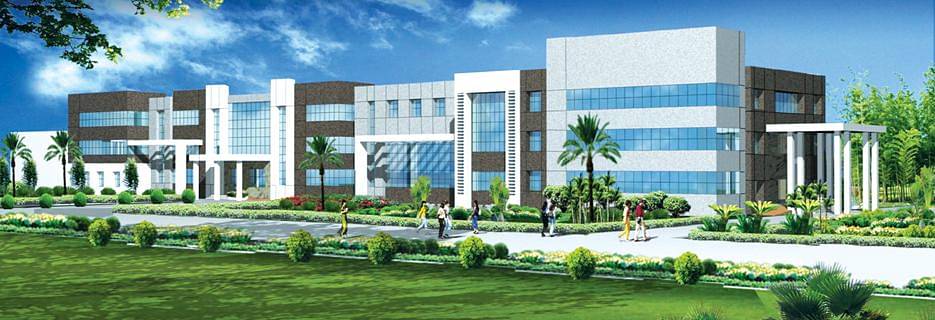
Chalmeda Anand Rao Institute of Medical Sciences
About
OfficialChalmeda Anand Rao Institute of Medical Sciences is a other institution in Hyderabad, established in 2006. Chalmeda Anand Rao Institute of Medical Sciences (CAIMS) is a private medical college established in 2008 in Keesara, a suburban area on the outskirts of Hyderabad, Andhra Pradesh. Named after the philanthropist Chalmeda Anand Rao, the institution was founded with the vision of providing quality medical education and healthcare services to the region. While not as historically prominent as older AIIMS or government medical colleges, CAIMS has steadily built its reputation as a competent medical education institution in the private sector. The college is affiliated with Osmania University and offers undergraduate and postgraduate medical programs. It operates a 500-bed teaching hospital on campus, which serves as the primary clinical training ground for students. The hospital handles significant patient loads, providing students with substantial exposure to diverse clinical cases and conditions. The institution is recognized by the Medical Council of India (now National Medical Commission) and is listed in the MDCAT directory. Academically, CAIMS follows the standard MBBS curriculum as prescribed by the National Medical Commission with four-year integrated programs supplemented by two years of compulsory rotatory internship. The college emphasizes both theoretical knowledge and practical clinical skills. Postgraduate programs include MD/MS courses in various specializations such as General Medicine, Surgery, Obstetrics & Gynaecology, Pediatrics, Psychiatry, and others. Research opportunities exist but are more clinically oriented than research-heavy compared to premier institutions. The campus is well-developed with modern medical infrastructure. The teaching hospital features departments covering major medical specialties with ICU facilities, operation theaters, and diagnostic centers. The college has invested in digital learning platforms and e-learning resources, particularly post-COVID. However, the location in Keesara, approximately 35-40 km from central Hyderabad, creates a significant commute challenge for day scholars and limits spontaneous access to the city's academic and cultural amenities. Placement and career prospects are reasonable but not exceptional. Many CAIMS graduates pursue postgraduate studies rather than directly entering practice, which is typical for Indian medical graduates. Those seeking PG seats at premier institutions (AIIMS, CMC Vellore, etc.) find the competition significant, though some students do secure admissions. For those entering clinical practice, job opportunities are available through hospital associations and private practice. The college has established relationships with various hospitals across India for internship and postgraduate training. Campus life is moderate. Being a medical college, the curriculum is demanding and time-intensive, leaving limited time for extracurricular activities. Student clubs exist for cultural and sports activities, but participation is lower compared to engineering or management institutions. The college conducts annual medical conferences and health awareness camps. Gender dynamics are reasonably balanced with increasing female enrollment, though hostel facilities reflect gender-segregated arrangements typical of Indian medical education. The student demographic comprises primarily students from Andhra Pradesh, Telangana, and neighboring states, with some all-India admissions through merit-based seats. The fee structure is moderate for a private medical college—significantly higher than government seats but lower than premium private chains. This positions it as an accessible option for middle-class families seeking private medical education without the exorbitant costs of top-tier private colleges. Challenges include the peripheral location reducing city exposure, research infrastructure being limited compared to government medical colleges, and the college's relatively recent establishment meaning alumni networks are still developing. Faculty turnover has been a concern in some departments. Some students report that despite having a teaching hospital, practical exposure in certain specializations can be limited due to patient load variations and patient preferences. CAIMS is recommended for students who secure NEET scores sufficient for admission but fall short of government medical college cutoffs, have financial constraints preventing premium private college fees, prioritize accessible medical education over prestige, and are comfortable with the suburban location. It's suitable for candidates planning to pursue postgraduate studies (as the PG entrance exams—NEET-PG, FMGE—are independent of undergraduate institution reputation) or for those planning to establish practice in Hyderabad or Telangana region where local connections matter. The institution represents a middle ground in Indian medical education—significantly better than unaccredited online or dubious medical programs, but not at the level of premier government or top private institutions. Student outcomes depend heavily on individual dedication and self-directed learning.