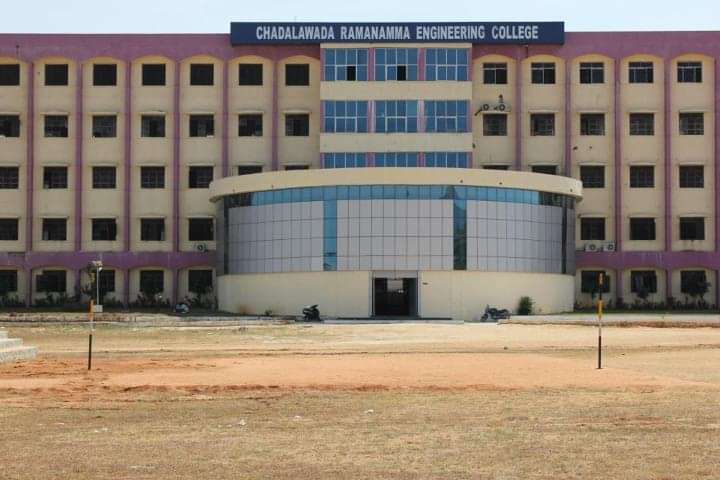
Chadalawada Ramanamma Engineering College
About
OfficialChadalawada Ramanamma Engineering College is a other institution in Tirupati, established in 2004. Chadalawada Ramanamma Engineering College (CREC), established in 1997, is a private engineering institution located in Tirupati, Andhra Pradesh. Founded under the umbrella of Chadalawada Educational Trust, the college has grown to become a moderately respected engineering college in the southern region, though it remains significantly below the tier of IITs, NITs, and top private engineering colleges like Manipal, VIT, or BITS Pilani. The college is positioned as a regional engineering college serving students primarily from Andhra Pradesh and neighboring states seeking undergraduate engineering degrees at an accessible fee structure. The institution operates under AICTE approval and is affiliated with JNTUA (Jawaharlal Nehru Technological University, Anantapur), which governs curriculum and examination standards for the region's engineering colleges. The college offers undergraduate (4-year) engineering programs in seven core disciplines: Computer Science & Engineering, Electronics and Communication Engineering, Electrical and Electronics Engineering, Mechanical Engineering, Civil Engineering, Chemical Engineering, and Information Technology. Additionally, it offers integrated dual-degree programs and some postgraduate specializations. The infrastructure includes separate engineering blocks for each branch, though facilities vary significantly by department. The CSE and IT departments are relatively well-equipped with modern labs, while mechanical and civil engineering departments rely on older but functional equipment. Academic rigor at CREC is moderate. While the curriculum follows JNTUA standards and covers foundational engineering concepts thoroughly, the college is not known for producing exceptional research or innovation. Faculty members are predominantly Master's degree holders, with limited doctoral qualifications (approximately 18-22% hold PhDs), which impacts research capabilities. The teaching methodology relies heavily on traditional classroom instruction with limited emphasis on project-based learning or industry collaboration in early semesters. However, final-year students engage in meaningful capstone projects and industry-sponsored assignments. Placement performance is the college's strongest metric. Across 2023-24, CREC achieved approximately 82-85% placement rate for engineering undergraduates, which is respectable for a college of its tier. The median salary hovers around 4.5-5.2 lakhs INR annually, with highest packages reaching 9-10 lakhs for top CSE graduates. Technology companies like TCS, Infosys, Cognizant, HCL, and Wipro are regular recruiters. Core engineering placements (mechanical, civil, electrical) are weaker, with many graduates needing to accept roles in non-core areas like IT services or manufacturing support functions. The placement data shows clear branch-wise disparities: CSE/IT students achieve 88-92% placement with better salary packages, while civil engineering placement hovers around 65-70%. Campus life at CREC is functional but not vibrant. The college has approximately 25-30 student clubs covering technical, cultural, and sports domains. Annual events include Technovision (technical fest) and Euphoria (cultural fest), though these remain relatively modest in scale compared to tier-1 institutions. Hostel facilities exist separately for male and female students with basic amenities—2 or 4-sharing dormitory configurations. While hostel quality is adequate for living, it is decidedly below luxury standards; rooms lack air conditioning in most sections, and infrastructure maintenance is inconsistent. Mess food is served on rotation between multiple vendors with average quality; many students prefer eating outside or ordering from local restaurants. Internet connectivity on campus is available but frequently experiences bandwidth limitations during peak usage hours. The college is situated in suburban Tirupati, approximately 15 km from the city center and 45 km from Tirupati Railway Station. This location offers both advantages and disadvantages. Proximity to Tirupati's religious and cultural heritage provides a unique academic environment with moderate cost of living. However, the suburban setting limits nightlife, entertainment options, and access to major corporate office parks—students seeking internship opportunities in major IT hubs need to travel to Hyderabad or Bangalore. Public transportation relies primarily on auto-rickshaws and local buses; the city lacks metro rail or organized bus rapid transit. Admissions are merit-based through the unified EAMCET (Engineering Agriculture Medical Common Entrance Test) conducted by Andhra Pradesh. The college typically receives 15,000-18,000 applications for approximately 600 undergraduate seats across all branches. Cutoff ranks vary significantly by branch and category: CSE typically requires ranks between 4,000-8,000 (General), while civil engineering accepts ranks up to 25,000-30,000. The acceptance rate (among applicants) is approximately 3.5-4.5%, though this is artificially depressed by applicants using the college as a backup option. Infrastructure quality is mixed. The college has invested in modern computer labs for CSE/IT departments with systems refreshed within the past 3-4 years. Science laboratories for physics, chemistry, and engineering sciences are adequately equipped but aging. The library holds approximately 35,000 books with limited digital journals subscriptions compared to tier-1 colleges; students often rely on alternative open-access resources. WiFi coverage exists across campus but experiences frequent disconnections. The college has a dedicated placement cell with one full-time placement officer and administrative staff who work with 80-120 recruiting organizations annually. Faculty quality is a significant concern. While senior faculty members have 15-20+ years of industry or academic experience, a substantial portion of junior faculty lack industry exposure or research experience. Faculty-student ratio is approximately 1:15, which is acceptable for engineering education but limits personalized mentoring. Professional development of faculty through conferences, workshops, and sabbaticals is limited compared to premier institutions. Who should apply: CREC is suitable for students with EAMCET ranks between 8,000-20,000 (General category) seeking affordable, board-recognized engineering education without expectation of placement at elite tech companies. The college works best for students from Andhra Pradesh or nearby states who prefer minimizing relocation costs and traveling home on weekends. It is NOT recommended for students with ranks below 8,000 who might secure admission at NITs or better private colleges, nor for students seeking research-intensive academics or world-class infrastructure. The college serves a demographic of middle-class families prioritizing degree completion and basic placement support over prestige or exceptional academic environment. Students with entrepreneurial inclinations or academic excellence should aim higher; students seeking value-for-money, decent teaching, and reliable placement support may find CREC adequate.