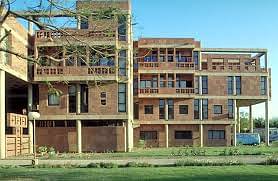
Central Institute of Education
About
OfficialCentral Institute of Education is a other institution in Delhi, established in 1947. The Central Institute of Education (CIE) is a prestigious autonomous college of the University of Delhi, established in 1947, situated at the heart of Delhi's North Campus. Originally founded to address the critical shortage of trained teachers post-independence, CIE has evolved into a leading institution for educational research, teacher education, and humanities education in South Asia. The institute was established under the visionary leadership of Dr. Zakir Hussain and Dr. Sarvepalli Radhakrishnan, both prominent educational reformers of independent India. CIE's foundational mission centres on producing educators who combine academic excellence with social consciousness and progressive pedagogical practices. The institute has maintained this commitment for over 75 years, making it one of the oldest teacher education institutions in India. Its location on North Campus, surrounded by Delhi University's premier colleges, creates an intellectually vibrant ecosystem that attracts scholars, researchers, and students committed to educational transformation. Academic Programs and Curriculum: CIE offers a range of undergraduate and postgraduate programs in education, humanities, and social sciences. The Bachelor of Education (B.Ed) program, spanning 2 years, is the flagship offering and focuses on developing reflective practitioners equipped with both subject expertise and contemporary pedagogical skills. The Master of Education (M.Ed) program, available in multiple specializations including Educational Psychology, Comparative Education, and Higher Education, attracts educators pursuing advanced research. The institute also offers B.A. Honours in Psychology and Sociology, B.A. in Education Studies, and M.A. programs in Education and related disciplines. Unlike many teacher education colleges that focus solely on curriculum delivery, CIE emphasizes experiential learning, critical reflection, and action research. Students engage with field-based projects in collaboration with schools across Delhi, gaining practical exposure to classroom dynamics, educational challenges, and innovative teaching methodologies. The curriculum is regularly updated to incorporate contemporary issues including digital literacy, inclusive education, environmental sustainability, and social justice frameworks. Research Strengths and Scholarly Contributions: CIE has established itself as a research powerhouse in educational studies. The institute houses specialized research centers including the Centre for Educational Research in Public Systems and the Centre for Teacher Development and Research. Faculty members regularly publish in national and international peer-reviewed journals, with particular strengths in comparative education systems, teacher effectiveness studies, educational policy analysis, and the sociology of education. The institute has conducted landmark studies on the state of primary education in Delhi, teacher professional development, curriculum effectiveness, and educational equity. CIE researchers have contributed significantly to policy discussions on National Education Policy implementation, inclusive education frameworks, and digital learning in Indian classrooms. The institute maintains active collaborations with UNESCO, British Council India, and international universities including University of Bath, University of Sussex, and Heidelberg University. Campus and Facilities: Despite its compact urban location, CIE maintains a scholarly atmosphere with a well-stocked library containing over 15,000 volumes with specialization in education, psychology, and social sciences. The institute has upgraded its technological infrastructure with computer labs, Wi-Fi connectivity, and multimedia classrooms. The campus houses faculty offices, student interaction spaces, and administrative areas, though on-campus hostel facilities are limited due to urban space constraints. Many students reside in university hostels or private accommodations within walking distance of the campus. Placement and Career Outcomes: Graduates of CIE pursue diverse career paths extending beyond conventional teaching. While approximately 40-45% of B.Ed graduates join schools as educators, others enter educational administration, curriculum development, educational publishing, NGO-based educational programs, and international development organizations. M.Ed graduates frequently pursue academic careers, research positions in educational institutions, or policy roles in government and international organizations. CIE alumni occupy influential positions in Indian education. Many have become principals and educational leaders in premier Delhi schools and central schools. Numerous alumni pursue doctoral studies at reputed universities globally, particularly in education policy, comparative education, and educational psychology. The institute maintains a strong alumni network that actively engages with current students through mentorship and career guidance. Notable Alumni and Impact: CIE has produced several educators and scholars who have shaped educational discourse in India. Alumni include eminent education policy specialists, directors of major educational institutions, leading school principals, and academic researchers published in top international journals. The institute's alumni are recognized for bringing progressive pedagogical innovations to Indian classrooms and advocating for educational equity. Campus Life and Student Experience: Student life at CIE is characterized by intellectual engagement, collaborative learning, and social commitment. The small cohort size (typically 60-80 students per program) enables close faculty-student interaction and personalized guidance. Students engage in seminar discussions, research presentations, and collaborative projects. The institute organizes regular seminars featuring visiting scholars, educational practitioners, and policymakers, exposing students to cutting-edge educational discourse. Cultural and academic clubs foster intellectual development. Regular workshops on contemporary educational issues, teaching demonstrations, and peer mentoring sessions create a learning community. The annual educational research conference and faculty-student seminar series are highlights of the academic calendar. Given its location on North Campus, students benefit from proximity to other academic institutions, cultural venues, and the broader Delhi university ecosystem. Challenge and Limitations: CIE's urban location, while intellectually beneficial, means limited on-campus hostel capacity. Students, particularly those from outside Delhi, must secure private accommodation, adding to living costs. Campus facilities, while well-maintained, are necessarily compact. The institute's selective admission process means high competition, particularly for M.Ed programs. Class sizes remain small, which ensures quality but limits overall enrollment numbers. Who Should Apply: CIE is ideal for candidates committed to educational excellence and social transformation. The institute suits students passionate about teaching, educational research, and policy. Candidates should value intellectual discourse, field engagement, and pedagogical innovation over purely career-driven outcomes. Those seeking to understand education as a tool for social change, and who are willing to engage critically with contemporary educational challenges, will thrive here. The institute particularly appeals to candidates from diverse socioeconomic backgrounds who see education as a vehicle for social mobility and equity.