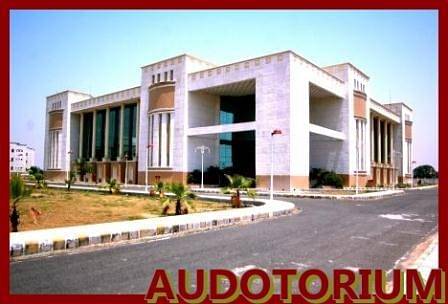
Chaudhary Charan Singh Post Graduate College
About
OfficialChaudhary Charan Singh Post Graduate College is a other institution in Etawah, established in 2010. Chaudhary Charan Singh Post Graduate College (commonly known as CCS College) is one of Etawah's oldest and most established educational institutions, founded in 1962 with a mission to provide quality post-graduate education in the region. Named after the legendary farmer leader and former Prime Minister of India, the college carries a legacy of social commitment and academic excellence. Located in the heart of Etawah, a historic city in western Uttar Pradesh, the college serves as a crucial educational hub for students from surrounding districts including Mainpuri, Kasganj, and Auraiya. The college offers a diverse range of post-graduate and under-graduate programs across sciences, arts, and commerce disciplines. Primary strengths lie in physics, chemistry, mathematics, botany, zoology, English literature, and history. The institution has evolved significantly over six decades, incorporating modern teaching methodologies while maintaining strong foundational academic rigor. The college is affiliated with Bundelkhand University, Jhansi, and operates under the regulatory framework of UGC and state education authorities. Academic programs span Master's degrees in Physics (specializations in Nuclear Physics and Materials Science), Chemistry (Organic and Analytical Chemistry), Zoology (Molecular Biology and Ecology), Botany (Plant Physiology and Taxonomy), English (Indian Literature and Linguistics), History (Ancient and Medieval India), and Commerce (Accounting and Finance). Bachelor's honors programs are offered in these disciplines plus Mathematics and Economics. The college has developed research centers in environmental science and polymer chemistry, generating publications in national and regional journals. Research strengths are moderate but growing. Faculty members actively engage in UGC-sponsored minor research projects focusing on agricultural science applications, water quality assessment, and herbal drug development—areas naturally aligned with the region's agrarian economy. However, research infrastructure remains basic compared to central universities; funding is limited and PhD programs are not offered at the college level. The college encourages faculty participation in national seminars and workshops, though publication volumes lag behind tier-1 institutions. Campus life is characterized by a tight-knit academic community. The college hosts annual cultural festivals including Founder's Day celebrations in October and departmental seminars. Student clubs exist in debates, drama, sports, and environmental awareness, though participation rates vary. The sports facilities include a modest cricket ground, badminton courts, and a volleyball court. However, students often note that extra-curricular opportunities are fewer compared to larger metropolitan colleges. The library holds approximately 45,000 volumes with limited online databases (primarily JSTOR access granted through university consortium). Placement outcomes are realistic for a regional post-graduate college. Average placement rates hover around 55-65% for Master's graduates, with most placements in teaching (government and private schools), civil service coaching, and entry-level corporate positions in retail, banking, and consulting. The college does not have a dedicated placement cell and relies on individual faculty recommendations and university job drives. Salary packages for non-teaching positions typically range from ₹18,000-₹28,000 monthly for fresh graduates, far below IIT/IIM standards. Some graduates pursue civil service exams (UPSC, UPPSC, STET) with moderate success; the college reports 2-3 UPPSC selections annually. Notable alumni include district-level administrators, school principals, and mid-level corporate professionals in finance sectors. The college has produced several civil servants and a few entrepreneurs in education technology. However, the alumni network is not particularly strong or organized; there is no formal alumni association for career mentoring. The infrastructure reflects a public college with budget constraints. Classrooms are basic with blackboards and occasional LCD projectors; air-conditioning is limited to administrative offices. Laboratory facilities for science subjects are adequate but aging—lab equipment was last upgraded in 2015-2016. Computer labs exist but are dated, with slow internet connectivity affecting online research. Hostel facilities are available but meet minimal standards; women's hostel is newer (built 2012) with better amenities than men's hostel (built 1987). Who should apply: This college is suitable for serious science and humanities scholars who are content with regional recognition and have reasonable expectations about placement. Strong candidates aspiring for research careers should consider central universities instead. The college is ideal for students seeking affordable, quality post-graduate education in a peaceful, semi-urban environment with access to foundational academic infrastructure. Students planning to pursue government jobs (UPSC, state services, teaching) or continuing to doctoral programs elsewhere will find adequate preparation. The college is NOT recommended for those prioritizing high corporate packages, industry research exposure, or metro-level campus life. Etawah's location is a significant constraint—it lacks the urban ecosystem of tier-1 cities, limiting internship and placement opportunities. Key considerations: Admission is merit-based via state entrance examinations (for some PG programs) and merit scores. Competition is moderate; cutoff scores are significantly lower than Delhi University or BHU. The teaching medium is Hindi and English. Female students constitute 45-50% of the student body, and the college has implemented basic gender safety measures including CCTV cameras and counseling cells. However, the broader city of Etawah lacks the cosmopolitan atmosphere of larger metros, which may be a concern for some students.