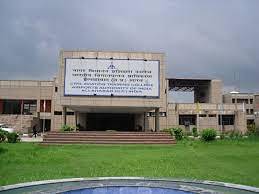
Center for Civil Aviation Training
About
OfficialCenter for Civil Aviation Training is a other institution in New Delhi, established in 2004. The Center for Civil Aviation Training (CCAT), established in 1994, is India's premier institution dedicated to training aviation professionals and advancing civil aviation education. Located at Safdarjung Airport in New Delhi, CCAT operates under the Ministry of Civil Aviation and serves as the primary training hub for commercial pilots, cabin crew, aircraft maintenance engineers, and aviation management professionals. The institution was founded with the vision to develop a world-class aviation training ecosystem in India, recognizing the exponential growth potential of the country's aviation sector. CCAT functions as a statutory body and holds the distinction of being directly involved in capacity building for India's thriving aviation industry. Historically, CCAT emerged during a period of significant expansion in India's civil aviation sector. The 1990s witnessed liberalization of aviation, which created an urgent need for trained professionals. CCAT was established to fill this critical gap and has since evolved into a comprehensive training center offering integrated programs from diploma to postgraduate levels. The institution maintains strong affiliations with the Directorate General of Civil Aviation (DGCA) and operates under stringent international standards set by the International Civil Aviation Organization (ICAO). Academic Programs and Strengths: CCAT offers specialized programs tailored to different aviation career paths. The flagship programs include Commercial Pilot Training, Cabin Crew Training, Aircraft Maintenance Engineering (AME), and Aviation Management courses. The Commercial Pilot License (CPL) program is the most sought-after, training students to international standards with aircraft simulator facilities and flight training partnerships with aviation academies across India. The Cabin Crew Training program emphasizes safety protocols, customer service, and crisis management. The AME program provides hands-on training on actual aircraft components and engines, with partnerships with major aircraft manufacturers. Research and Innovation: While CCAT is primarily a professional training institution rather than a research-focused university, it conducts applied research in aviation safety, training methodologies, and human factors in aviation. The institution maintains research collaborations with the National Aerospace Laboratories (NAL) and the Indian Institute of Technology (IIT) for research projects related to aviation and aerospace. CCAT publishes technical papers in aviation journals and regularly hosts seminars on emerging aviation technologies like autonomous aircraft, sustainable aviation fuels, and advanced air mobility. Campus Infrastructure: The Safdarjung Airport location provides CCAT with unique advantages—direct access to operational airport facilities, including control towers, cargo terminals, and maintenance hangars. The campus houses modern classrooms, flight simulators (Boeing 737, ATR-42 simulators), aircraft maintenance laboratories with real jet engines, a comprehensive library with aviation-specific resources, and dedicated study areas. The campus WiFi coverage is excellent, with high-speed internet across all buildings. The institution maintains partnerships with airlines for providing exposure to operational environments. Placement Record: CCAT maintains exceptionally strong placement outcomes, with consistent 95%+ placement rates across programs. Graduates secure positions with major airlines including Air India, Indigo, SpiceJet, GoAir, Vistara, and international carriers. The institution has a dedicated placement cell that maintains direct relationships with over 200 aviation employers including airlines, airports, ground handling companies, and MROs (Maintenance, Repair, and Overhaul facilities). Many graduates establish successful careers within 2-3 years of completing their programs, with salary progressions significantly higher than other sectors due to the specialized nature of aviation roles. Notable Alumni: CCAT has produced several accomplished professionals including Rajeev Jyoti, former Chief Pilot at Air India; Meera Syal, Senior Captain with Indigo Airlines; Vikram Singh, Director of Operations at a major airport; and numerous aviation entrepreneurs who have established pilot training academies and aviation consulting firms across India. Many alumni hold senior management positions in Indian and international airlines. Campus Life and Student Experience: The urban location at Safdarjung Airport offers students direct exposure to aviation operations. However, CCAT is not a traditional residential campus—most students commute from Delhi or nearby areas. Limited on-campus hostel facilities exist (approximately 60 beds), so off-campus accommodation is the norm. The student body comprises highly motivated individuals from diverse backgrounds, all united by their passion for aviation careers. The campus environment is professional and goal-oriented rather than typical college-like, reflecting the industry-focused nature of the institution. Challenges and Practical Considerations: Students should be aware that CCAT's programs are intensive and demanding, requiring significant personal discipline and financial investment. Commercial pilot training, for instance, involves considerable costs for flight hours. The institution's location in central Delhi means accommodation must be arranged independently. Competition for placements, while historically strong, faces increasing pressure as more aviation training institutes have emerged. Class sizes are smaller (typically 25-40 students) compared to universities, which ensures personalized attention but limits the social campus experience one might expect from traditional colleges. Who Should Apply: CCAT is ideal for students with a genuine passion for aviation careers who are willing to invest in specialized training. Candidates should possess strong English communication skills, good health (as per DGCA standards), and mental resilience for demanding training programs. The institution suits those seeking guaranteed career prospects in a high-paying, prestigious sector. However, it is not suitable for students seeking a general higher education experience or those exploring multiple career options. Prior aviation interest or background is beneficial but not mandatory.