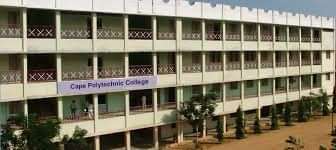
Cape Polytechnic College
About
OfficialCape Polytechnic College is a other institution in Kanyakumari, established in 2008. Cape Polytechnic College, established in 1987, is a state government polytechnic institution located in Kanyakumari district, the southernmost region of Tamil Nadu. The college serves as a significant educational hub for technical education in the Kanyakumari region, providing diploma and advanced diploma programs across multiple engineering disciplines. Founded with the vision of producing skilled technical manpower for industrial development, Cape Polytechnic has evolved to become one of the recognized polytechnic institutions under the Directorate of Technical Education, Tamil Nadu. The institution is strategically positioned to serve the educational needs of students from Kanyakumari, Tirunelveli, and surrounding districts, offering accessible technical education to students who might not otherwise have access to premier institutions. The college operates on a 25-acre suburban campus with modern infrastructure, though infrastructure development continues as a work-in-progress. Academic programs focus on diploma and advanced diploma qualifications in civil, mechanical, electrical, electronics, and computer science engineering disciplines. The teaching methodology emphasizes practical skill development through well-equipped workshops and laboratories. The college maintains an industry-orientation approach with guest lectures, internship programs, and industrial visits embedded in the curriculum. Faculty members are encouraged to participate in professional development activities and maintain industry connections. The placement cell actively engages with industrial partners to facilitate student placements. In recent years, Cape Polytechnic has seen increasing recruitment from IT companies, manufacturing units, and infrastructure development organizations. Notable strengths include low student-faculty ratios in specialized labs, hands-on workshop training, and strong connections with local industries in Kanyakumari and surrounding regions. The college has established tie-ups with manufacturing units, IT companies, and infrastructure firms for placements and internships. Campus life is characterized by cultural diversity, with students from Tamil Nadu, Kerala, and neighboring regions. The college actively promotes technical clubs, cultural societies, and sports activities. Annual technical fests and cultural programs provide platforms for student engagement. However, the college faces infrastructure limitations typical of state polytechnic institutions, with less-frequent updates to computing facilities compared to private polytechnics. Internet connectivity and library resources, while adequate, are not at premium levels. Hostel facilities are basic but functional, primarily designed for students from distant regions. The college is ideal for students seeking affordable, quality technical education in a supportive environment without the pressure of highly competitive entrance exams. It serves students who have completed their 10th standard and seek diploma-level technical qualifications or those pursuing advanced diplomas. The institution particularly suits students from Kanyakumari, Tirunelveli, and surrounding districts seeking local technical education with reasonable placement prospects. The college is not recommended for students seeking top-tier placements at multinational corporations or those prioritizing campus infrastructure grandeur. Academic rigor is moderate, with focus on practical skills rather than theoretical excellence. The college's strength lies in producing job-ready technicians for local and regional industries rather than producing research scholars or IIT aspirants. Admission is primarily through merit-based selection based on SSLC/SSC percentages for diploma programs, with no national-level entrance exams required. This democratic admission process makes the college accessible to economically weaker sections and first-generation learners. The institution emphasizes inclusive education and supports backward communities through dedicated seats and scholarship programs as per government norms.