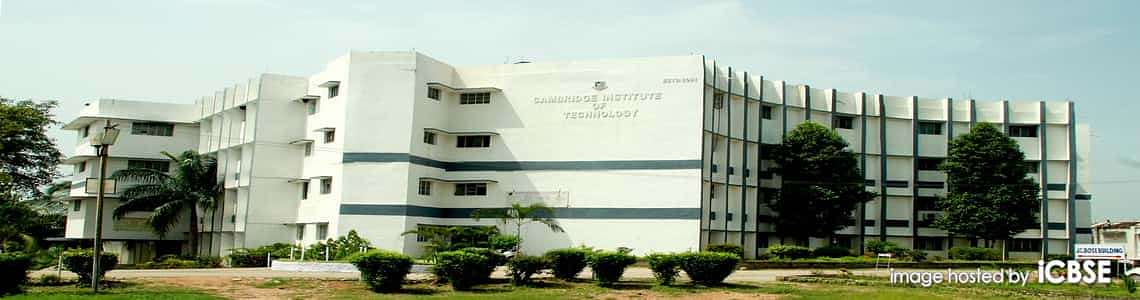
Cambridge Institute of Technology
About
OfficialCambridge Institute of Technology is a private institution in Ranchi, established in 2001. Cambridge Institute of Technology (CIT), Ranchi, was established in 2002 as a private engineering college in Jharkhand. Located on the outskirts of Ranchi in the Doranda area, it operates under the AICTE approval framework and is affiliated with Jharkhand Rai University (formerly Ranchi University). Over two decades, CIT has evolved from a small engineering institute into a multi-disciplinary institution offering undergraduate and postgraduate programs across engineering, management, and science disciplines. The institution serves approximately 3,200 students across multiple programs with a faculty strength of 280 educators. Academic Programs and Structure: CIT offers B.Tech programs in 8 major disciplines including Computer Science & Engineering, Electronics & Communication Engineering, Mechanical Engineering, Civil Engineering, Electrical Engineering, Information Technology, and emerging streams like Data Science and Artificial Intelligence. The college conducts B.Tech admissions through JEE Main counseling (state and central pools) as well as merit-based direct admission for candidates from outside JEE. The undergraduate programs have a standard 4-year duration with an intake of approximately 600-700 students annually. At the postgraduate level, CIT offers M.Tech programs in select specializations, primarily in Computer Science, Power Electronics, and Structural Engineering with smaller intake capacities (20-40 per branch). The college also runs BBA and MBA programs through its management school, typically attracting 100-150 students annually. Additionally, B.Sc programs in various science disciplines are offered to students seeking pure science education. Campus Infrastructure: The 42-acre suburban campus in Doranda provides adequate space for academic and residential facilities. The campus houses separate engineering buildings for different departments, a central library with approximately 35,000 books and digital access to major journals, computer labs equipped with modern workstations, research laboratories for engineering disciplines, and a sports complex with indoor and outdoor facilities. However, infrastructure quality is comparable to mid-tier private engineering colleges rather than top-tier institutions—some buildings show signs of aging, and laboratory equipment is periodically updated but not always state-of-the-art. The campus has WiFi coverage in academic areas and hostel zones, though connectivity can be intermittent during peak hours. The central cafeteria serves multi-cuisine food with acceptable quality, and banking facilities (ATM and cooperative bank branch) operate on campus. Placement and Career Outcomes: CIT has maintained a consistent placement record with approximately 85-90% of eligible students securing job offers in the 2023-24 academic year. The median salary package hovers around 4.5-5.2 LPA (Lakhs Per Annum), with highest packages reaching 12-14 LPA in competitive years. Top recruiters include major IT companies (TCS, Infosys, Wipro, HCL, Cognizant), core engineering firms (SAIL, NTPC, Power Grid), consulting firms, and banking sector organizations. The placement cell maintains active industry connections and conducts regular campus recruitment drives. However, placement outcomes vary significantly by branch—Computer Science and IT branches achieve 95%+ placements, while Civil and Mechanical branches see 70-80% placement rates. Many graduates work in Tier-2 and Tier-3 cities rather than metropolitan hubs, with salary packages accordingly adjusted. The college facilitates internships during the summer break, though not all internships convert to full-time offers. Faculty and Research: The faculty comprises approximately 280 members, with roughly 35-40% holding PhD degrees. While faculty engagement in research is present, the college is not known as a research powerhouse. There are limited funded research projects and publications in high-impact journals. Some faculty members engage in consulting work and industry collaborations, particularly in departments like CSE and ECE. The college has established industry partnerships with companies like TCS, Infosys, and HP for student development and training programs. Research facilities are basic compared to IITs or top NITs, though emerging areas like AI/ML have newer equipment. Admissions and Competitiveness: CIT operates a hybrid admissions model. For the JEE Main cutoff, the college typically selects candidates in the rank range of 90,000-150,000 (AIR) for Computer Science and IT branches (General category), while other branches fall in 150,000-300,000+ rank range. Merit-based direct admissions are also significant, especially for candidates from Jharkhand and neighboring states. The institution accepts applications throughout the year for management quota seats (typically 15% of intake). Acceptance rates are relatively high (40-60% of applicants) due to moderate to lower competition compared to NITs or top private universities. The application process involves online submission of JEE scores or merit certificates, followed by counseling and admission. Campus Life and Student Experience: The college provides hostel accommodation for approximately 40-50% of the student population. Separate hostels for boys and girls operate with dormitory-style rooms (2-3 students per room) and basic amenities including bedding, study tables, and attached bathrooms. Hostel monthly fees range from 4,500-7,500 INR depending on occupancy and facilities. The college mess operates with multiple meal options (vegetarian and non-vegetarian) at approximately 2,500-3,500 INR per month. Student sentiment regarding hostel quality is mixed—cleanliness and maintenance are average, and some students report concerns about water supply during peak hours. The campus hosts numerous clubs across technical (Robotics, Coding, Web Development), cultural (Dance, Music, Drama), and sports categories. Annual events include TechFesta (technical fest in October), CultFest (cultural fest in February), and Sports Day. However, the scale and organization of these events are modest compared to premier institutions. Internet connectivity is available but sometimes inconsistent, especially in older hostel blocks. The overall campus ragging policy is enforced, though occasional incidents have been reported historically—the administration has taken steps to improve oversight in recent years. City Context and Student Life: Ranchi, the capital of Jharkhand, is a Tier-2 city with a population of approximately 1.2 million. The city is known for its pleasant climate, lakes, and forests but is not a major metropolitan hub for IT or corporate employment. Living expenses outside campus are moderate—shared accommodation (PGs and flats) costs 3,500-6,500 INR per month, while solo PG rooms range from 5,000-8,500 INR. Food outside campus (eating out) costs 150-300 INR per meal, with monthly food budgets for students typically 8,000-12,000 INR if eating out regularly. Transport within the city relies on auto-rickshaws and local buses; cab services like Uber/Ola have limited availability compared to metros. The college operates a shuttle service to central Ranchi (Lalpur area) during weekends. The climate is temperate with monsoon months June-September; summer temperatures reach 35-40°C, while winters drop to 5-10°C. The overall safety rating in Ranchi is average—the city is reasonably safe, but late-night travel for students is not advisable. Medical facilities including Ranchi Medical College and private hospitals (Apollo, Bethany) are available in the city. What Makes CIT Unique: CIT's strength lies in its accessibility for tier-2 engineering aspirants and its improving placement infrastructure. The college has made conscious efforts to strengthen its academic rigor and industry alignment over the past decade. The suburban location offers a relatively calm learning environment compared to chaotic urban centers, though this also means limited off-campus opportunities. The college maintains strong connections with Jharkhand-based industries and government organizations, which benefits placement in core engineering sectors. Who Should Apply: CIT is suitable for JEE Main scorers in the rank range of 100,000-250,000 who are seeking a decent engineering education with reasonable placement outcomes. Students from Jharkhand and Eastern India seeking affordable private education will find value. The college is particularly recommended for those pursuing Computer Science, IT, or Electronics branches. However, students with JEE ranks below 100,000 would be better served by applying to NITs or top-tier private universities. The college is NOT recommended for students seeking a cosmopolitan urban campus experience or those prioritizing cutting-edge research facilities. Students should have realistic expectations regarding salary packages (typically 4-6 LPA rather than 8+ LPA) and job locations (often Tier-2/3 cities and smaller metros rather than Bangalore/Hyderabad). The institution works best for goal-oriented students who can self-study, as faculty-led research and mentorship opportunities are limited compared to premier institutions. Those seeking merit scholarship assistance should note that financial aid is limited, though some scholarships are offered based on academic performance and entrance exam scores.