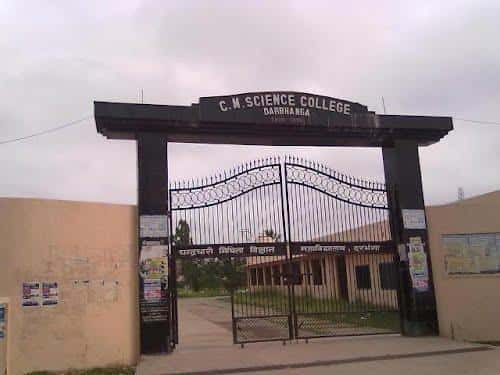
C M College
About
OfficialC M College is a public institution in Darbhanga, established in 1971. C M College, Darbhanga, Bihar, is one of the oldest and most prestigious educational institutions in northern Bihar, with roots tracing back to the early 20th century. Located in Laheriasarai, approximately 8 km from central Darbhanga city, the college serves as a regional hub for undergraduate and postgraduate education across multiple disciplines. Founded with a mission to provide quality higher education to students from tier-3 and tier-4 towns of Bihar, the institution has evolved into a comprehensive academic center offering programs in Engineering, Sciences, Commerce, and Arts. Academic Structure and Program Offerings: C M College operates undergraduate and postgraduate programs across six major faculties. The Engineering division, established in 1985, offers B.Tech programs in Civil, Mechanical, Electrical, and Electronics & Communication Engineering, attracting students primarily through JEE Main cutoffs. The Sciences faculty provides BSc degrees in Physics, Chemistry, Biology, and Mathematics specializations, catering to approximately 600 undergraduate students annually. The Commerce and Management streams include BCom (Regular and Honours) and MCom programs, with consistent annual intakes of 200+ students. The Arts faculty remains the largest by enrollment, offering BA in various combinations of Hindi, English, History, Political Science, Economics, and Sociology. Research and Academic Strengths: The institution has made notable strides in research, particularly in applied sciences and civil engineering. Faculty members have published over 150 papers in peer-reviewed journals in the last five years, with research clusters focusing on sustainable building materials, agricultural biotechnology, and water resource management—areas directly relevant to Bihar's development challenges. The Engineering department has established partnerships with IIT-BHU for research collaboration and student mentorship programs. However, research infrastructure remains below standards of tier-1 institutions, with limited access to advanced laboratory equipment and funding constraints impacting PhD program expansion. Campus Infrastructure and Facilities: The 18-acre campus features separate engineering and science blocks, a central library housing 45,000 volumes, computer labs with 200+ systems connected to campus Wi-Fi, and dedicated spaces for theoretical studies. Hostel facilities exist for both men and women with capacity for approximately 1,200 resident students. The campus has a health center with resident doctor availability, a cafeteria serving 2,500+ meals daily, and basic gymnasium facilities. The college recently upgraded internet bandwidth to 100 Mbps following student feedback, though connectivity remains inconsistent during peak hours. Water supply, though treated, occasionally faces disruptions during peak summer months (May-June). Placement and Career Outcomes: The college's placement cell has consistently achieved placement rates between 65-75% for engineering students and 55-65% for science students over the past three years. Major recruiters include Mahindra Group, TCS, Wipro, various government PSUs including NTPC and BHEL, and Bihar government administrative services. Average salary packages for engineering graduates hover around ₹4.5-5.5 lakhs annually, with top performers securing packages up to ₹10-12 lakhs in IT sector roles. Commerce and Science graduates typically secure positions in banking (IBPS/SBI), education, and government services, with average packages in the ₹2.5-3.5 lakh range. The placement performance, while respectable for a tier-2 college in Bihar, lags behind similarly-situated institutions in metropolitan areas. Campus Life and Student Experience: Student life at C M College reflects the cultural ethos of north Bihar. The institution hosts an annual college festival (Samagra) in February featuring cultural programs, sports tournaments, and academic competitions. Active student clubs include the Engineering Society (technical), Cultural Council, Sports Committee, Entrepreneurship Club, and an active NSS unit conducting regular community service activities. However, student feedback indicates limited exposure to industry internships compared to colleges in Delhi or Bangalore, and minimal startup ecosystem engagement. Sports facilities include a cricket ground, badminton courts, and a gymnasium, though athletic development programs lack professional coaching at elite levels. Notable Alumni and Institutional Legacy: The college has produced graduates who have excelled in civil service (15+ IAS/IPS officers since 1995), engineering sector (senior officials at NTPC, NHPC, Indian Railways), education (university professors across India), and business. Notable alumni include Dr. Rajendra Singh (Mechanical Engineering 1988), now Chief Engineer at NHPC; Anita Sinha (Arts 1995), IAS 2002 batch; and Ashok Kumar (Commerce 1992), founder of a successful pharmaceutical distribution network in Bihar. Who Should Apply: C M College is ideal for students from Bihar, Jharkhand, and eastern Uttar Pradesh seeking quality engineering or science education at affordable costs with a clear pathway to government or corporate employment. The institution particularly suits disciplined, self-motivated students who can leverage limited resources effectively and benefit from the supportive academic culture. It is well-suited for JEE Main qualifiers targeting tier-2 engineering colleges, and for merit-based admission candidates in science and arts streams. The college is NOT recommended for students seeking research-intensive environments, startup incubation ecosystems, or highly cosmopolitan campus experiences. Student aspirations should align with government service, traditional corporate careers, or academic pursuits rather than entrepreneurship or specialized technical roles. Unique Institutional Characteristics: C M College stands out as one of the few engineering colleges established during the pre-liberalization era that has successfully modernized its curriculum and infrastructure. Its deep community roots in Darbhanga and northern Bihar create a distinctive regional character. The college maintains strong relationships with local industries, schools, and NGOs, facilitating practical learning and community engagement. The faculty body, while not primarily PhD-qualified at levels of metro-based colleges, includes experienced educators with 15-25 years of teaching experience and practical industry exposure. Challenges and Honest Assessment: The institution faces several constraints. Geographic location in a tier-3 city limits exposure to cutting-edge industry trends, restricts recruitment of top-tier corporate employers, and results in student migration post-graduation. Infrastructure, while adequate, requires modernization—laboratories lack state-of-art equipment, the library digital collection is limited, and research funding is constrained. Faculty strength in specialized areas (data science, AI/ML, renewable energy) is below institutional needs. The college's reputation, while solid regionally, lacks national recognition, potentially affecting student mobility in competitive job markets. Ragging, though officially zero-tolerance, has occasionally been reported in hostel settings, requiring continued administrative vigilance.