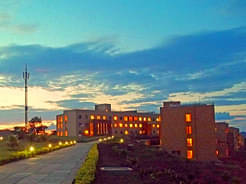
Bharati Vidyapeeth College of Engineering, Navi Mumbai
About
OfficialBharati Vidyapeeth College of Engineering, Navi Mumbai is a other institution in Navi Mumbai, established in 1990. Bharati Vidyapeeth College of Engineering, Navi Mumbai is part of the larger Bharati Vidyapeeth University system, one of India's oldest and most respected private educational networks. Founded in 1821 as a charitable organization and later establishing engineering education in 1976, BVCE Navi Mumbai has grown into a significant engineering institution serving western India. The college is located in the relatively planned and developing Lavale area of Navi Mumbai, approximately 45 km from Mumbai's central business district, making it accessible yet somewhat isolated from the metropolitan core. The institution operates under the Bharati Vidyapeeth Deemed-to-be-University framework, which provides academic autonomy and flexibility in curriculum design compared to purely state-regulated engineering colleges. The college offers 8 undergraduate engineering disciplines and several postgraduate programs, with a total student body of approximately 4,200 across all programs. The engineering curriculum at BVCE is designed with an emphasis on both theoretical foundations and practical application, with several departments equipped with modern laboratories and research facilities. The college has experienced significant growth in recent years, with infrastructure improvements including new academic blocks, upgraded computer laboratories, and expanded research centers. Faculty composition includes 280+ members, with a reasonable mix of PhD holders and industry professionals. The college maintains industrial partnerships with companies like Infosys, TCS, Wipro, and various manufacturing firms, which influence curriculum design and provide internship opportunities. One of BVCE's distinguishing features is its location in Navi Mumbai, which has emerged as a secondary financial and manufacturing hub. This positioning has attracted recruiters from finance, IT, and core engineering sectors. However, the college's reputation remains somewhat overshadowed by premier institutions like VJTI Mumbai, IIT Bombay, and top NITs. The placement scenario at BVCE has been reasonably strong post-2018, with IT companies dominating campus recruitment. The college infrastructure includes dedicated placement cells, career counseling units, and active alumni networks. Campus life at BVCE is moderate—while the institution maintains various student clubs (cultural, technical, and sports), the suburban location limits easy access to the broader student community ecosystem of Mumbai. The hostel facilities house approximately 60% of the student population, with separate blocks for women and men. The college has adopted policies addressing ragging and maintains a relatively safe campus environment. Academic rigor varies by program and faculty, with core engineering departments (Mechanical, Civil) maintaining traditional pedagogical approaches, while newer departments (Electronics, IT) have adopted more modern teaching methodologies. Research output from BVCE is modest but growing, with several faculty members publishing in national journals and conducting industry-sponsored projects. The college is NAAC accredited and maintains NBA accreditation for several engineering programs, which ensures quality standards recognition. Bharati Vidyapeeth College of Engineering, Navi Mumbai is best suited for students seeking a mid-tier private engineering college with reasonable placement prospects, moderate fees, and a developing but functional campus infrastructure. It appeals particularly to students from western India, especially Maharashtra, who wish to study engineering without relocating to metropolitan centers but still gain exposure to industry connections. The institution is suitable for candidates with JEE Main scores in the 60th-75th percentile range (ranks 1,50,000-2,50,000 approximately). Students seeking niche research opportunities or premium campus experiences should look elsewhere. The college's value proposition lies in its balance of affordability compared to premium private colleges, reasonable placement outcomes, and the Bharati Vidyapeeth University backing providing some credibility in traditional sectors. The college faces challenges including relatively lower visibility compared to older prestigious institutions, suburban location limiting quick access to metro amenities, and competition from both NITs and aggressive newer private colleges using heavy marketing. Alumni network, while growing, is not as strong as institutions with longer engineering traditions. The institution is gradually positioning itself as a practical engineering college focused on employability rather than pure research or innovation, which aligns with industry needs but may limit appeal for research-oriented aspirants.