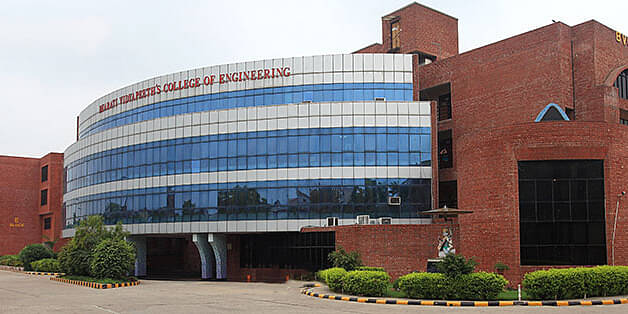
Bharati Vidyapeeth's College of Engineering
About
OfficialBharati Vidyapeeth's College of Engineering is a other institution in Delhi, established in 1999. Bharati Vidyapeeth's College of Engineering (BVCE) in Delhi was established in 1999 as part of the Bharati Vidyapeeth Deemed University ecosystem, which traces its origins to 1962. Located in the Rohini area of West Delhi, the institution has grown to become a significant engineering college in the national capital, offering diverse undergraduate and postgraduate programs across core engineering disciplines. The college is recognized by the All India Council for Technical Education (AICTE) and holds academic accreditation from UGC. Its foundational mission revolves around combining technical rigor with holistic human development, reflecting the broader philosophy of the Bharati Vidyapeeth movement. BVCE operates across multiple engineering disciplines including Computer Science and Engineering, Electronics and Communication Engineering, Mechanical Engineering, Civil Engineering, Electrical Engineering, and Information Technology. The institution has progressively expanded its postgraduate offerings, with MTech programs in Structural Engineering, Power Systems, Digital Signal Processing, and Software Engineering attracting students seeking specialized technical expertise. The college also offers a 5-year integrated BTech-MBA program for students interested in dual technical-management credentials. The faculty strength comprises approximately 280 members, of whom around 45% hold doctoral degrees from recognized institutions. Research activities are centered in areas including renewable energy, IoT and embedded systems, machine learning applications, structural health monitoring, and digital signal processing. The college maintains partnerships with software companies like TCS, Infosys, and Wipro for technology collaboration and curriculum alignment, though the depth of these partnerships varies. The campus infrastructure includes dedicated laboratories for each discipline, a central library with digital resources, computer centers with modern configurations, and basic sports facilities. Academic block designs follow conventional multi-story layouts common to Delhi engineering colleges of this era. The institution emphasizes practical learning through mandatory internships, industry visits, and hands-on lab work, though students often report that equipment in some labs could be more contemporary. Placement performance has shown steady improvement, with 2023-24 data indicating approximately 78-82% placement rates for UG students. Technology sector remains the dominant employment destination, accounting for roughly 60% of placements, with finance and consulting roles capturing another 15-20%. Core engineering roles in manufacturing and infrastructure sectors account for approximately 8-12% of placements. The median salary for engineering graduates hovers around INR 6.5-7.2 lakhs, with highest packages reaching INR 15-18 lakhs in technology roles. Notable alumni include software engineers and technical leaders working in multinational corporations, though the college is yet to produce prominent industry icons at the national level. Campus life at BVCE reflects the energy typical of West Delhi colleges—student clubs focus on technical competitions like robotics and coding, cultural societies organize events during annual festivals, and sports participation is moderate. The hostel accommodates approximately 25-30% of students, with separate facilities for men and women, though capacity constraints mean many students, particularly those from within Delhi NCR, commute daily. The college administration is reasonably accessible, though bureaucratic processes can sometimes be slow. Safety on campus is generally good, with security staff present, though women students occasionally report concerns about late-evening campus access. The institution's positioning makes it suitable for students seeking quality engineering education at fees lower than premium private colleges but higher than government NITs/IITs, with a focus on technology placements and corporate career pathways rather than research or entrepreneurship. Candidates from Delhi and NCR who value proximity to home and seek solid technical education with decent corporate placements form the primary student demographic. The college attracts students who narrowly miss admission to top-tier government colleges and seek alternatives combining respectable academics with emerging infrastructure in the Delhi-NCR region.