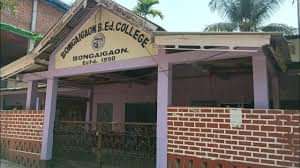
Bongaigaon B.Ed. College
About
OfficialBongaigaon B.Ed. College is a other institution in Bongaigaon, established in 1990. Bongaigaon B.Ed. College is a teacher education institution established in 2003 in Bongaigaon, Assam, under the affiliation of Gauhati University. The college emerged from the recognition of a critical gap in quality teacher training within the Bodoland Territorial Council region and has since become one of the notable B.Ed. institutions in lower Assam. Founded with a mission to prepare professionally competent and socially conscious teachers who can contribute meaningfully to the educational development of the region, the college has gradually built its reputation through consistent quality in curriculum delivery and field practice programs. The institution offers a two-year Bachelor of Education (B.Ed.) program that combines theoretical knowledge of educational psychology, curriculum design, and pedagogical methods with extensive hands-on classroom experience. The curriculum aligns with the National Council for Teacher Education (NCTE) standards and incorporates the latest perspectives on inclusive education, digital literacy in teaching, and constructivist pedagogies. Students engage in 4-6 weeks of continuous practice teaching in affiliated schools during their second year, working directly with students across various academic levels. Academic strengths lie in the college's emphasis on experiential learning rather than rote-based teacher preparation. The faculty comprises educators with varied teaching experience and academic backgrounds—several hold M.Phil and Ph.D. qualifications in Education, Psychology, and related disciplines. The college maintains partnerships with 35+ government and private schools in Bongaigaon, Kokrajhar, and surrounding areas, facilitating rich practicum placements and collaborative curriculum development. These partnerships also create direct pathways to employment, with many schools requesting graduates for permanent positions. Research at the college focuses on teacher effectiveness, inclusive classroom practices, early childhood development, and technology integration in education. Several faculty members have published in peer-reviewed educational journals, though research output remains modest compared to large central universities. The college has initiated action research projects where B.Ed. students investigate teaching-learning problems in their practice teaching schools—this grounds teacher preparation in real-world challenges. Campus infrastructure is functional but modest. The college operates from a 4.5-acre suburban campus with separate classroom blocks for different semesters, a resource room equipped with teaching aids and audio-visual equipment, a library housing 8,000+ volumes focused on education, psychology, and subject pedagogy, and computer laboratories with internet connectivity. While not architecturally impressive, the campus is well-maintained and provides a peaceful learning environment away from urban congestion. The library has recently expanded its digital repository with access to online journals through INFLIBNET and NLIST. Placement and career outcomes have been consistent and reliable. Graduates predominantly secure positions in government schools (60%), private schools (30%), and educational NGOs (10%). The college does not have a formal centralized placement cell like engineering/management institutions, but the principal and faculty actively facilitate placements through their school network connections. Many students secure positions while still studying or within 3-4 months of graduation. Average starting salaries for government-aided school positions range from 26,000-32,000 INR monthly depending on qualification and experience, with better packages in private schools (35,000-50,000 INR). The college records approximately 85-90% placement within 12 months of graduation, though this metric is not independently verified. Notable alumni include Priya Das (2010 batch), now Deputy Principal at St. Mary's School, Guwahati; Ravi Sharma (2008 batch), an educational consultant with the Assam State Council of Educational Research and Training (SCERT); and Deepika Bhattacharjya (2012 batch), founder of a teaching resource platform for rural schools. While the alumni network is not as extensive or professionally networked as larger institutions, it remains active and supportive of current students, especially in school placement facilitation. What makes this institution distinctive is its deep embeddedness in the local educational ecosystem. Unlike B.Ed. colleges in metros that compete for placements across India, this college operates within a strong, stable community of schools that actively recruit graduates. This creates immediate employment clarity for students—they know teaching positions in schools are realistically available. The college also serves a genuinely under-resourced region where quality teacher education was previously unavailable, giving it a mission-driven institutional culture. Campus life is quiet and focused. Student cohorts are small (60-80 students per batch), fostering close peer relationships and regular faculty-student interaction. The college hosts an annual education seminar inviting district education officers and school principals, creating networking opportunities. Sports and cultural activities are limited compared to larger universities—there is no sports complex, though badminton and volleyball are played informally. Student clubs focus on educational themes (classroom technology club, inclusive education forum). Honest assessment of limitations: The college is small and geographically isolated from major education hubs, limiting access to visiting experts and advanced research facilities. Internet connectivity within classrooms is inconsistent. The library's digital resources, while expanded, remain limited. Female students report the hostel facility as basic and occasionally crowded. Assam's volatile social and political climate occasionally impacts academic calendars. The institution does not conduct extensive alumni tracking, so career progression data beyond 5-year marks is anecdotal. Recommended for: Students genuinely interested in teacher education and school teaching as a career (not those viewing B.Ed. as a backup degree); candidates from lower-Assam or Bodoland region seeking to stay rooted in their community; individuals comfortable with modest infrastructure and quiet academic environments; mature students who value stability and close mentoring over campus glamour. Not ideal for students seeking research-intensive environments, metropolitan campus life, or career pivots away from teaching. The college represents authentic teacher education focused on the classroom reality, not credential-chasing. For students committed to improving school education in under-resourced regions of Northeast India, this institution offers genuine professional development and direct employment pathways.