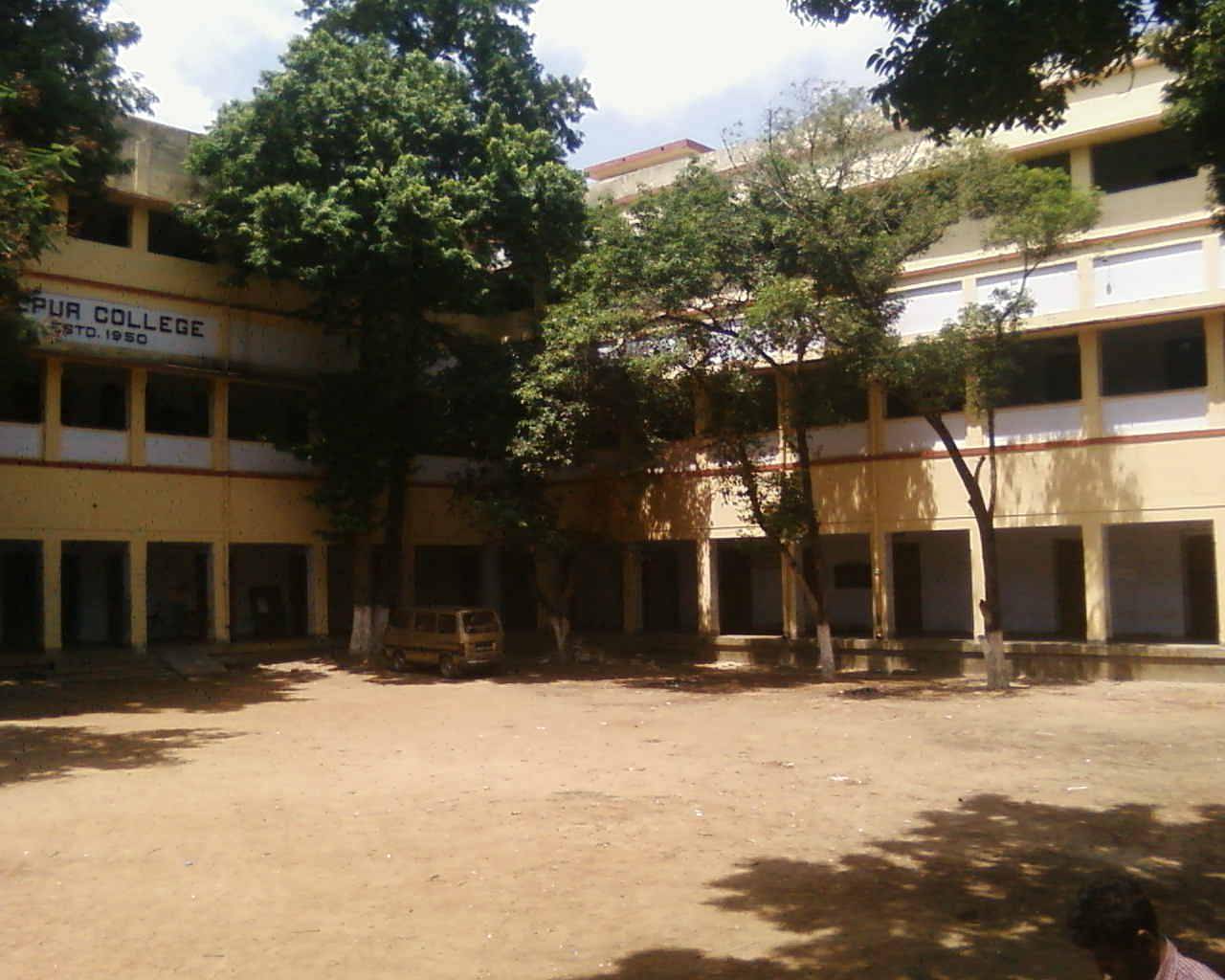
Bolpur College
About
OfficialBolpur College is a public institution in Bolpur, established in 1950. Bolpur College, established in 1946 in Bolpur, West Bengal, is a 78-year-old institution located in the culturally rich region of Santiniketan. Founded in the immediate post-independence era, the college has evolved into a significant educational hub for rural West Bengal while maintaining close ties with the intellectual legacy of Rabindranath Tagore's Visva-Bharati University, which is located just 3 kilometers away. The college operates under the academic governance of the University of Calcutta and serves approximately 2,800 undergraduate and postgraduate students across 95 faculty members spread across a 18-acre campus that blends modern educational infrastructure with the natural environment characteristic of the Birbhum district. Academic Programs and Strengths: Bolpur College offers comprehensive undergraduate (UG) and postgraduate (PG) programs across Sciences, Arts & Humanities, and Commerce streams. At the undergraduate level, the college offers Bachelor of Science (B.Sc.) in Physics, Chemistry, Botany, Zoology, Mathematics, Physiology, and Geology with a total intake of approximately 480 students annually. Bachelor of Arts (B.A.) programs span English, Bengali, History, Political Science, Philosophy, Economics, and Education with an intake of around 350 students. The Bachelor of Commerce (B.Com.) program enrolls approximately 120 students. At the postgraduate level, the college operates M.Sc. programs in Physics, Chemistry, Botany, Zoology, and Mathematics, along with M.A. programs in English, Bengali, History, Political Science, and Education. The total postgraduate intake is approximately 280 students across 5 semesters. The college also offers diploma and certificate programs in various skill-based courses. Research and Faculty Profile: The faculty strength of 95 comprises individuals with doctoral qualifications (approximately 65% hold PhDs), with specializations spanning pure sciences, applied sciences, and social sciences. The college maintains research collaborations with Visva-Bharati University, the Indian Institute of Science (Bengaluru), and several national research institutions. Key research areas include materials science, organic chemistry, plant physiology, environmental biology, and social policy studies. The college houses research labs equipped with modern analytical instruments including spectrophotometers, chromatography systems, microscopy facilities, and computational resources. However, research output measured by peer-reviewed publications remains modest compared to tier-1 institutions, with an average of 15-20 publications per faculty per year across all disciplines. Campus Infrastructure and Facilities: The 18-acre campus includes a modern library with over 48,000 books, digital access to major academic journals through INFLIBNET, a dedicated computer center with 85 systems offering high-speed internet connectivity, separate boys' and girls' hostels accommodating 380 resident students, a multipurpose auditorium with 500-seat capacity, a health center with resident doctor and nursing staff, a fully functional sports complex with cricket ground, football field, badminton courts, and indoor gymnasium, a cafeteria serving subsidized meals, and departmental laboratories equipped with modern instrumentation. However, infrastructure limitations include outdated sports facilities compared to urban colleges, limited laboratory equipment for emerging fields like biotechnology and nanotechnology, and bandwidth constraints during peak usage hours. The campus WiFi coverage is full across the campus but experiences intermittent connectivity during monsoon months. Placement and Career Outcomes: For the 2023-24 academic year, the college achieved an overall placement rate of 58%, with significant variation across streams. Science stream placement rate stands at 42%, Arts stream at 52%, and Commerce stream at 78%. Median salary across all placed students is approximately 285,000 INR per annum, with the highest package reaching 650,000 INR for a Commerce graduate placed in financial services. Average salary across the three streams is approximately 320,000 INR. Top recruiters include Indian Oil Corporation (core engineering roles), Tata Steel (graduate trainees), Axis Bank (relationship managers), Indian Bank (clerical officers), Infosys (systems engineer roles), State Bank of India (probationary officers), Reliance Industries (diploma and degree holders), GAIL, Power Grid Corporation, and various state government organizations. Sector-wise placement shows a significant concentration in public sector undertakings (PSU) with 32% of placements, followed by banking and finance at 28%, core engineering and manufacturing at 18%, IT services at 12%, retail and FMCG at 7%, and other sectors at 3%. The placement cell, while active, operates with limited industry connections outside traditional PSU recruitment cycles, limiting opportunities in startups and emerging sectors. Campus Life and Student Experience: The college maintains a vibrant campus culture rooted in the intellectual traditions of the Santiniketan region. Student-run clubs include the Literary Club, Debating Society, Environmental Club, Tech Club, Cultural Association, Sports Club, and Entrepreneurship Club. Annual festivals include Basanta Utsav (cultural festival held in March), an inter-college athletics meet in January, and a cultural fest in September featuring traditional and contemporary performances. Sports facilities include a full cricket ground, football field, four badminton courts, and an indoor gymnasium, though these lack the sophistication of urban college facilities. The hostel infrastructure accommodates 380 students (approximately 13.5% of total student population) in relatively basic but functional rooms with shared facilities. Hostel monthly rent ranges from 2,500 INR (basic four-bedded room) to 5,000 INR (semi-private accommodation). The mess charges approximately 3,200 INR monthly and serves North Indian, Bengali, and South Indian cuisine on rotation. Internet speeds in hostels average 8-12 Mbps. Ragging is reportedly minimal due to strict college regulations and active anti-ragging committees, though occasional eve-teasing incidents have been reported in past years. Safety for women is generally good within campus due to dedicated women's hostel with trained wardens, CCTV coverage in common areas, and visible security presence, though safety in surrounding areas requires vigilance, particularly post-sunset hours. Notable Alumni and Institutional Impact: The college has produced numerous alumni who have contributed significantly to various fields. Dr. Amartya Banerjee (Batch 1998, Physics) is a senior researcher at CSIR-Indian Institute of Chemical Biology, Kolkata, known for work in organic synthesis. Shantanu Dey (Batch 2001, Economics) is an IAS officer currently serving as District Magistrate of a tier-2 district. Priyanka Sharma (Batch 2003, English) is a published author and freelance journalist covering social issues in rural India. The college has produced multiple civil service officers, university professors, healthcare professionals, and mid-level industry leaders, reflecting its role as a regional educational institution. Who Should Apply: Bolpur College is ideal for students seeking quality undergraduate education in Sciences, Arts, or Commerce at an affordable cost within a culturally rich, intellectually stimulating, yet relatively quieter environment compared to metropolitan institutions. The college suits students from West Bengal and neighboring states who prefer proximity to home or seek to study in the Santiniketan-Bolpur region renowned for intellectual pursuits. It is particularly suited for students aiming for civil service examinations, government job recruitment, teaching careers, or further research studies. However, it is not recommended for students targeting high-profile IT/tech placements, entrepreneurship ecosystems, or highly specialized emerging fields without supplementary coaching. The college's strength lies in foundational academics, personality development, and moderate placement outcomes in traditional sectors. The relatively rural location, while offering tranquility and low living costs, presents limitations in terms of corporate recruitment drives, internship opportunities with multinational firms, and access to commercial entertainment and coaching centers typical of urban colleges. Students should approach Bolpur College with realistic expectations: solid academics, affordable living, cultural enrichment, and entry into government/traditional sector jobs, rather than premium placements or startup ecosystem exposure.