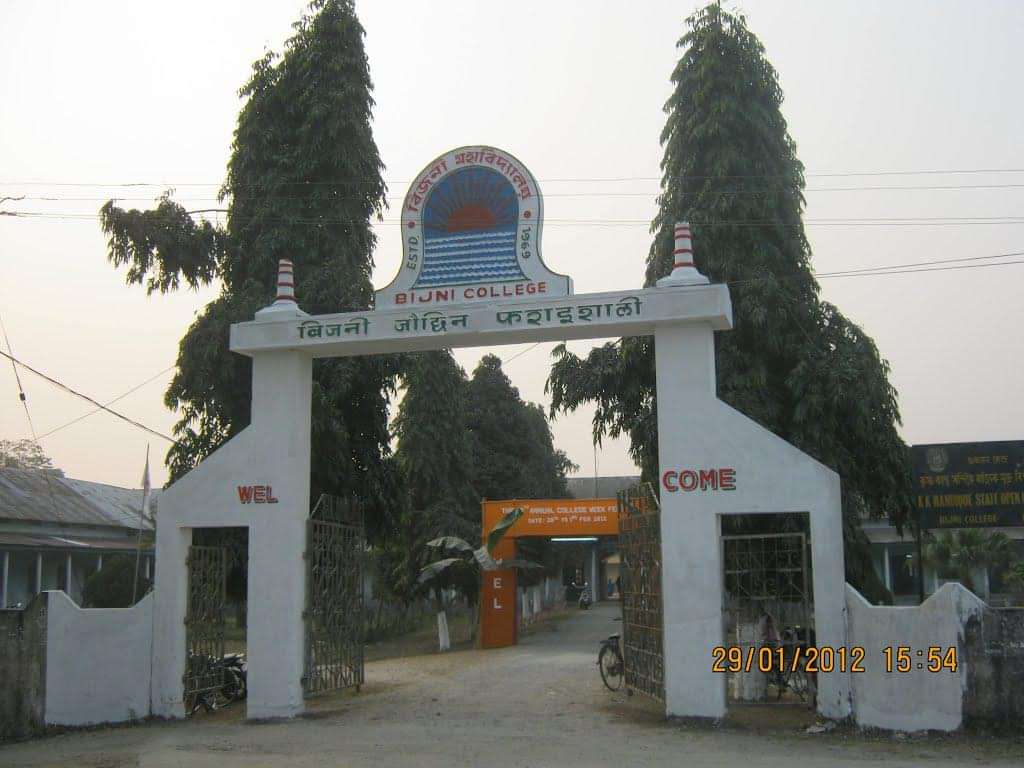
Bijni College
About
OfficialBijni College is a other institution in Bongaigaon, established in 1969. Bijni College, established in 1962 in Bongaigaon, Assam, is a government-aided institution that has served rural and semi-urban communities in the Kokrajhar district for over six decades. Founded as part of Assam's educational expansion in the post-independence era, the college has grown from a modest two-stream institution to a multi-disciplinary college offering undergraduate and postgraduate programs across sciences, commerce, and humanities. The college is affiliated with Gauhati University and operates under the regulatory framework of the University Grants Commission (UGC). Bijni College occupies a sprawling 28-acre campus in a predominantly rural setting, approximately 45 km from Guwahati and 35 km from Bongaigaon town. The college serves a significant population of first-generation learners, with approximately 65% of students coming from economically weaker backgrounds and rural families. This demographic reality shapes the institution's character: it is fundamentally a community college focused on accessibility rather than elite positioning. The academic curriculum emphasizes foundational STEM education, liberal arts, and teacher training, with particular strength in physics, chemistry, biology, and mathematics at the undergraduate level. The institution has produced notable graduates in education, administration, and civil services, though it does not compete with premier institutions for research output or placements in technology sectors. Faculty strength stands at 89 permanent and contractual staff members, with approximately 42% holding doctoral degrees. While many faculty are competent teachers, research publication rates remain modest, reflecting the college's teaching-focused mission rather than research ambition. The college has National Board of Accreditation (NBA) recognition for its science programs and NAAC accreditation status (B+ grade as of 2019), though the institution has not pursued sector-specific accreditations in engineering or management fields. Bijni College does not offer engineering or management programs—a significant limitation for students seeking technical or MBA education in this geography. Instead, the college focuses on B.Sc., B.A., B.Com., and M.Sc./M.A./M.Com. programs, making it primarily a feeder institution for students pursuing higher studies in specialized fields at metropolitan universities. The college's placement record is modest but honest: approximately 35-40% of undergraduate students secure campus placements, primarily in education (teacher training), banking (clerical roles), and government service exams preparation. Salary outcomes are lower than metropolitan institutions, with median first-year salary around 2.8-3.2 lakh INR for placed graduates. However, the college has developed a strong reputation in civil service and government job preparation, with several alumni clearing UPSC, APSC, and banking examinations over the past decade. Campus life reflects the rural setting and limited budget: there are active cultural clubs, a functioning sports program, and active student unions, but resources for technology clubs, startup incubation, or cutting-edge research facilities are limited. The college operates a mixed-gender hostel system with separate facilities for women and men; hostel accommodation is available for approximately 45% of students at highly subsidized rates (₹3,500-5,000 per month). Mess facilities operate with student committees managing menus; quality varies seasonally but generally serves vegetarian and non-vegetarian options suited to Assamese and North Indian palates. Internet connectivity is adequate but not exceptional—WiFi coverage is available in academic blocks and hostel areas but bandwidth limitations exist during peak hours. Safety on campus is generally good, with no major reported incidents; the rural setting paradoxically provides security through community oversight. For women students, the college maintains dedicated hostel wardens, separate recreational facilities, and has reported no significant ragging incidents in recent years. However, students should be aware that the rural location means limited access to specialized healthcare, shopping, and entertainment—the nearest city amenities (Guwahati) require 1.5-2 hours by road. Bijni College is recommended for: (1) students from rural Assam seeking quality undergraduate education without migration pressure, (2) first-generation learners aiming for government jobs or teaching careers, (3) students with limited financial resources who value affordable hostel accommodation and subsidized meals, and (4) those interested in teacher training (B.Ed., M.Ed. programs). The college is NOT recommended for: (1) students targeting software/IT careers (no engineering, limited computing infrastructure), (2) those seeking management education, (3) candidates expecting metropolitan lifestyle or nightlife, and (4) international students (minimal ELP, visa support, or global networking). The institution's unique strength lies in its role as an educational ladder for rural Assamese youth—it democratizes higher education access and maintains respectable academic standards without the financial burden of private institutions. Alumni networks remain regionally concentrated (Assam and Northeast India), limiting national placement reach. Overall, Bijni College represents an honest middle-ground institution: neither prestigious nor substandard, it offers genuine value to a specific demographic while being transparent about its limitations in research, technology, and cosmopolitan campus life.